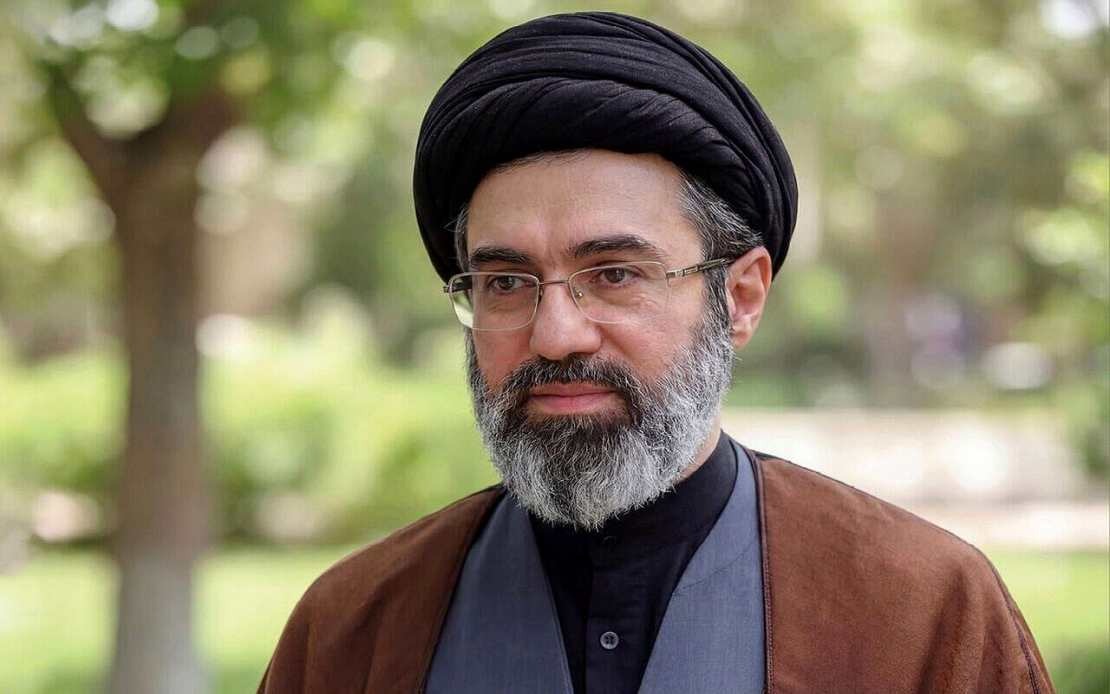
Iranian President Masoud Pezeshkian moved to quell speculation about the health and condition of Iran's newly appointed Supreme Leader Mojtaba Khamenei, declaring in a televised address that the nation's top authority is in perfect health. The reassurance came during an interview with state broadcaster IRIB TV on Monday, where Pezeshkian discussed substantive engagements with the supreme leader that underscored continuity in Iran's governance structure and policy direction.
The presidential statement holds particular significance given the extraordinary circumstances of Khamenei's elevation to office. In March, Iran's Assembly of Experts selected Mojtaba Khamenei to assume the supreme leader position following the death of his father, Ali Khamenei, who was killed in coordinated United States and Israeli military strikes on February 28. The succession marked one of the most dramatic transitions in Iran's post-revolutionary history, occurring amid heightened regional tensions and international diplomatic fractures.
Pezeshkian's public confirmation of Khamenei's wellbeing addresses an informational vacuum that has characterised the new supreme leader's tenure. Since his selection by the Assembly of Experts three months prior, Mojtaba Khamenei has maintained a notably low public profile, with no substantive public appearances or media engagements. This absence from the spotlight has inevitably sparked international curiosity and speculation about the state of Iran's governance and the consolidation of power during this delicate transitional period.
The president characterised his recent encounter with the supreme leader as an extensive engagement, spanning approximately seven hours, demonstrating substantive dialogue between the executive and supreme leader branches of Iran's dual-power structure. Rather than superficial courtesy, Pezeshkian stressed that the meeting constituted a "very good" session addressing numerous pressing domestic concerns that preoccupy Iranian society. The extended duration of the meeting suggests serious deliberation on matters requiring the attention of both senior officials.
Central to their discussions was the imperative of preserving national cohesion and social unity—a priority that Pezeshkian attributed directly to Khamenei's emphasis. In the context of Iran's present economic pressures and international isolation, this focus on maintaining internal solidarity carries strategic weight. Fractious domestic divisions could prove destabilizing during a period when the nation navigates international sanctions and geopolitical challenges emanating from its regional conflicts.
The two leaders devoted considerable attention to the quotidian challenges affecting ordinary Iranian households. Employment generation, affordable housing, and household living standards featured prominently in their agenda—issues that directly impact the material welfare of the Iranian population. These economic concerns reflect broader struggles within Iran's sanctioned economy, where inflation, currency devaluation, and limited foreign investment have constrained growth and compressed household purchasing power.
Through Pezeshkian's account, sanctions imposed by the United States and other Western nations emerged as a critical preoccupation requiring strategic consideration at the highest levels of state. The president explicitly noted that discussions encompassed the cascading consequences flowing from international economic restrictions, acknowledging the acute pressures these constraints place on Iran's development aspirations and ordinary citizens' economic opportunities. This framing positions sanctions as not merely a foreign policy irritant but as a central variable shaping domestic policy deliberations.
The timing of this public affirmation coincides with Pezeshkian's transition into his third year as president, a juncture that naturally invites reflection on governance performance and alignment between executive and supreme leader branches. By securing this interview opportunity and releasing Khamenei health assurances, Pezeshkian appears intent on projecting an image of stable, coordinated leadership and transparent governance—messaging particularly relevant for both domestic and international audiences evaluating Iran's post-succession stability.
For Malaysia and other Southeast Asian observers monitoring Iranian developments, the readout carries diplomatic implications. Iran maintains varied relationships across the region, from commercial partnerships to more complicated security dimensions. Confirmations of stable succession and continued governmental functionality bear upon how regional actors assess the reliability and predictability of Iranian diplomatic and commercial engagement. A power transition perceived as chaotic or contested could create uncertainty affecting regional equations.
The absence of Mojtaba Khamenei from public view since his appointment represents an unusual approach to establishing supreme leader legitimacy and authority. Pezeshkian's health declarations partially compensate for this lack of direct public engagement, offering constituents and international observers reassurance about governance continuity without requiring the new supreme leader to expose himself to public scrutiny or potential criticism. This managed transparency approach reflects calculated decision-making about how best to consolidate power during a sensitive succession period.

