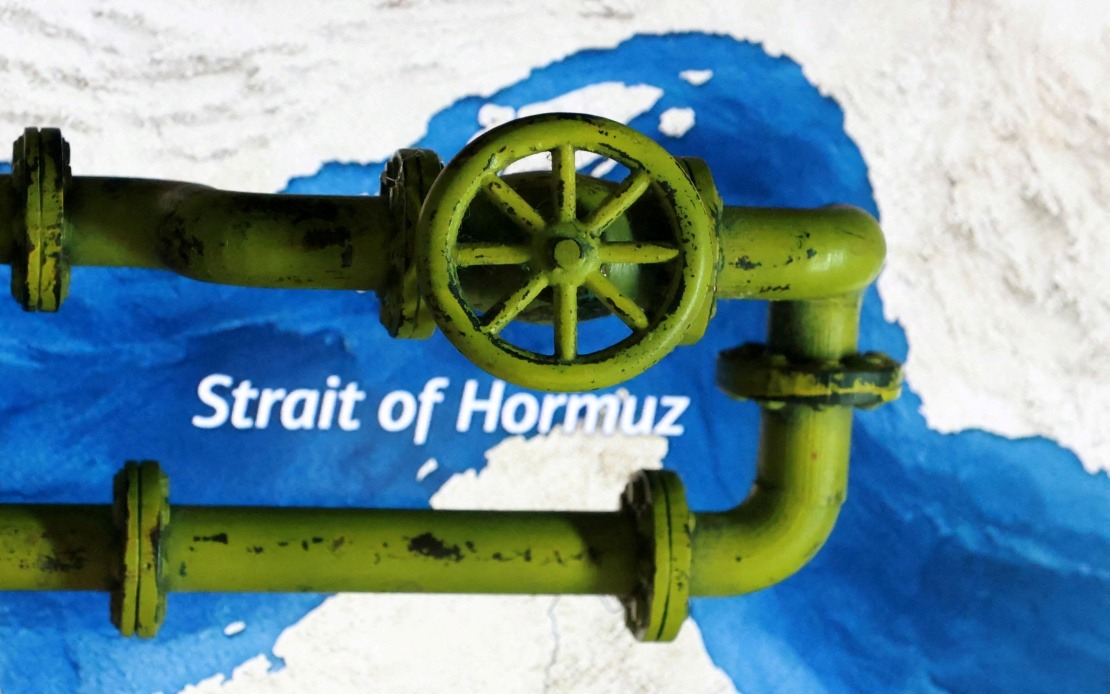
Iran's ability to generate revenue from petroleum sales has completely collapsed, according to Abdolnaser Hemmati, governor of the Central Bank, who disclosed the dire situation in a televised address this week. The admission represents a watershed moment for Tehran's already-strained economy, as international sanctions and geopolitical friction have effectively severed the nation's primary conduit for foreign currency earnings. Hemmati acknowledged that neighbouring Iraq and Qatar face identical challenges, their oil revenues also eroded to nothing, but he emphasized that Iran's predicament is uniquely severe due to the frozen nature of its international reserves.
The backdrop to Iran's export shutdown combines several interconnected pressures. Long-standing American sanctions have systematically targeted Iran's petroleum sector and access to global financial infrastructure, deliberately starving the government of the hard currency it depends upon. This deliberate strangulation of Iran's oil economy forms part of a broader Washington strategy to restrict Tehran's capacity to fund regional activities and domestic governance. Recent escalations in military tensions between Iran and the United States, following the collapse of a June framework agreement that had offered limited relief, have intensified these constraints further and raised the prospect of additional punitive measures.
What distinguishes Iran's current predicament from that of its Gulf neighbours is the weaponization of its own reserves. Hemmati underscored that while Iraq and Qatar retain the ability to tap their central bank holdings to cushion revenue shortfalls, the United States has rendered Iranian foreign currency reserves inaccessible, preventing their withdrawal or deployment. This distinction proves critical: it means Tehran cannot easily compensate for lost oil income by drawing down accumulated savings. Instead, the government must navigate an acute liquidity crisis with its hands tied by international financial architecture dominated by American influence.
The breakdown of the Islamabad Memorandum, a framework agreement reached between Tehran and Washington in June that was meant to facilitate the eventual release of restricted Iranian funds and pave the way toward a comprehensive accord, adds another layer of economic desperation. Hemmati revealed that funds previously expected to materialize under this understanding remain frozen, leaving Tehran unable to access capital that negotiators had hoped would ease immediate fiscal pressures. The failure of this diplomatic initiative to deliver tangible financial relief suggests that any near-term improvement in Iran's economic circumstances depends on a fundamental shift in US policy.
Iran's economic resilience will hinge significantly on its relationships with regional partners, particularly Iraq. Before the onset of current hostilities, Iran exported approximately $12 billion in goods and services annually to its neighbour, comprising $4 billion in government-contracted supplies such as natural gas and electricity alongside $8 billion in private sector transactions. These figures illustrate the depth of economic interdependence between the two nations and the magnitude of trade now imperilled by regional instability. Baghdad faces its own revenue pressures stemming from disruptions to oil commerce and the effective closure of the Strait of Hormuz, limiting its capacity to assist Iranian entities.
Despite these headwinds, Iranian officials have secured tentative commitments from Iraq to settle outstanding debts owed to Tehran. During Hemmati's recent visit to Baghdad, discussions centred on mechanisms to facilitate the transfer and utilization of Iranian funds currently held within Iraqi banking institutions, offering a potential workaround to American sanctions on direct transfers. Such arrangements would allow Iran to access frozen capital indirectly through Iraqi financial channels, though their effectiveness remains unproven and contingent on Iraqi willingness to navigate the political and legal risks involved.
A particularly significant development involves the Trade Bank of Iraq, which both nations have identified as a potential vehicle for supporting Iranian contractors active within Iraq. During meetings with Iraqi leadership, Iranian negotiators secured tentative agreement to utilize the bank's resources to back guarantees for Iranian firms undertaking projects across Iraq. The Iraqi prime minister reportedly approved this proposal and issued instructions to operationalize the arrangement, though implementation timelines and scope remain undefined. For Malaysia and other Southeast Asian nations maintaining economic ties to both Iran and Iraq, these banking arrangements warrant close monitoring, as they may signal broader efforts to circumvent Western financial sanctions through cooperative regional structures.
The implications of Iran's export collapse ripple across the Middle East and beyond. Iraq's own fiscal sustainability depends partly on oil revenues, and its inability to generate the surpluses historically directed toward settling Iranian accounts creates a cascading crisis. Meanwhile, the broader region faces uncertainty regarding maritime security and energy flows, with the Strait of Hormuz—through which a substantial portion of global petroleum transits—vulnerable to further disruption. Any escalation between Iran and the United States could trigger wider instability affecting energy prices, shipping routes, and economic conditions affecting Southeast Asia's trade and investment patterns.
Hemmati's public acknowledgment of zero oil exports represents an unusual level of candor from a senior Iranian official, suggesting that policymakers believe transparency about economic hardship may build domestic consensus around difficult adjustments ahead. The Central Bank and government claim to have implemented contingency measures to manage the revenue loss, though the governor declined to detail specific mechanisms. Whether Iran's economy can withstand a prolonged period without oil export income depends on the effectiveness of such domestic preparations, the success of alternative revenue channels like Iraqi financial arrangements, and ultimately the trajectory of negotiations with Washington.
For international observers and countries with interests in regional stability, the situation underscores the fragility of Middle Eastern economics under contemporary geopolitical strain. Iran's inability to access its own reserves and the collapse of export revenues demonstrate how sanctions regimes can render entire national economies effectively non-functional without requiring military intervention. The question now centres on whether diplomatic channels can reopen before economic desperation prompts Iranian leadership toward military adventures that could destabilize the region further and disrupt global energy supplies.

