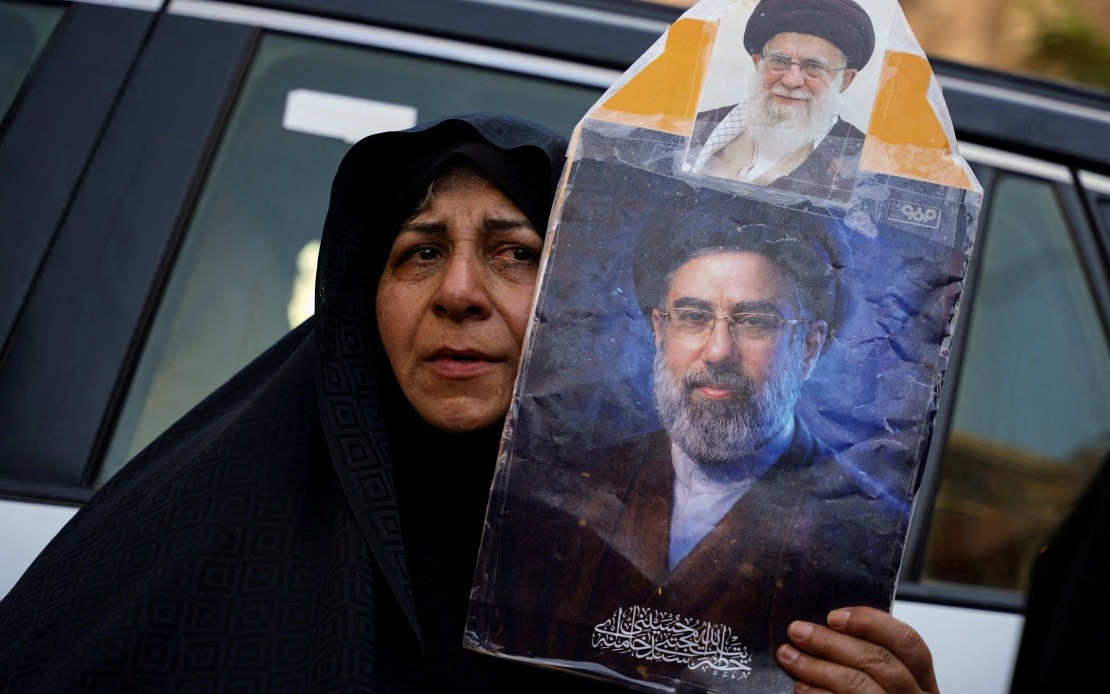
The deteriorating relationship between Washington and Tehran reached a new low this weekend when Iran's Supreme Leader Mojtaba Khamenei publicly denounced the credibility of agreements bearing President Donald Trump's signature. Speaking through Iranian state media channels on Saturday, Khamenei seized on what he characterised as fresh American violations of a recently negotiated memorandum of understanding to reinforce a broader indictment of US diplomatic reliability. His comments reflect the profound mistrust underpinning Middle Eastern geopolitics and suggest that the carefully constructed June accord may already be unraveling despite initial hopes for a diplomatic breakthrough.
The peace memorandum in question was signed on June 18 by Iranian President Masoud Pezeshkian and Trump, with both sides committing to pursue comprehensive negotiations within a 60-day window aimed at reaching a final settlement. The agreement was celebrated internationally as a potential turning point in resolving one of the world's most intractable conflicts, offering a pathway to de-escalation after years of mounting hostilities and proxy warfare across the Persian Gulf region. However, the optimism that accompanied the accord's unveiling has been replaced by mutual recriminations and tit-for-tat military operations that threaten to spiral into outright conflict.
Khamenei's Saturday address constituted a sweeping repudiation of American trustworthiness, structured around the proposition that Washington's pattern of breaking international commitments renders any promise made by Trump's administration worthless. The Supreme Leader framed American violations not as isolated incidents but as expressions of fundamental national character, arguing that repeated breaches expose "the US lying and its illogical, unreliable, and evil nature." This rhetorical positioning moves beyond specific policy disagreements to challenge the very foundation upon which diplomatic engagement rests—mutual confidence that both parties will honour their undertakings.
Simultaneously, Iran's Deputy Foreign Minister for Legal and International Affairs Kazem Gharibabadi made clear that Tehran intended to match American actions with corresponding countermeasures. In announcing that Iran had ceased fulfilling its obligations under the MoU, Gharibabadi effectively put Washington on notice that the agreement, from Iran's perspective, no longer binds the Islamic Republic to its terms. This escalatory declaration transforms a dispute over implementation into an outright rejection of the accord's validity, substantially narrowing the diplomatic space for further negotiation.
The military dimension of this crisis has become increasingly acute. American forces have conducted what Iranian officials characterised as multiple rounds of strikes against Iranian positions and assets in recent days, while the Islamic Revolutionary Guard Corps has responded with retaliatory missile and drone attacks directed at US military installations and facilities throughout the region. The cyclical nature of these exchanges—action and reaction, each justified as defensive—creates momentum toward broader conflict even as both sides ostensibly remain committed to negotiation.
For Southeast Asian observers and policymakers, the unraveling of this accord carries significant implications. Regional nations, particularly those with substantial energy interests and maritime security concerns, face the prospect of renewed instability in one of the world's most critical chokepoints for global commerce. Malaysia and its neighbours maintain substantial trade relationships with both Iran and the United States, and any escalation would inevitably disrupt supply chains, increase energy costs, and create security uncertainties that ripple across Asia.
Khamenei's explicit threat of "unforgettable lessons" directed at the United States and what he termed the "resistance front" signals that Iran views the current situation not as a temporary setback in negotiation but as a justification for expanded military responses. The language employed—warning that continued American "warmongering" would incur severe costs—represents a significant rhetorical escalation beyond diplomatic protest. Such statements typically precede military action in Middle Eastern contexts, suggesting that Iranian planners are preparing contingencies for sustained conflict.
The fundamental question animating this crisis concerns whether the June memorandum can be salvaged through sustained diplomatic effort or whether both parties have already concluded that the agreement serves their interests insufficiently to warrant continued adherence. Khamenei's assault on Trump's credibility suggests the Iranian leadership views the accord as a failed experiment in engaging an American administration deemed fundamentally untrustworthy. From an Iranian perspective, evidenced by the Supreme Leader's statements, the costs of continued compliance with terms being violated by the other party outweigh any benefits derived from maintaining the fiction of a functioning agreement.
The timing of these developments also warrants consideration. The 60-day negotiating window specified in the June accord remains open for several weeks, yet both parties appear to be preparing for confrontation rather than compromise. This pattern—simultaneous engagement and escalation—has characterised US-Iran relations for decades, but the breakdown of this particular accord demonstrates that even structured negotiating frameworks struggle to survive when underlying strategic interests diverge sharply and mutual confidence has eroded completely.
Looking forward, the international community faces a narrowing window for intervention that might arrest the current downward trajectory. Regional powers with influence in Tehran, particularly Russia and China, along with European nations that participated in earlier nuclear negotiations, retain theoretical capacity to broker a resumption of dialogue. However, Khamenei's public statements suggest that any such initiative would need to address fundamental questions about American reliability and commitment—issues that transcend the specific terms of the June memorandum and touch on broader questions about whether productive engagement with Washington remains feasible from Tehran's perspective.
The collapse of this agreement, should it prove irreversible, would represent a significant setback for diplomatic conflict resolution at a moment when such mechanisms are increasingly valued. For Malaysian and broader Southeast Asian interests, renewed Iran-US confrontation would compound existing regional security challenges and potentially reshape global energy markets in ways that prove destabilising for developing economies dependent on stable commodity pricing.

