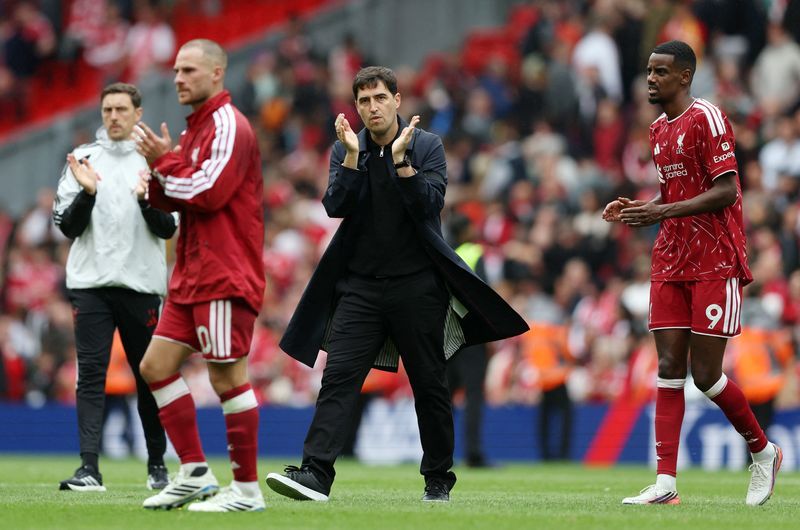
Andoni Iraola's first weeks as Liverpool manager have yielded no victories, yet the Spanish tactician finds reason for optimism in how his team responded during Saturday's 2-2 stalemate against Nottingham Forest. The draw, following a similar result against Newcastle United, demonstrates a resilience that Iraola believes points toward the eventual success he was appointed to deliver at Anfield.
Iraola arrived at Liverpool this summer tasked with reversing a dramatic decline that saw the Merseyside club tumble from defending Premier League champions to fifth place over the past season. The magnitude of that collapse was magnified by the club's extraordinary spending of £446 million on new players, a Premier League record, which failed to produce the anticipated improvement. The burden of expectations is considerable, yet Iraola's appointment signals the board's commitment to fundamental tactical renewal rather than incremental adjustment.
The new manager's philosophy represents a sharp departure from the measured, possession-based approach of his predecessor. Iraola has committed to a more aggressive, tempo-driven system rooted in high pressing, quick transitions, and relentless attacking intent. This style echoes the "heavy-metal football" that characterised Juergen Klopp's most successful years at Anfield, when the club's intensity and attacking verve made the stadium a fortress that visiting teams dreaded. For supporters weary of more conservative football over recent seasons, Iraola's blueprint offers a return to a more recognisable attacking identity.
The Saturday performance against Forest illustrated both the promise and the persistent challenges within Iraola's transitional project. Liverpool's opening forty-five minutes proved sluggish and disjointed, with Nottingham Forest capitalising on defensive passivity to take the lead through Dan Ndoye's counterattacking finish. Iraola's frustration at this sluggish first-half display was evident, highlighting what he identified as the team's ongoing susceptibility to starting games without sufficient intensity. This recurring tendency to begin matches slowly represents a hangover from last season's struggles, one that cannot persist if Liverpool are to mount a genuine title challenge.
The transformation after half-time provided meaningful evidence that Iraola's methods are beginning to penetrate the squad's understanding. Liverpool shifted to a more aggressive press, accelerated their ball movement, and dramatically increased their intensity across all phases of play. Alexander Isak equalised shortly after the interval, before substitute Victor Munoz secured a second equaliser with a late intervention. These comebacks, from losing positions in consecutive matches, reveal an emerging character and competitiveness that Iraola identifies as crucial to his longer-term ambitions.
Munoz's contributions across both opening fixtures have particularly impressed Iraola, who highlighted the winger's relentless work rate and threat creation both in possession and when defending. The consistency of Munoz's effort, his willingness to repeatedly seek to impact the game despite occasional imperfections in execution, embodies the mentality Iraola is attempting to embed across his entire squad. Such standards of intensity and commitment become foundational when implementing a high-tempo tactical system that demands maximum physical and mental engagement from every player throughout ninety minutes.
The underlying diagnostic that Iraola has identified points to a deeper structural issue that transcends individual performances or momentary lapses. His analysis of the first-half display against Forest emphasised excessive passivity without possession, with Liverpool's defensive shape becoming too compact and remote, creating sufficient space for opponents to exploit on transition. Only when the team elevated its pressing intensity and reduced these distances did they begin to dominate play and create consistent attacking opportunities. For Iraola, this disconnect between tactical intention and execution represents the primary work-in-progress element within his squad.
Despite the lack of victories, alarm within Anfield remains remarkably muted. Iraola himself has explicitly warned that implementing his tactical reset would require extended time, and observers recognise that mastering a fundamentally different style of play cannot be accomplished within a handful of matches. The manager's authority and the board's patience suggest both parties understand that the opening weeks represent establishment of foundations rather than achievement of finished product. This measured perspective among stakeholders provides crucial space for Iraola to develop his vision without the suffocating pressure that can derail managerial tenures.
Liverpool's pursuit of reinforcements should accelerate the implementation process substantially. The club has reached agreement with Paris Saint-Germain to sign France winger Bradley Barcola, a 23-year-old whose direct running style and explosive pace represent an archetypal fit for Iraola's high-octane attacking system. Such recruitment signals the board's commitment to resourcing the manager's tactical approach with personnel specifically suited to execute it. Barcola's arrival should provide additional thrust to Liverpool's pressing sequences and attacking transitions.
The fundamental tension within Liverpool's current position remains the gap between performance quality and tangible results. Iraola has demonstrated that he can coax improved football from his squad, particularly in the second half of matches when his side plays with genuine intensity and attacking purpose. The entertainment value has undeniably increased compared to the recent past, with Liverpool generating more attacking chances and playing with greater directness and speed. However, as Iraola himself emphasised following the Forest draw, entertainment remains secondary to the accumulation of three-point victories.
The comebacks from losing positions in both opening fixtures carry dual significance. On one level, they demonstrate character and refusal to accept defeat, qualities essential to any successful team. Conversely, they indicate a need for more professional starts and fuller performances from the opening whistle. Liverpool cannot sustain a season based on rescue missions and late equalising goals; such inconsistency ultimately leads to dropped points and tournament failure. For Iraola, the priority now extends beyond encouraging the character his team has shown to embedding the discipline and relentlessness required to avoid falling behind in the first place.
For Southeast Asian observers of English football, Iraola's appointment and early tenure carry particular interest given the region's passionate following of the Premier League. Liverpool's traditional appeal to Malaysian and regional supporters derives substantially from the club's attacking tradition and intensity under previous successful managers. Iraola's commitment to reestablishing this attacking identity offers the prospect of restoring the football that made Liverpool a favourite among Southeast Asian supporters. Whether he can convert the evident promise into sustained competitive success over coming weeks will determine whether this transitional period proves to be the foundation of a genuine revival or merely a false dawn.

