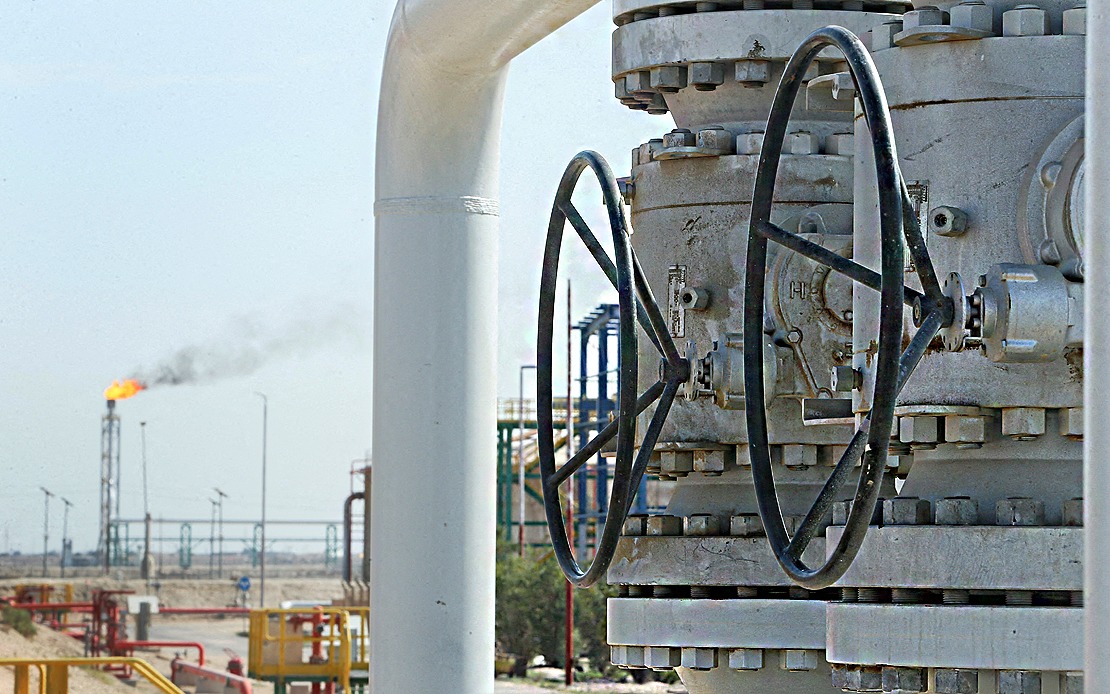
Iraq is moving ahead with plans to construct an alternative oil pipeline that would connect the nation's southern and northern oilfields directly to Mediterranean export terminals, according to Oil Minister Bassim Khudair. The initiative reflects Baghdad's growing concern about the viability of existing export routes through the Strait of Hormuz, where months of regional hostilities have effectively restricted the flow of crude to global markets. A comprehensive feasibility study is currently underway to examine the technical and economic feasibility of linking Basra and Kirkuk—Iraq's primary oil-producing regions—with the Turkish port of Ceyhan and the Syrian facility at Baniyas.
The proposed corridor represents a significant strategic shift for an oil-dependent economy that generates more than 90 percent of its government revenues from petroleum sales during normal circumstances. Khudair emphasised that Baghdad possesses a definitive vision and coherent strategy for identifying new export channels, signalling that the Mediterranean route is not merely a contingency plan but a central component of long-term energy policy. The potential extension to Aqaba on Jordan's Red Sea coastline would further diversify Iraq's options and reduce geographic concentration of export infrastructure.
The urgency surrounding alternative routing cannot be overstated. Iraqi crude production has declined during the prolonged standoff between Iran and the United States, compounding the revenue challenges facing a state that must sustain social welfare payments to over 10 million citizens each month. This cohort includes civil servants, pensioners, and welfare beneficiaries whose livelihoods depend on the consistent flow of oil-derived income. When the Hormuz route functions normally, it represents the most cost-effective and efficient mechanism for transporting crude to international buyers; any prolonged closure or restriction threatens both national finances and social stability.
However, terrestrial pipeline infrastructure presents its own complications. Overland transportation of crude through Turkey and Syria would incur substantially higher operational costs than maritime shipping, reducing profit margins on exported oil and narrowing Baghdad's fiscal space. The economic calculus becomes more challenging when considering that pipeline routes demand significant capital investment, ongoing maintenance, and management across multiple jurisdictions and potentially unstable regions. For a nation already grappling with reconstruction requirements following years of conflict, these expenses represent a meaningful burden on public resources.
Security vulnerabilities compound the economic concerns. Iraqi decision-makers acknowledge that alternative pipeline networks, regardless of their routing, remain theoretically vulnerable to military action—particularly from Iran, which has repeatedly demonstrated its capacity to strike energy infrastructure across the region. The Mediterranean route would traverse territory and potentially waters where Iranian influence extends, introducing geopolitical risk factors that maritime shipping through the Hormuz, despite current difficulties, has historically mitigated through international naval presence and established shipping corridors.
Iraq already maintains an operational pipeline through Turkey that transits Kurdish autonomous territory, providing limited export capacity through the northern corridor. A second pipeline that deliberately bypasses Kurdistan is currently undergoing final testing phases and could commence operations within the immediate future, according to Khudair's statements. This dual-track approach—utilising existing infrastructure while simultaneously developing long-term alternatives—reflects Baghdad's pragmatic acknowledgment that no single solution adequately addresses the multifaceted challenges posed by Hormuz dependency.
From a broader Southeast Asian perspective, Iraq's pipeline strategy carries implications for regional energy security discussions. Malaysia and other ASEAN economies depend significantly on Gulf oil supplies, and Hormuz disruptions reverberate through global commodity markets affecting fuel costs and inflation dynamics across the region. Iraqi efforts to develop redundant export pathways contribute modestly to overall supply resilience, though the Mediterranean route cannot fully compensate for Hormuz-scale volumes. The precedent of seeking land-based alternatives may inform discussions within Southeast Asian energy policy circles regarding diversification strategies.
The feasibility study process itself will reveal crucial information about technical specifications, timeline requirements, and realistic costs. Pipeline construction across multiple nations demands treaty negotiations, right-of-way agreements, and coordination mechanisms that extend beyond Iraq's direct control. Syria's ongoing instability and international isolation complicate these arrangements, while Turkish participation introduces NATO considerations and questions about how pipeline politics might interact with broader Western strategic interests in the eastern Mediterranean.
The initiative also reflects Iraq's positioning within regional geopolitics. By simultaneously pursuing pipelines through Turkey and Syria, Baghdad signals willingness to engage constructively with both nations while avoiding excessive reliance on either. This balanced approach serves Iraq's longer-term interest in maintaining strategic flexibility and avoiding the kind of singular dependency that has historically complicated its foreign policy options. The potential Jordanian extension further diversifies stakeholders and creates additional diplomatic pathways.
Beyond immediate export considerations, the Mediterranean pipeline project connects to Iraq's broader infrastructure modernisation agenda. Improved energy infrastructure enhances the country's attractiveness to foreign investors and supports economic diversification efforts that extend beyond petroleum sectors. Pipeline technology development and management expertise could catalyse broader technical capability building within Iraq's energy sector workforce.
The timeline for implementing the Mediterranean corridor remains uncertain. Feasibility studies typically require years to complete thoroughly, and even with favourable conclusions, securing international financing and coordinating across multiple borders would extend actual construction timelines considerably. In the interim, Iraq must continue managing oil exports through existing constrained channels while maximising the limited alternative capacity represented by the Kurdish pipeline and the newly tested route that circumvents Kurdish territory.
For international energy markets and ASEAN observers, the significance lies less in the pipeline's immediate contribution to global supply and more in what the initiative indicates about how Middle Eastern producers perceive long-term Hormuz reliability. If Iraq—alongside other Gulf states—persistently invests in bypass infrastructure, this signals serious concerns about the strait's viability, potentially influencing broader global energy security discussions and investment patterns in renewable and alternative energy sectors.

