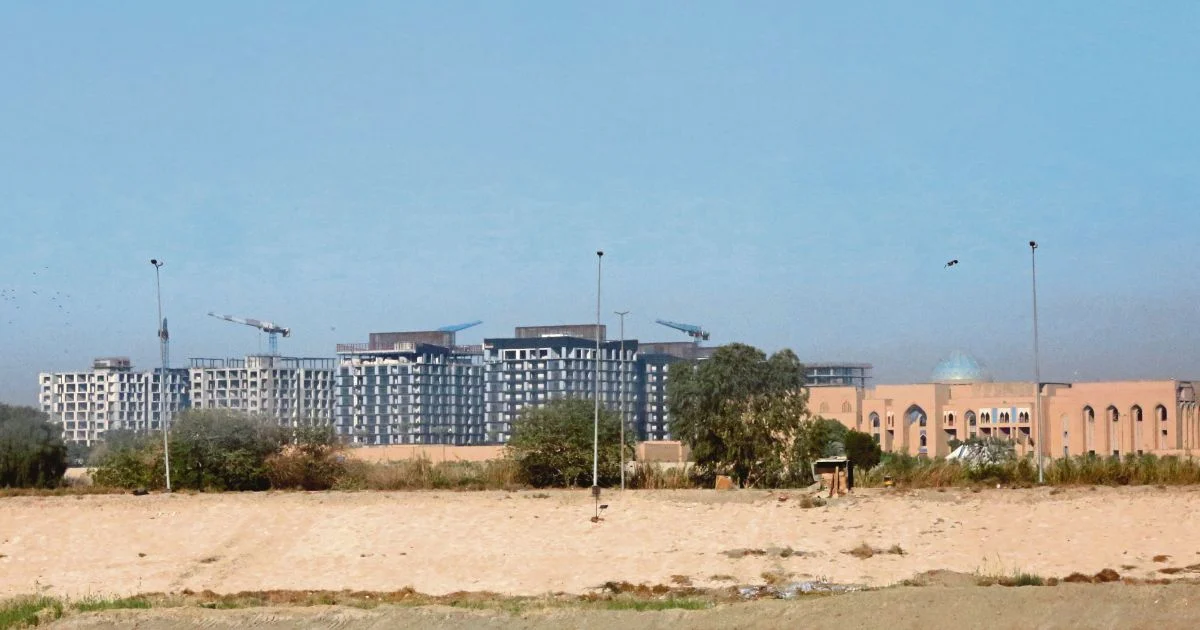
Iraqi security forces moved swiftly through Baghdad's heavily secured Green Zone during the early hours of Sunday, executing what observers describe as the most significant anti-corruption sweep in recent months. The operation netted numerous government officials alongside sitting Members of Parliament, all suspected of involvement in various forms of corruption. Heavy security deployments were visible throughout the fortified enclave as authorities conducted the coordinated arrests, marking a dramatic show of force against alleged wrongdoing at the highest echelons of Iraqi governance.
The Green Zone, which houses Iraq's primary government institutions including the parliament building and ministerial offices, represents one of the world's most heavily guarded administrative compounds. Its location in central Baghdad, combined with extensive concrete barriers, checkpoints, and military presence, has historically shielded senior officials from public scrutiny and accountability. That security apparatus itself became a tool of enforcement during Sunday's operations, allowing authorities to move decisively with minimal external interference or disruption to normal activities.
The timing and scale of these raids reflect growing domestic and international pressure on Baghdad to demonstrate concrete action against systemic corruption. Iraq ranks among the world's most corrupt nations according to Transparency International's Corruption Perceptions Index, with endemic graft undermining government legitimacy, draining public resources, and fueling public discontent. Citizens across Iraq have repeatedly protested against political elites whom they view as enriching themselves while basic services like electricity, water, and healthcare remain inadequate. For policymakers seeking to restore public confidence in institutions, high-profile arrests of corrupt officials represent an essential symbolic gesture, even as entrenched structural problems persist.
The involvement of parliamentarians in Sunday's operation carries particular significance within Iraq's political context. The Iraqi parliament includes members from numerous competing political blocs and religious factions, creating a complex landscape where personal allegiances and sectarian affiliations often supersede institutional loyalty or legal accountability. Arresting MPs simultaneously sends a message that no position or parliamentary immunity can shield officials from corruption investigations, while simultaneously raising questions about whether the enforcement mechanism itself operates fairly across different political factions.
For Malaysia and other Southeast Asian nations grappling with similar corruption challenges, Iraq's approach offers both lessons and cautionary tales. Anti-corruption drives in the region—whether in Malaysia's recent institutional reforms or Singapore's established mechanisms—have demonstrated that high-profile arrests, while important for public morale, must be accompanied by transparent investigation procedures and credible judicial processes. Without institutional safeguards preventing selective prosecution along factional lines, anti-corruption campaigns risk becoming tools for eliminating political rivals rather than genuine efforts to strengthen governance.
The security situation surrounding Sunday's operation underscores the complex relationship between security and governance in Iraq. The heavy military deployment required to arrest officials within the Green Zone itself illustrates how fragile institutional control remains in post-2003 Iraq. Unlike mature democracies where police forces conduct such operations as routine legal procedures, Iraq's security apparatus must be marshalled as though executing a major security operation, reflecting deeper questions about the state's capacity to enforce law evenly and safely.
Baghdad's political establishment includes members with deep ties to armed militias, foreign powers, and illicit revenue streams developed over decades of conflict and weak state capacity. Any comprehensive anti-corruption effort must therefore contend not merely with individual officials but with entrenched networks involving shadowy financial flows, intelligence agencies, and organized armed groups. Sunday's visible security presence suggests that authorities undertaking these arrests faced genuine risks of violent interference or armed retaliation, factors that rarely surface in comparable operations in more institutionally stable countries.
The international dimension of Iraq's corruption problem cannot be overlooked. Neighbouring Iran, Turkey, and Gulf states have historically leveraged corruption networks to extend political influence within Iraq. Major reconstruction contracts worth hundreds of millions of dollars have been distributed through opaque processes to politically connected entities, with substantial portions siphoned to external actors. Anti-corruption efforts limited to high-profile arrests of individual officials, while symbolically important, address symptoms rather than the underlying structural vulnerability that makes Iraq susceptible to such transnational corruption networks.
Previous anti-corruption campaigns in Iraq have produced mixed results, with arrested officials sometimes released through legal challenges, political pressure, or outright security force intervention. The sustainability of Sunday's operation therefore depends critically on whether detained officials face credible judicial proceedings rather than prolonged detention followed by release. International observers will closely monitor whether courts maintain independence in prosecuting cases and whether convictions withstand appeals and political pressure.
For regional security analysts and governance specialists, Iraq's anti-corruption trajectory remains inseparable from its broader struggle to consolidate state authority following the military defeat of ISIS. Building effective anti-corruption institutions requires simultaneous progress on multiple fronts: strengthening judicial independence, professionalizing security forces, establishing transparent financial oversight mechanisms, and reducing the political and militia-linked privileges that make corruption attractive in the first place. Sunday's operation represents one tactical move within a much longer institutional struggle.
The implications for Iraq's neighbours, particularly those experiencing similar governance challenges, extend beyond the immediate question of whether these raids will reduce corruption. They speak to the fundamental challenge of holding officials accountable in societies where state institutions remain contested, power is distributed across multiple armed actors, and transparent legal processes compete with informal networks of loyalty and coercion. How Baghdad's authorities follow through on Sunday's arrests will significantly influence both Iraq's governance trajectory and the confidence of Iraq's population in the possibility of institutional reform.

