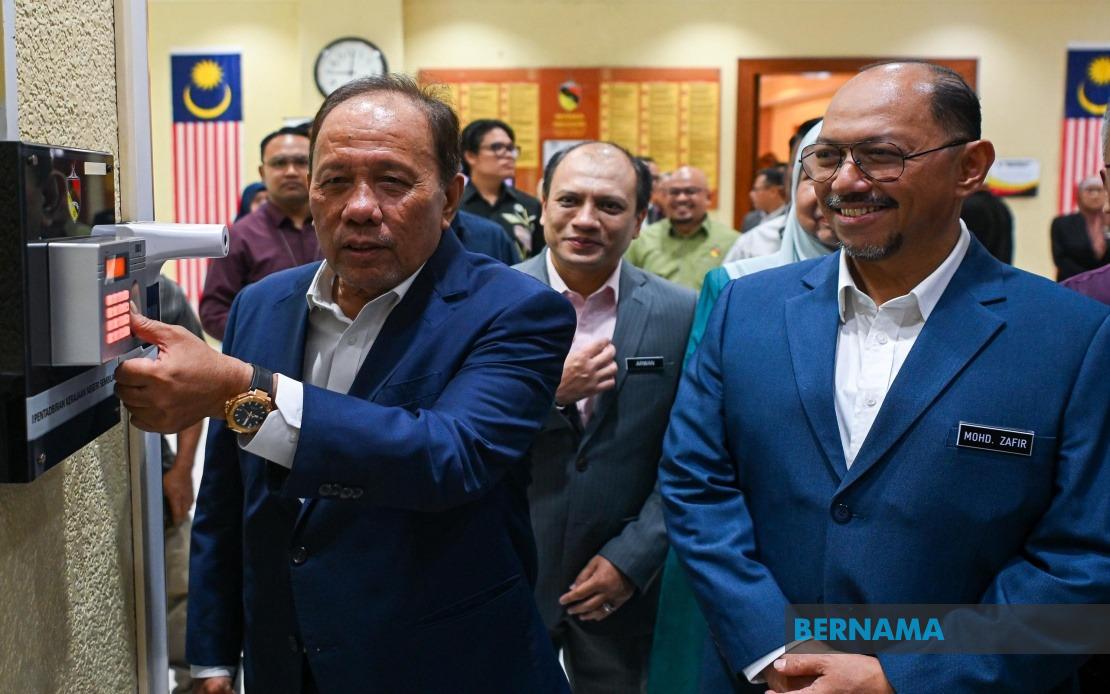
Datuk Ismail Lasim, fresh in his role as Negeri Sembilan Menteri Besar, has moved to counter criticism surrounding his elevation to the post, insisting that his appointment adhered strictly to established constitutional and administrative protocols. Speaking to journalists at Wisma Negeri in Seremban on August 4, the newly installed chief minister emphasised that the entire process unfolded in an orderly fashion and in full compliance with the state's prescribed procedures for such appointments.
The timing of Ismail's defence reflects growing questions about the mechanics of his appointment, particularly after Wawasan chairman Tan Sri Rais Yatim publicly raised concerns about the manner in which the position was filled. Rais Yatim's intervention introduced a discordant note into what appeared to be a routine transition of power, suggesting that the appointment process had strayed from conventional practice and that external actors may have wielded inappropriate influence over matters governed by Negeri Sembilan's customs and constitutional framework.
Ismail, who captured the Juasseh state seat during the recent Negeri Sembilan state election, underwent the formal swearing-in ceremony before Yang Dipertuan Besar of Negeri Sembilan Tuanku Muhriz Tuanku Munawir at Istana Besar Seri Menanti the previous Sunday. This ceremonial endorsement by the state's paramount ruler is a constitutionally essential step that lends legitimacy to such appointments, yet questions have persisted about the political negotiations and deliberations that preceded the formal investiture.
The electoral landscape that enabled Ismail's appointment reflects a complex political settlement in the state. Barisan Nasional captured 18 of the 36 state assembly seats in the election, whilst Perikatan Nasional secured seven seats. Together, these coalitions achieved the supermajority required to form government and select a chief minister without challenge from opposition parties. This commanding coalition strength suggests that Ismail's selection enjoyed substantial political backing across multiple parties and interest groups.
The fact that two-thirds of the state assembly aligns behind the governing coalitions carries implications for Ismail's administrative capacity and legislative authority. With such a comfortable majority, his government possesses considerable latitude to advance its policy agenda without navigating the constraints that typically confront narrow governments. However, the persistence of questions about his appointment process indicates that smooth mathematics do not always translate to smooth politics in Malaysian state-level governance.
Tan Sri Rais Yatim's decision to publicly scrutinise the appointment process deserves careful consideration. As chairman of Wawasan, a think tank with influence in intellectual and policy circles, his concerns carry weight among stakeholders who monitor constitutional propriety and administrative integrity. His specific allegations regarding external interference in matters pertaining to Negeri Sembilan's customs and constitutional provisions strike at the heart of federalism and state autonomy within Malaysia's constitutional architecture.
The question of external interference in state-level appointments touches on longstanding tensions within Malaysia's political system. State governments, whilst subordinate to the federal structure, retain significant autonomy over their own affairs. Any suggestion that federal actors or external interests have shaped a state appointment without proper consent of the state's constitutional authorities represents a breach of the federal bargain that underpins Malaysian governance. This explains why Ismail felt obliged to publicly defend the legitimacy of his appointment rather than letting the matter rest on procedural formalities alone.
For Malaysian and Southeast Asian observers of Malaysian politics, the controversy surrounding Ismail's appointment reveals the enduring contestation over how power transitions should occur within Malaysia's constitutional monarchy framework. Despite clear electoral results and coalition arithmetic, the absence of transparency around the decision-making processes that culminated in his selection created space for scepticism and questioning. In modern governance, legitimacy extends beyond formal procedure to encompass stakeholder confidence in the integrity of the process itself.
Ismail's public statement affirming the correctness of the appointment process serves multiple audiences. To fellow coalition members, it reassures them that their political investment in backing his candidacy rests on solid constitutional ground. To the public and civil society, it signals commitment to the rules and norms that structure Malaysian governance. To those who questioned the appointment, including Rais Yatim, it presents a defence rooted in procedural compliance rather than political argument. Whether this intervention successfully resolves the underlying concerns remains to be seen, as such questions about political process often linger in public consciousness long after formal denials have been issued.

