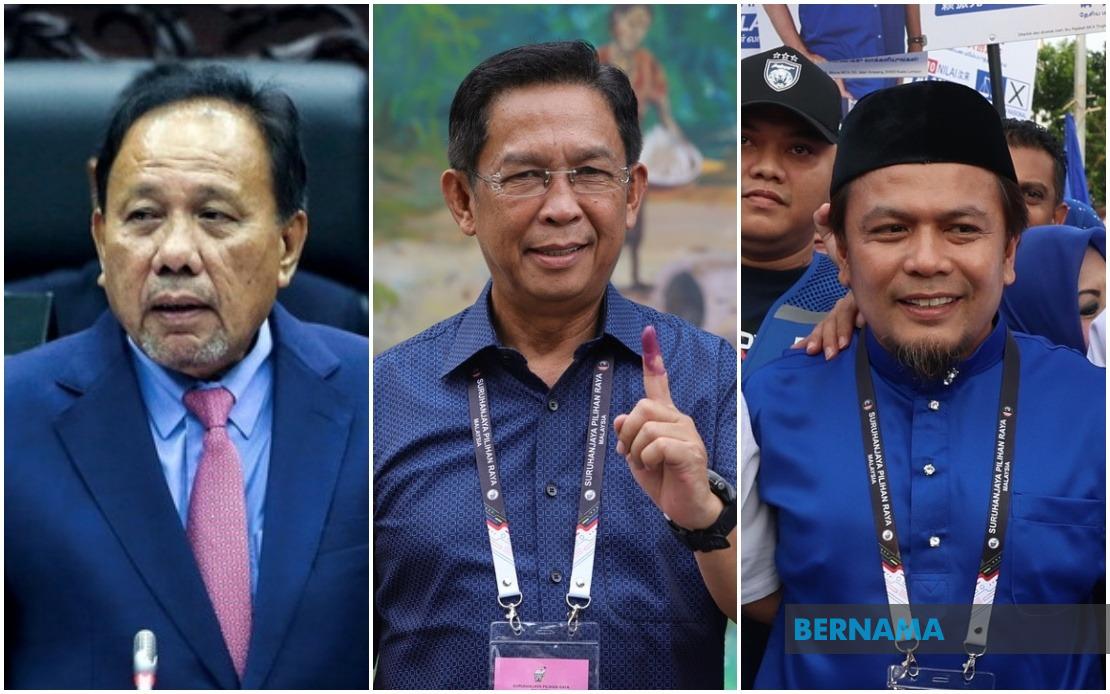
The race to lead Negeri Sembilan has narrowed to three prominent UMNO figures following Barisan Nasional's commanding performance in the 16th state election held on August 1. Datuk Ismail Lasim, the 67-year-old chief of Kuala Pilah UMNO division and a member of the party's Supreme Council, has emerged as one of the primary contenders for the role of Menteri Besar. His credentials were strengthened by his victory in the Juasseh state constituency, signalling considerable grassroots support in his electoral division and potentially within the broader party hierarchy.
The other two names circulating among political observers are Datuk Seri Jalaluddin Alias and Datuk Mohd Asna Amin. Jalaluddin, aged 62, holds dual responsibilities as the Negeri Sembilan UMNO liaison chairman and Member of Parliament for Jelebu, and consolidated his political standing by successfully defending his Pertang state seat. Asna Amin, at 47 the youngest of the three candidates, brings a different profile to the table as the former state deputy speaker who secured victory in the Lenggeng constituency. The presence of three viable candidates reflects the depth of political talent within UMNO's Negeri Sembilan machinery, though it also underscores the delicate balancing act required in determining leadership.
Barisan Nasional's electoral success has fundamentally altered the political landscape in the state. The coalition captured 18 of the 36 state seats contested, while Perikatan Nasional secured 11 seats. Combined, these two coalitions command a two-thirds supermajority, granting them considerable legislative power and ensuring stability in state governance. This commanding position contrasts sharply with the fractious political environment that preceded the dissolution of the assembly in June, when internal tensions within the previous BN-Pakatan Harapan coalition government had reached a breaking point.
The appointment process itself reflects Malaysia's constitutional monarchy framework. BN chairman Datuk Seri Dr Ahmad Zahid Hamidi presented three names to Tuanku Muhriz, the Sultan of Negeri Sembilan, at Istana Hinggap in Seremban on the evening of August 1. The Sultan's selection from these three candidates would occur before the oath-taking ceremony scheduled for approximately 11:00 am on August 2 at Istana Besar Seri Menanti in Kuala Pilah. This constitutional process, whereby the Ruler formally appoints the Chief Minister from candidates recommended by the winning coalition, remains a cornerstone of Malaysia's system of parliamentary democracy within a monarchical framework.
The political upheaval that necessitated this election originated in April 2024, when Negeri Sembilan BN abruptly withdrew its support from incumbent Menteri Besar Datuk Seri Aminuddin Harun. This withdrawal shattered the fragile PH-BN coalition that had governed the state following the previous election, in which Pakatan Harapan had won 17 seats compared to BN's 14 and PN's five. The decision to withdraw support set off a chain reaction culminating in the dissolution of the State Legislative Assembly on June 5, triggering the election campaign that has just concluded.
For Malaysian political observers, the Negeri Sembilan outcome carries significance beyond the state's borders. The performance demonstrates BN's resurgence as an electoral force following its 2018 federal election defeat, though the coalition's consolidation of power comes against a backdrop of internal manoeuvring and realignments. The decisive nature of the victory—securing a two-thirds majority—also reflects voter sentiment and ground-level organisational effectiveness. Understanding these dynamics becomes particularly important as Malaysia approaches its next federal election cycle, with state-level contests frequently serving as indicators of shifting political preferences.
The three candidates each bring distinct advantages to the position. Ismail Lasim's Supreme Council membership suggests influence at the national party level, potentially facilitating resource allocation and federal support for Negeri Sembilan's development agenda. His age and experience within UMNO structures indicate a traditional approach to governance. Jalaluddin Alias combines state-level organisational responsibility with parliamentary representation, bridging state and federal politics and potentially enhancing Negeri Sembilan's advocacy at the national level. Asna Amin's relative youth and previous role as deputy speaker position him as a potentially forward-looking administrator, though his shorter tenure in senior positions may be weighed against the other candidates' established track records.
The selection process occurring today will likely be influenced by multiple considerations beyond electoral performance. Factional dynamics within UMNO, considerations of regional representation across Negeri Sembilan's diverse districts, and the incoming Menteri Besar's capacity to govern with the support of Perikatan Nasional representatives will all factor into the calculation. The precedent of coalition governments in Malaysian states, where the leading coalition partner's nominee may require support from smaller coalition partners or independents, adds another layer of complexity to leadership selection.
Looking forward, the new Menteri Besar will inherit a state administration facing both opportunities and challenges. Economic diversification, infrastructure development, and managing the diverse needs of Kuala Lumpur's neighbouring state will dominate the agenda. The strong mandate provided by the two-thirds majority should provide legislative stability, though the need to maintain PN's cooperation within the coalition framework will require continuing attention to inter-coalition relations.
The outcome also reflects ongoing evolution in Malaysian electoral politics. The ability of BN to recapture ground lost in 2018, particularly in a state adjacent to the federal capital where urban and semi-urban constituencies predominate, suggests adaptation to changing voter preferences. The simultaneous strength of PN, securing 11 seats despite facing a well-resourced BN campaign, indicates that the three-coalition structure characterising contemporary Malaysian politics remains resilient and competitive.

