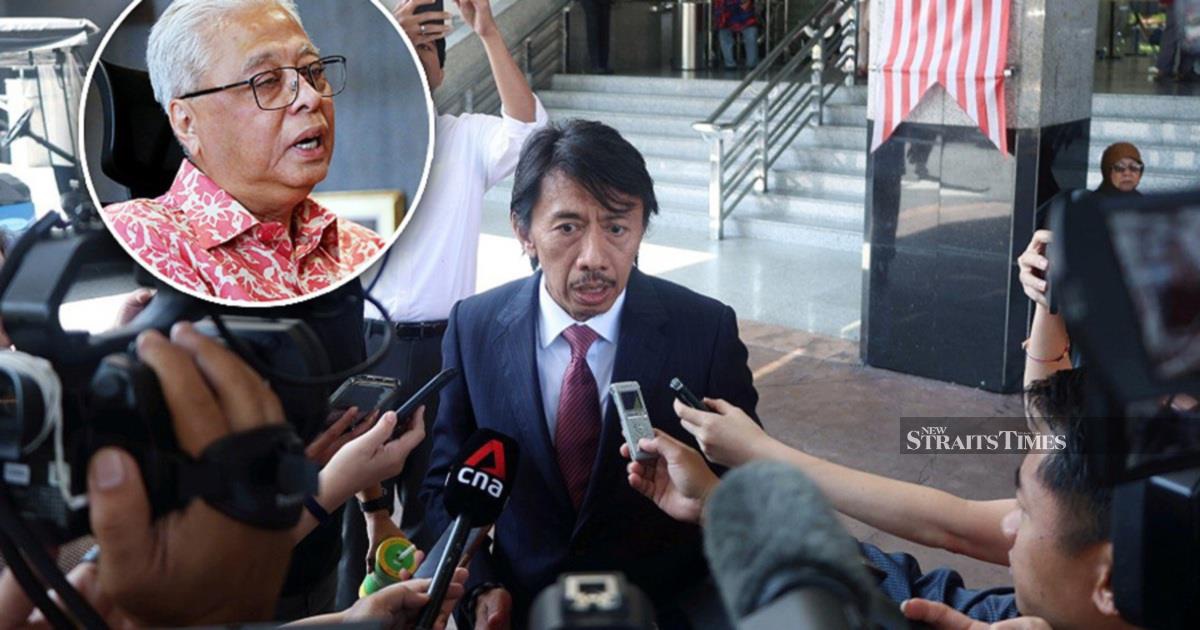
Former Prime Minister Datuk Seri Ismail Sabri Yaakob is pressing ahead with his legal defence despite grappling with health difficulties, as he prepares to confront serious allegations under the Malaysian Anti-Corruption Commission (MACC) Act in the coming weeks. The Umno politician's determination to vindicate himself stands as a significant moment in Malaysia's ongoing anti-corruption efforts, particularly given his previous tenure at the nation's highest office.
The upcoming proceedings represent a critical juncture for Ismail Sabri, who served as Prime Minister from August 2021 until November 2022. His willingness to face the charges directly, notwithstanding personal health challenges, signals a confidence in his legal position or at minimum a commitment to address the allegations publicly through the courts rather than seeking postponements or avoiding the process. This contrasts sharply with the political culture where some figures facing similar circumstances have pursued various delaying tactics or sought medical exemptions.
The MACC charges carry substantial weight within Malaysia's political and legal landscape. Accusations under the MACC Act typically involve serious matters of governance and abuse of public authority, making the proceedings inherently high-profile and consequential for the former premier's political legacy and personal reputation. The agency, established to investigate corruption allegations at all levels of government and the public sector, does not take action lightly, suggesting the evidence presented to proceed with charges met established legal thresholds.
Ismail Sabri's health complications introduce an additional dimension to this unfolding narrative. Medical issues can complicate legal proceedings by affecting an individual's capacity to participate fully in their defence, potentially creating grounds for adjournments or case postponements. The former premier's apparent refusal to allow such circumstances to impede his legal process demonstrates either remarkable resolve or perhaps recognition that further delays might appear to underscore weakness in his position.
For Malaysian observers, the case encapsulates ongoing tensions between political accountability and the mechanisms designed to ensure integrity in public service. The nation has witnessed several high-profile corruption investigations targeting senior politicians in recent years, creating a backdrop of heightened scrutiny regarding governmental probity. Ismail Sabri's case therefore extends beyond the individual circumstances to reflect broader societal expectations about how those wielding executive power should answer for their conduct.
The timing of these charges also invites examination of Malaysia's political dynamics during the period when Ismail Sabri held the premiership. His government faced considerable parliamentary challenges with a slim majority and frequent internal party dissension, creating a complex governance environment that may be relevant to understanding the alleged infractions now being prosecuted. The MACC's investigations typically span considerable periods, suggesting that whatever conduct prompted the current charges occurred over months or years.
Ismail Sabri's decision to confront the allegations rather than seek refuge in procedural manoeuvres may influence public perception of his character, regardless of the eventual legal outcome. In Malaysia's politically charged atmosphere, how public figures respond to criminal accusations—whether through transparency and active engagement or through obfuscation and avoidance—often shapes their standing among voters and party loyalists. His stance could therefore carry implications extending well beyond this single case.
The implications for Malaysian politics are substantial. Ismail Sabri maintains considerable influence within Umno, and the outcome of his trial could reverberate through party structures and coalition arrangements that shape the nation's political landscape. His potential vindication or conviction will send powerful signals about accountability for senior politicians and about the MACC's independence and effectiveness as an institution.
Regionally, Malaysia's handling of high-profile corruption cases involving former leaders attracts scrutiny from neighbouring Southeast Asian nations navigating similar questions about governance and accountability. The region's various democracies and hybrid political systems grapple constantly with balancing political competition against the need to demonstrate that institutions genuinely function independent of partisan influence.
For Ismail Sabri's supporters, his willingness to face the legal process despite health adversity represents admirable fortitude and confidence in his eventual exoneration. Critics, meanwhile, may view the charges themselves as vindication that anti-corruption mechanisms are functioning as intended, ensuring that no one—regardless of former position—escapes scrutiny for alleged misconduct. Both interpretations underscore the polarised nature of Malaysian political discourse.
The coming weeks and months will prove crucial as the legal proceedings unfold. The MACC's case construction, the defence strategy developed by Ismail Sabri's legal team, and the court's ultimate findings will all contribute to perceptions about justice, accountability, and institutional integrity in contemporary Malaysia. Whatever emerges from this process will inevitably inform public confidence in both the political system and the mechanisms supposedly designed to police it.
As Malaysia continues wrestling with questions about governance standards and corruption prevention, Ismail Sabri's case serves as a very public test of whether the nation's institutions can credibly investigate and adjudicate allegations against even the most powerful former office-holders. His determination to proceed despite personal hardship may ultimately matter less than what the courts ultimately determine about the substance of the accusations themselves.

