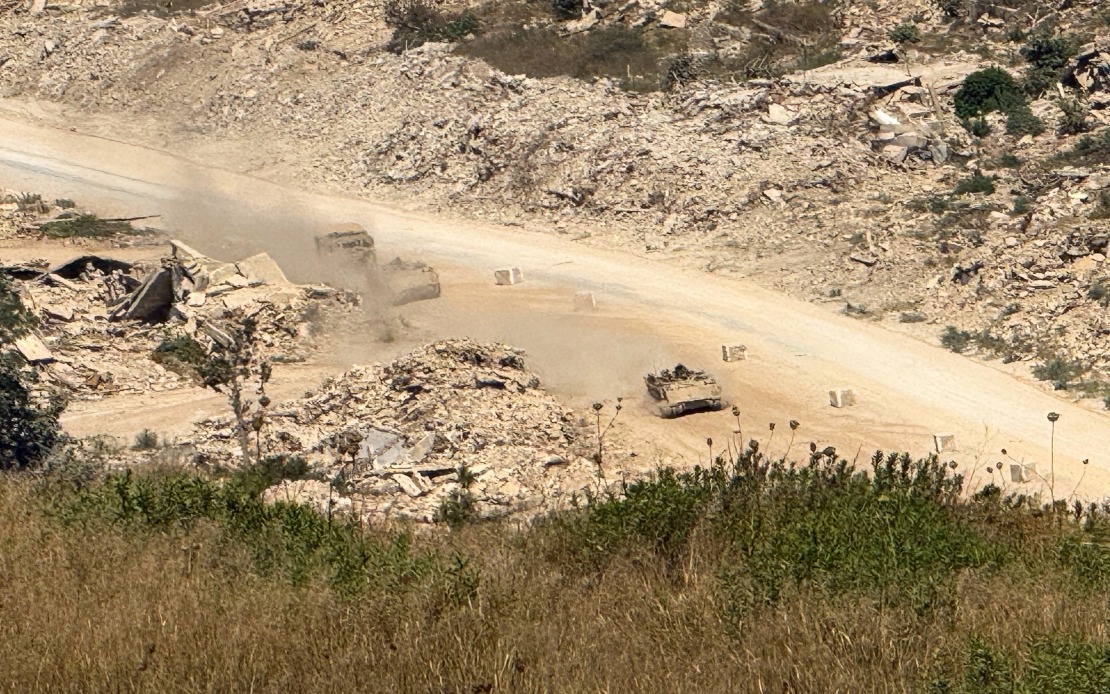
The Israeli military has maintained active combat operations across southern Lebanon, according to reports from the Lebanese National News Agency, conducting coordinated strikes involving artillery, ground forces, and aerial reconnaissance across multiple southern governorates. The operations represent a continuation of military pressure in the region despite diplomatic efforts to stabilise the situation through international mediation, raising questions about whether military and political tracks can run in parallel or whether one side remains committed to expansion rather than de-escalation.
Machine-gun fire targeted Wadi al-Salouqi in Nabatieh governorate while the town of Mansouri experienced overnight artillery bombardment and subsequent explosions, according to Lebanese authorities monitoring the situation. The scope of reported incidents suggests coordinated military activity rather than isolated engagements, with operations spanning multiple population centres and encompassing different weapon systems and tactical approaches designed to maintain pressure across a wide front.
In Nabatieh itself, a significant explosion was recorded in Kfar Tebnit, while the outskirts of Nabatieh al-Fawqa faced intermittent artillery barrages emanating from Israeli positions. The choice of targets spanning both urban areas and outlying districts indicates operations designed to establish control over territory rather than respond to specific military threats, a distinction that carries implications for civilian populations and the stability of border regions in southern Lebanon.
Additional operations extended to the town of Khiam, where Israeli forces reportedly burned residential structures, and to Mays al-Jabal's western approaches, where ground forces advanced accompanied by targeted artillery fire. Meanwhile, unmanned aircraft conducted low-altitude reconnaissance missions over the Zahrani area, establishing aerial surveillance capabilities across the operational zone. These varied tactical operations suggest a comprehensive approach to consolidating Israeli presence rather than responding to discrete security incidents.
The escalation occurs amid what Lebanese officials characterise as positive momentum in diplomatic negotiations. Lebanese President Joseph Aoun stated during a recent Cabinet session that negotiations concluded Thursday in Rome under United States sponsorship had yielded "positive progress" on critical issues including border demarcation and the status of detained individuals. The talks represented the seventh round of direct Lebanese-Israeli engagement focused on implementing a framework agreement established on June 26, suggesting sustained international commitment to managing the dispute through negotiated settlement.
That framework agreement envisions a structured Israeli withdrawal from Lebanese territory through designated "pilot zones" while the Lebanese military expands its presence and armed groups, principally Hezbollah, undergo disarmament processes. The agreement theoretically creates conditions for stability by addressing territorial control, military capabilities, and national security arrangements through coordinated international oversight. However, the persistence of military operations suggests either that implementation remains incomplete or that one party views continued military advantage as enhancing its negotiating position.
The broader conflict chronology provides essential context for understanding current dynamics. Israeli military operations in Lebanon began on March 2 and have resulted in significant humanitarian consequences, with Lebanese authorities documenting 4,335 deaths, 12,277 wounded, and displacement exceeding one million people. These figures represent one of the most significant humanitarian crises in the Middle East in recent years, yet diplomatic efforts continue attempting to establish frameworks for cessation despite the scale of destruction and grievance that accumulates with each military operation.
Israeli forces currently occupy portions of southern Lebanese territory, some continuously held for decades while others were recently captured during the current campaign. Israeli military units have penetrated more than 10 kilometres into Lebanese territory, establishing control over significant areas beyond the internationally recognised border. This territorial depth complicates negotiating frameworks, as it requires agreed mechanisms for withdrawal, verification of disarmament, and international guarantees against re-occupation that address the security concerns of both populations.
The pattern of continued military operations alongside diplomatic engagement reflects a strategy some analysts describe as creating "facts on the ground" that strengthen negotiating positions. By maintaining military pressure and expanding territorial control even as diplomatic teams negotiate, one party may seek to establish conditions that subsequent agreements recognise rather than reverse. This dynamic creates particular challenges for mediation efforts, as each military operation potentially raises the baseline demands of the party suffering the incursion.
For Malaysian observers and regional stakeholders, these developments illustrate broader patterns affecting Middle Eastern stability. The persistence of territorial disputes, the role of international mediation through major powers, and the challenges of transforming military advantage into lasting political settlement remain central to understanding conflicts throughout the region. Southeast Asian nations maintain strategic interests in regional stability given maritime trade routes, energy security, and the precedents established through conflict resolution mechanisms.
The Israeli occupation of Palestinian and Syrian territories alongside the Lebanese situation creates a complex regional environment where multiple unresolved disputes interconnect. Israel's continued refusal to withdraw from these territories or accommodate international resolutions calling for Palestinian statehood establishes patterns that affect negotiations across multiple theatres. Regional states must navigate these complexities while maintaining diplomatic relationships and pursuing their own security interests.
The diplomatic process, despite military escalation, continues operating through international channels with American mediation maintaining engagement between parties. Success requires both military operations to cease and substantive agreement on implementation mechanisms including international verification, which represents a significant undertaking given the breakdown of trust demonstrated by concurrent military activity. The outcome of ongoing negotiations will substantially influence regional security dynamics and the prospects for similar disputes elsewhere in the Middle East.

