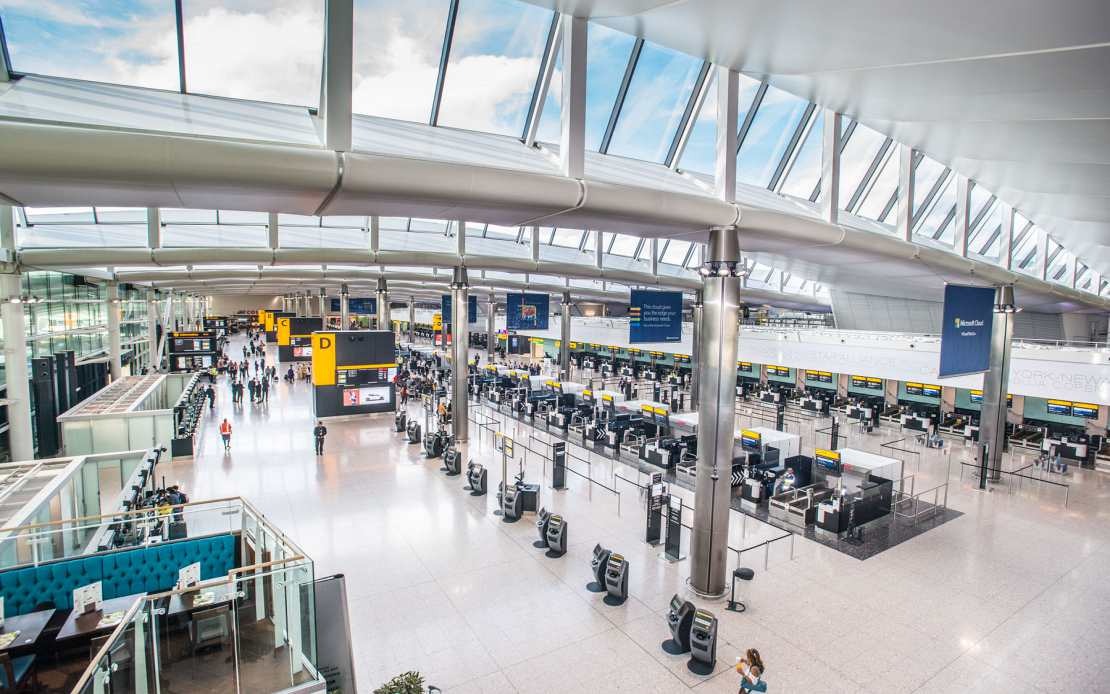
Istanbul Airport has reclaimed the crown as Europe's busiest aviation hub, surpassing London's Heathrow with 8.15 million passengers in July—a reversal that has intensified calls for British infrastructure investment. The western London airport, which saw just 7.86 million travellers during the same month, now faces renewed pressure to expand as it struggles to maintain its competitive edge in Europe's fiercely contested aviation market.
Heathrow's loss of its top-ranking position represents a significant setback for Britain's aviation ambitions. The airport had held Europe's busiest status continuously from 1996 through 2019, a 23-year reign that underscored London's dominance as a global aviation hub. The pandemic briefly disrupted this streak in 2020, but Heathrow recovered the title in 2023 and held it until this latest data was released, suggesting the Turkish challenge is not merely a temporary fluctuation but rather reflects deeper structural challenges in how European airports are evolving.
The comparative performance metrics reveal troubling momentum shifts. Heathrow's July passenger numbers declined 1.5 percent year-on-year, a contraction that airport management attributes partly to regional instability. The United States-Iran conflict has particularly impacted routes serving West Asia, with Heathrow reporting a concerning 20.2 percent year-on-year drop on these services. Meanwhile, Istanbul's growth trajectory—a 2.3 percent annual increase—demonstrates how geopolitical advantages and expanding Middle Eastern connectivity are reshaping European aviation patterns.
Geographic and strategic positioning appears critical to understanding Istanbul's rise. Positioned at the crossroads between Europe and Asia, Istanbul benefits from increasingly robust connections to Middle Eastern markets and expanding global routes. The Turkish airport serves as a natural hub for Gulf carriers and Asian airlines seeking European gateways, a competitive advantage that traditional Western European hubs are finding increasingly difficult to counter. For regional readers across Southeast Asia, this dynamic underscores how aviation hubs are shifting based on connectivity patterns and geopolitical alignments rather than historical precedent alone.
Heathrow's operational constraints underscore the urgency of its expansion ambitions. Currently running two runways at near-maximum capacity, the airport has proposed a third runway that would theoretically enable it to handle 150 million passengers annually—a capacity increase of roughly 60 percent. Airport management has characterised the Turkish displacement as vindication of their expansion case, arguing that without additional infrastructure, Britain risks ceding its position as Europe's premier aviation gateway to competitors better positioned for future growth.
The British government's approach to this challenge has been cautious but increasingly supportive. Transport Secretary Heidi Alexander launched a consultation in June on revised expansion policies, establishing the framework for potential approval. Former Chancellor Rachel Reeves signalled determination to begin construction during the current parliamentary term, with 2035 set as a target completion date. This timeline reflects the considerable technical and political hurdles that must still be cleared before earth can be turned on Britain's most contentious infrastructure project.
Political divisions over expansion priorities, however, remain pronounced. Prime Minister Andy Burnham—who dismissed Reeves—has previously articulated concerns that Heathrow expansion diverts critical investment away from northern England, potentially exacerbating regional economic disparities. This tension between London's global competitiveness and broader British regional development priorities reflects a fundamental strategic question about national investment allocation that extends beyond aviation policy into broader economic inequality debates.
Despite these headwinds, Heathrow has demonstrated its enduring attractiveness to carriers. July marked the airport's busiest single day of the year, with 267,000 passengers travelling on July 19 as summer holidays commenced. Several new carriers commenced operations during the month, including ITA Airways from Italy, Alaska Airlines from the United States, and Riyadh Air from Saudi Arabia. These additions suggest sustained demand for Heathrow slot access, even within current capacity constraints, indicating that the airport's competitive position remains formidable despite its recent ranking loss.
Heathrow's chief executive Thomas Woldbye framed the airport's position optimistically, describing the summer season as progressing strongly while emphasising ambitions for further growth. He stressed that expansion would secure Britain's status as host to Europe's leading aviation hub, potentially unlocking additional trade, investment, and tourism benefits through enhanced connectivity. The implicit argument—that constrained capacity risks not merely losing rankings but forgoing economic opportunities—forms the core rationale for expansion advocates navigating bureaucratic processes.
For Southeast Asian business interests and travellers, Heathrow's competitive struggles carry practical implications. The airport remains a crucial gateway for connections to and from the region, and reduced competitiveness could affect route availability, frequency, and ultimately airfares on key services. Istanbul's rise as a competing hub also represents an alternative routing option for regional travellers, potentially offering different pricing and scheduling advantages depending on their origins and destinations.
The broader context suggests that European aviation hubs face intensifying competition from increasingly sophisticated competitors, particularly those strategically positioned on intercontinental routes. Istanbul's displacement of Heathrow, while headline-grabbing, reflects longer-term structural shifts in global aviation patterns rather than representing a permanent repositioning. Nevertheless, it has crystallised debate over whether Britain's political and regulatory systems can respond with sufficient urgency to infrastructure challenges that rivals are addressing more decisively.
As the consultation period progresses and the British government evaluates expansion approval, the stakes extend beyond passenger numbers and runway capacity. The decision will signal whether Britain remains committed to maintaining world-class aviation infrastructure or whether regional equity concerns and political caution will constrain its largest airport's ability to compete. Istanbul's ascendancy provides an uncomfortable reminder that competitive advantage in aviation cannot be assumed permanently—it must be actively defended through investment and modernisation.

