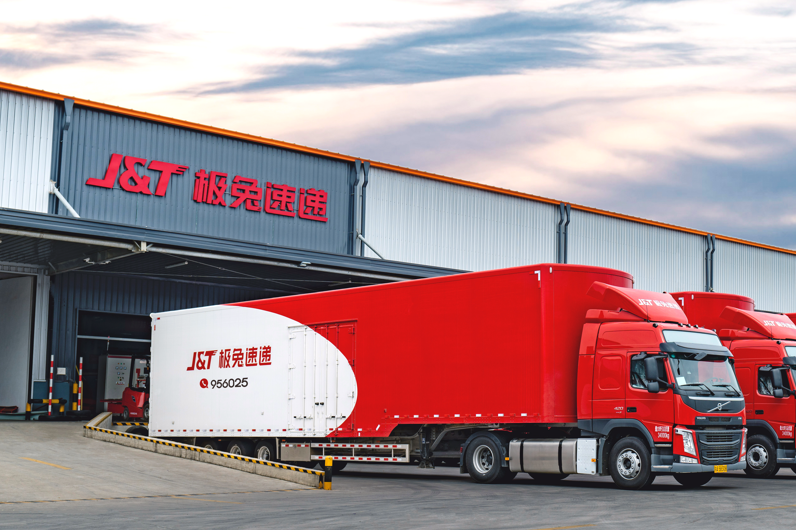
J&T Global Express Ltd, the Hong Kong-listed logistics service provider, has reached an unprecedented operational scale as its average daily parcel volume crossed the 100 million threshold for the first time during the second quarter of 2026. The milestone underscores the company's transformation from a regional player into a genuine global operator, capitalising on surging e-commerce demand across multiple continents and reshaping the international express delivery landscape in ways that have particular relevance for Southeast Asian businesses and consumers.
The company's overall throughput during the April-to-June period reached 9.18 billion parcels, representing 24.2 percent expansion compared to the same quarter a year earlier. More significantly, non-China parcels exploded upward by 66.9 percent to 2.97 billion units, now representing close to one-third of J&T Express's entire global operations. This dramatic rebalancing of the company's geographic footprint reflects a fundamental strategic shift away from over-reliance on domestic Chinese volumes and towards diversified international markets where growth trajectories remain steeper and competitive dynamics less saturated.
Within the broader international expansion, Southeast Asia has emerged as the undisputed growth engine. The region processed 2.76 billion parcels during Q2, a 63.2 percent year-on-year increase, translating to an average of 30.3 million packages daily across the ten-nation region. By the end of the first half, cumulative Southeast Asian volumes reached 5.52 billion, up 71.2 percent annually. For Malaysian readers, this expansion carries direct implications: improved logistics infrastructure, faster delivery times, and intensified competition among express providers should benefit consumers through better service standards and pricing pressure. The surge also reflects the region's emerging middle class rushing toward online shopping, with J&T Express positioning itself as a critical enabler of that consumption shift.
The company has substantially upgraded its physical infrastructure to accommodate this explosive demand. As of June 30, 2026, Southeast Asian sorting centres increased by six facilities to reach 127 installations across the region, while the count of automated sorting lines grew by eleven to seventy-five units. This infrastructure investment signals confidence in sustained long-term growth rather than speculative expansion. Automated sorting technology proves particularly crucial in the region where wage inflation and labour availability challenges make mechanisation economically attractive, allowing J&T Express to maintain competitive pricing while improving operational margins. For Malaysian businesses, this infrastructure development means faster intra-regional supply chains and more efficient cross-border e-commerce capabilities.
China, despite remaining J&T Express's largest single market, showed a more moderate expansion pace that reflects saturation dynamics within the world's most competitive delivery marketplace. Chinese parcel volume during Q2 climbed 10.6 percent to 6.21 billion units, averaging 68.2 million daily. The company has responded through network optimisation and customer portfolio refinement rather than sheer volume growth, acknowledging that further expansion in China will come through efficiency gains and margin improvement rather than raw volumetric increases. Domestically, Chinese sorting lines grew by eight to reach 346 units during the first half-year, supporting incremental volume growth and throughput acceleration. This bifurcated strategy—aggressive expansion overseas while consolidating domestic Chinese operations—represents mature portfolio management in a maturing home market.
J&T Express's incursion into less penetrated markets outside its traditional footprint demonstrates bold geographic diversification. In Latin America and the Middle East combined, second-quarter parcels surged 136.5 percent year-on-year to 211 million units. The company has deliberately deepened partnerships with major e-commerce platforms in these regions while aggressively building cross-border logistics capabilities. These emerging markets represent greenfield opportunities where J&T Express can establish market position ahead of intensifying competition, particularly as Chinese e-commerce enterprises expand globally and demand reliable logistics partners operating across multiple jurisdictions.
The company's ambitious international strategy has attracted attention from major investment banks. Morgan Stanley recently upgraded J&T Express to overweight status, reasoning that the company possesses stronger growth prospects than domestic Chinese peers precisely because of its geographic diversification strategy. The bank specifically highlighted Southeast Asia and South America as regions where underlying e-commerce expansion rates exceed global averages, providing J&T Express with secular tailwinds that pure-play Chinese logistics companies cannot access. This analyst endorsement provides institutional validation for what management has been executing operationally over multiple quarters.
For Southeast Asian markets particularly, J&T Express's expansion represents a significant structural development in regional logistics architecture. The company's willingness to invest heavily in automated infrastructure, expand workforce capacity, and establish permanent operational presences contrasts with smaller operators relying on fragmented partnerships. Malaysian readers and businesses should recognise that this competitive dynamic will likely drive service quality improvements, cost pressures that benefit shippers, and technological adoption that modernises the region's logistics sector. As J&T Express scales across Southeast Asia, it simultaneously raises competitive benchmarks that force other operators to innovate or exit.
The company's trajectory also reflects broader globalisation dynamics within the Chinese technology and logistics sectors. Rather than remaining confined to domestic growth opportunities constrained by market maturity and regulatory scrutiny, J&T Express has successfully exported its operational model and technological capabilities to emerging markets where demand growth rates dwarf those available in China. This pattern of Chinese companies evolving into genuine multinational enterprises increasingly characterises technology, logistics, and e-commerce sectors across Asia, reshaping regional competitive landscapes and creating winners who combine scale advantages with geographic diversification.

