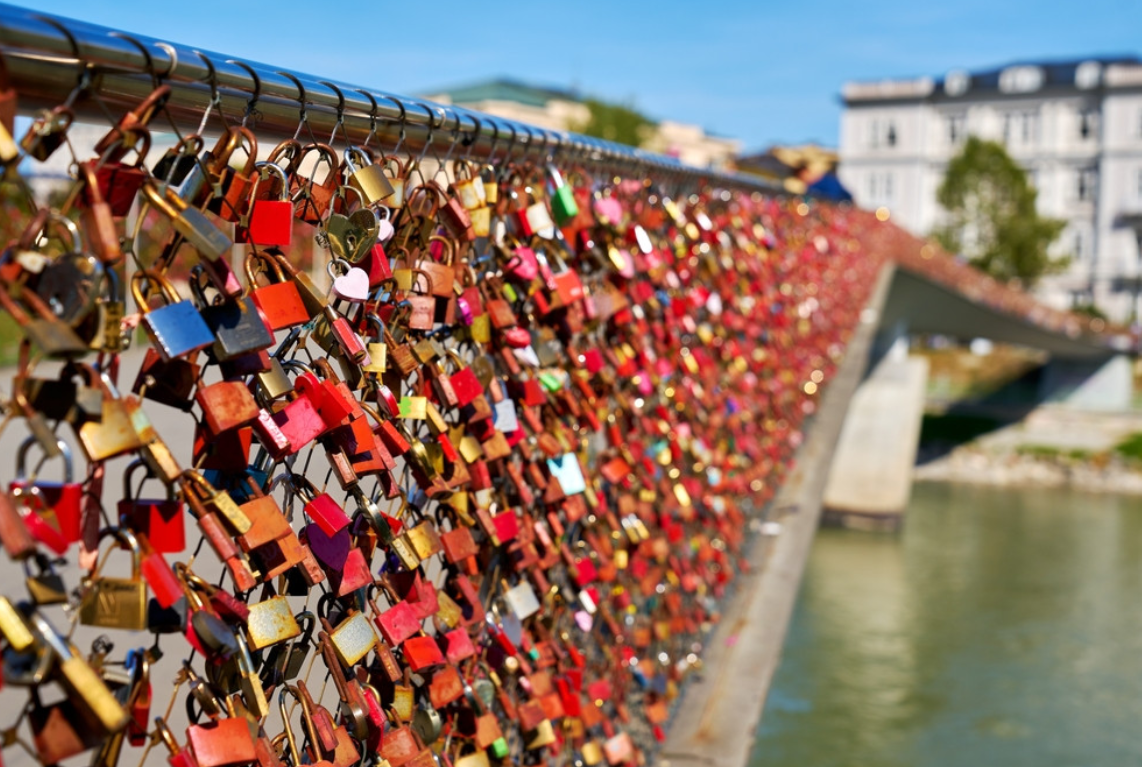
Jakarta's administration has unveiled plans to construct several decorative pedestrian bridges featuring 'love lock' installations along a major South Jakarta corridor, reigniting debate about how cities should allocate limited public resources between aesthetic enhancements and functional infrastructure improvements. Governor Pramono Anung's proposal, inspired by similar romantic attractions in Paris and Seoul, aims to transform stretches of Jl. Rasuna Said by adding three or four bridges spanning the Cideng River and connecting to Jl. Kuningan Persada near the Corruption Eradication Commission headquarters. The administration has committed Rp 91 billion (US$5 million) to the broader revitalisation of the 3.8-kilometre thoroughfare, a heavily trafficked business corridor that requires sidewalk improvements and removal of obsolete monorail infrastructure abandoned since the early 2000s.
According to special gubernatorial staffer Cyril Raoul "Chico" Hakim, the bridge project represents the administration's commitment to creating accessible public spaces with contemporary design sensibilities. The initiative deliberately targets younger demographics, with officials suggesting that couples and young visitors would congregate at these bridges to attach commemorative padlocks, thereby creating vibrant, people-centric spaces within one of Jakarta's busiest commercial zones. City authorities framed the project as part of a comprehensive effort to humanise the urban environment and provide gathering points beyond the typical commercial establishments that dominate the area. However, the administration has not yet finalised budget allocations for the bridge installation itself, as the project remains in preliminary design stages pending detailed engineering assessments.
Criticism emerged swiftly from both residents and urban development specialists who questioned the strategic wisdom of the investment. Karlina, a 27-year-old office worker employed nearby, acknowledged the bridges' potential as novel attractions but remained unconvinced they would attract genuine foot traffic in a predominantly corporate district. She articulated a generational perspective, suggesting that younger Jakartans prioritise free, easily accessible gathering spaces connected by reliable public transit systems rather than isolated Instagram-worthy installations. Her observation reflects broader patterns in how urban youth navigate and perceive public spaces, particularly in contexts where discretionary time and transportation costs represent genuine constraints for many workers commuting to the central business district.
Urban planning scholar Trubus Rahadiansyah characterised the love lock bridge concept as fundamentally misaligned with the corridor's actual transportation ecology and pedestrian needs. He emphasised that Jl. Rasuna Said functions primarily as a vehicle artery rather than a walkable district, rendering this particular location unsuitable for attracting sustained foot traffic regardless of aesthetic improvements. From Rahadiansyah's perspective, the project exemplifies a troubling pattern wherein city administrations prioritise symbolic, media-friendly developments that generate positive headlines over infrastructure addressing genuine public safety deficiencies and mobility challenges. He pointed specifically to pedestrian safety at railway level crossings as a pressing concern that demands urgent investment, having witnessed how inadequate crossing infrastructure contributed to catastrophic incidents.
The expert invoked the April collision between a Commuter Line train and the Argo Bromo Anggrek intercity service in Bekasi, West Java, which resulted in 16 deaths and injured at least 91 passengers, as a stark reminder of infrastructure failures with life-or-death consequences. Investigation revealed that the collision followed a separate incident in which a commuter train struck an electric vehicle immobilised at a level crossing, demonstrating how inadequate safety mechanisms create cascading hazards within Jakarta's complex transportation network. Rahadiansyah noted that numerous railway crossings throughout the metropolitan area remain unequipped with proper gates and protective barriers, representing a chronic vulnerability that persists despite repeated incidents. He argued compellingly that bridge construction and upgraded safety infrastructure at railway crossings constitute far more pressing infrastructure priorities than amenities built primarily to enhance visual appeal.
City councillor Kevin Wu from the Indonesian Solidarity Party (PSI) amplified concerns about equity and resource allocation within Jakarta's development framework. Wu called for transparent public review of the love lock bridge project, emphasising that municipal budgets should predominantly serve residents' fundamental requirements rather than concentrating resources on flagship aesthetic initiatives. He highlighted disparities in development across Jakarta's diverse districts, noting that residents in West, East, and North Jakarta struggle with basic infrastructure deficiencies including inadequate sidewalks, insufficient pedestrian crossing protections, and limited green spaces. Wu's intervention reflects broader political anxiety among reform-minded officials that Jakarta's development trajectory risks exacerbating spatial inequalities by concentrating attractive public amenities in commercially significant central zones while neglecting peripheral areas where working-class and middle-income residents reside.
The love lock bridge controversy illuminates ongoing tensions within Southeast Asian cities regarding development philosophy and budgetary priorities. Jakarta's experience resonates across the region as administrations in Manila, Bangkok, Hanoi, and other major metropolitan centres simultaneously pursue world-class urban branding initiatives while confronting chronic deficiencies in basic pedestrian infrastructure, public transportation, and safety systems. The debate reflects fundamental questions about governance legitimacy and public resource stewardship during periods of constrained municipal finances. Cities throughout Southeast Asia face similar pressures to enhance global competitiveness and attract international investment and tourism through distinctive public spaces, yet simultaneously grapple with infrastructure maintenance backlogs and safety concerns that directly affect daily quality of life for ordinary residents.
The Cideng River project also illustrates how beautification initiatives can inadvertently marginalise concerns about functional accessibility and inclusive public space design. While romantic installations may enhance visual interest and generate positive social media engagement, critics contend they represent a narrow conception of public value that privileges spectacular interventions over systematic improvements benefiting broader populations. The allocation of Rp 91 billion across the entire Jl. Rasuna Said revitalisation appears modest relative to the scale of Jakarta's infrastructure challenges, raising questions about whether subdividing resources between aesthetic and functional improvements represents optimal strategy for maximising public benefit. Proponents of the love lock bridges argue they constitute a relatively minor expense within the larger revitalisation budget and can coexist with other necessary improvements, yet sceptics question whether such projects establish troubling precedents that encourage future administrations to channel limited resources toward symbolic rather than substantive infrastructure development.
The governance dimensions of this debate extend beyond simple resource allocation toward questions of democratic participation and planning legitimacy in rapidly urbanising Asian cities. The love lock bridge proposal, while championed by elected city leadership and presented as serving young residents' aspirations, emerged through administrative channels without extensive community consultation regarding whether such installations genuinely reflect public preferences or priorities. The initial presentation as essentially predetermined policy generated space for public criticism precisely because residents perceived inadequate opportunity to shape decisions affecting their shared urban environment. This dynamic reflects broader patterns across Southeast Asian cities where top-down planning approaches, even when undertaken by democratically accountable officials, encounter resistance when implemented without meaningful participatory processes that allow affected residents to articulate competing priorities and concerns.
Looking forward, Jakarta's leadership confronts a consequential opportunity to recalibrate development approaches by integrating safety infrastructure improvements, accessible public transportation connections, and equitable spatial development with aesthetic enhancements that strengthen community attachment and urban livability. The love lock bridge controversy need not culminate in simple cancellation but rather could prompt more sophisticated integration planning wherein romantic public spaces emerge organically from comprehensive neighbourhood improvements addressing residents' substantive needs. Such an approach would acknowledge legitimate aspirations for vibrant, memorable urban environments while refusing to compartmentalise safety, accessibility, and beauty as competing rather than complementary urban values. The resolution of this specific Jakarta controversy will likely influence how peer cities throughout Southeast Asia balance aspirational urban development with functional infrastructure requirements during coming years of continued metropolitan growth and intensifying resource competition.

