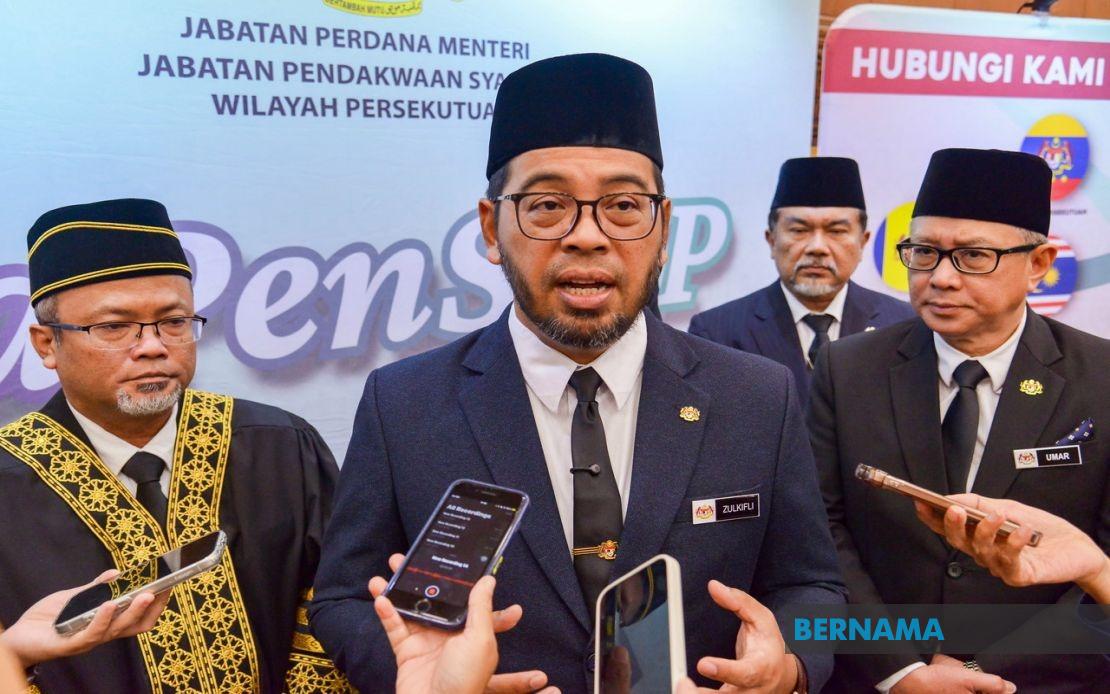
The Prime Minister's Department is launching an investigation into allegations that a Department of Islamic Development Malaysia (JAKIM) reference code was falsely cited to legitimise marriage documents purportedly issued by the Malaysia Rohingya Ulama Council. Religious Affairs Minister Dr Zulkifli Hasan announced the inquiry on July 15 in Putrajaya, though he acknowledged not yet receiving comprehensive details about the controversy that has generated considerable online discussion.
The core issue centres on a marriage declaration letter that circulated widely across social media platforms bearing the reference number "JAKIM.PERH/LN.800-7(5)". The appearance of an official JAKIM designation prompted immediate concern about whether the religious council possessed legitimate authority to issue such documents and whether JAKIM had provided formal recognition or endorsement. The discovery triggered scrutiny from state-level religious authorities about the document's validity and the processes by which marriage declarations for Rohingya individuals are processed within Malaysia's Islamic administrative framework.
The Perak Islamic Religious Department (JAIPk) subsequently clarified that it does not recognise the letter as a legitimate document suitable for official purposes. Furthermore, state officials indicated that marriages involving members of the Rohingya community face registration obstacles rooted in broader policy considerations currently under review by state religious authorities. This statement highlights the complex intersection between refugee communities, Islamic law administration, and citizenship-related documentation challenges that Malaysian authorities must navigate.
The incident underscores persistent tensions surrounding the status and legal recognition of Rohingya individuals in Malaysia. As a nation hosting one of the world's largest Rohingya populations outside Bangladesh and Myanmar, Malaysia confronts recurring questions about how Islamic institutions should formally acknowledge life events for stateless or non-citizen populations. The marriage document controversy illustrates how these policy gaps can create space for potentially fraudulent documentation practices, whether intentional or arising from genuine confusion about jurisdictional boundaries.
Dr Zulkifli's investigation announcement reflects the government's concern about maintaining institutional integrity within JAKIM and preventing the misappropriation of official reference numbers. The inquiry will likely examine whether the Malaysia Rohingya Ulama Council acted with deliberate intent to deceive or whether misunderstanding existed regarding what authority the council possessed to issue such letters. This distinction carries significant implications for how Malaysian religious authorities might subsequently regulate or restrict the council's activities.
Beyond the marriage document matter, the minister flagged another emerging concern affecting Malaysia's Islamic regulatory environment: the proliferation of religious lectures and teaching delivered without proper accreditation across social media platforms. This issue reflects broader challenges facing religious authorities globally as digital platforms enable rapid dissemination of content that traditional oversight mechanisms struggle to monitor or control. Dr Zulkifli indicated the department was actively reviewing approaches to address unaccredited religious instruction online, though he stressed that responsibility for regulating religious teaching accreditation ultimately resides with state governments rather than federal authorities.
The jurisdictional complexity surrounding religious oversight in Malaysia—where states retain significant autonomy over Islamic affairs while the federal government coordinates broader policy direction—complicates efforts to establish uniform standards. Dr Zulkifli acknowledged that the government continues studying optimal strategies for managing online religious content, recognising that effective solutions must account for legal considerations and the division of powers between federal and state institutions. At the departmental level, officials confirmed they routinely ensure that individuals invited to appear on broadcasts and other platforms possess proper accreditation, demonstrating some capacity to exercise gatekeeping functions within directly controlled contexts.
Dr Zulkifli used the occasion of the second Malaysian Syariah Prosecutors Conference (PePSSM) 2026 to emphasise the government's commitment to modernising Syariah legal frameworks in response to evolving challenges. He particularly highlighted cybercrime and digital-era violations as areas requiring enhanced prosecutorial capacity and legislative refinement. This forward-looking agenda reflects recognition that Islamic law systems must adapt to technological realities that existing jurisprudence never contemplated, from cryptocurrency fraud to online defamation and data theft.
Effective response to these emerging challenges demands sustained collaboration among multiple government agencies. The minister underscored the necessity of strengthened cooperation between the Malaysian Communications and Multimedia Commission (MCMC), the Royal Malaysia Police (PDRM), and the Attorney General's Chambers to ensure Syariah enforcement and prosecution capabilities remain robust and coordinated. Such inter-agency collaboration becomes increasingly essential as cases become more technically complex and cross-jurisdictional issues proliferate.
Syariah prosecutors themselves must substantially upgrade their professional competencies to address modern crime patterns. Dr Zulkifli highlighted the importance of developing expertise in digital forensics, data analysis, and technology infrastructure understanding, recognising that contemporary prosecutions often depend on reconstructing events from digital traces rather than relying on traditional evidence gathering methods. Investment in these specialised capabilities will determine whether Malaysia's Islamic legal system remains effective at holding violators accountable in a rapidly digitising environment.
The twin concerns—inappropriate marriage document practices and unaccredited religious instruction spreading online—illustrate how Malaysia's Islamic institutions encounter pressures from multiple directions simultaneously. Protecting institutional credibility requires vigilant oversight of document issuance while respecting legitimate community needs for religious guidance and ceremonial recognition. The investigation into the JAKIM reference number misuse will provide important insights into whether systemic vulnerabilities within the religious bureaucracy require remediation through procedural reforms or technological safeguards preventing unauthorised use of official designations.

