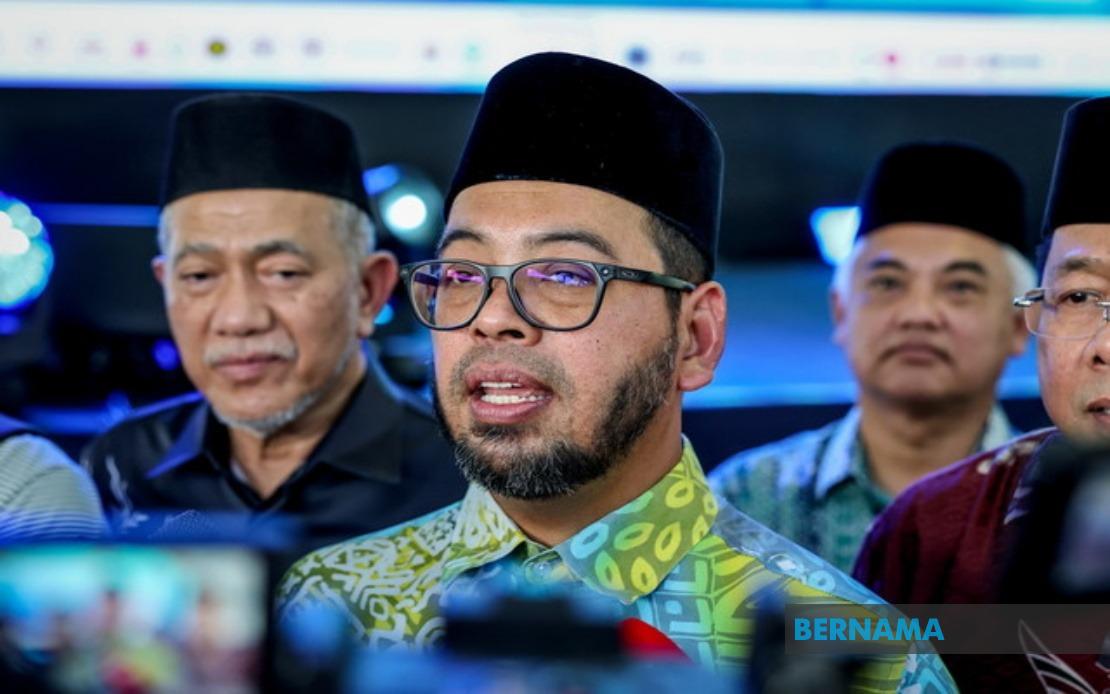
The Department of Islamic Development Malaysia (JAKIM) is moving to establish a standardised set of funeral management guidelines that can serve as a reference across the nation, responding to a controversy that recently gained widespread attention online. Minister in the Prime Minister's Department (Religious Affairs) Dr Zulkifli Hasan announced the initiative while speaking in Bukit Mertajam, emphasising that the refinement process takes into account both contemporary requirements and the existing legal frameworks of individual states.
Currently, the landscape of funeral practices in Malaysia remains fragmented, with several states having already developed their own internal guidelines independent of federal oversight. JAKIM recognises that while these state-level documents provide some structure, there is considerable benefit in elevating them into a more robust, comprehensive resource that can guide best practices across all regions. The federal department's decision to intervene comes at a time when funeral management procedures have become a point of public concern, prompting calls for clearer, more transparent protocols.
The minister explained that JAKIM is in the final stages of preparing these guidelines, which will be made available for adoption and implementation by other states. He acknowledged that substantial foundational work already exists, meaning the task ahead involves refining and harmonising these existing frameworks rather than building from scratch. This approach allows for a faster timeline without sacrificing quality or relevance.
Zulkifli indicated that while the exact completion date remains flexible, the department is committed to finishing the work expeditiously. He stressed that the process will maintain scrupulous compliance with the diverse legal requirements that govern Islamic affairs in each state, recognising that Malaysia's federal structure demands such deference to state authority. This careful balancing act reflects the constitutional reality that religious matters fall largely under state jurisdiction, even as the federal government seeks to promote national standards.
The impetus for this standardisation effort stems from a recent incident in Selangor that attracted considerable viral attention. That case involved allegations of unjustified delays in the burial of a deceased person at the Ukay Perdana Muslim Cemetery in Hulu Kelang, raising public questions about the procedures and accountability mechanisms governing funeral management in the state. The Selangor Islamic Religious Council (MAIS) subsequently directed an urgent meeting involving the family of the deceased, officials from Masjid Nurul Hidayah in Kampung Pandan Dalam, the welfare body Badan Kebajikan Salatulrahim, and the Selangor Islamic Religious Department (JAIS).
Zulkifli made clear that responsibility for addressing the Selangor matter remains with state-level authorities rather than the federal government. He appealed to all stakeholders to approach the situation with composure and to collaborate constructively in finding resolutions that satisfy all parties without deepening any divisions within the community. His call for unity underscores the sensitive nature of funeral practices, which carry deep religious and emotional significance for Muslim families.
MAIS chairman Datuk Salehuddin Saidin confirmed that the convening of these parties aimed to identify the most appropriate course of action and to establish safeguards that would prevent similar controversies from arising in future cases. The council's proactive response suggests a recognition that funeral delays, whether caused by administrative bottlenecks, miscommunication, or procedural uncertainty, strike at the heart of Islamic obligations and family dignity. The meeting represented an attempt to address not only the immediate grievance but also the underlying systemic vulnerabilities that may have allowed the problem to occur.
The move by JAKIM to create unified guidelines carries broader implications for how Malaysia manages religious services and public administration. Funeral practices touch upon fundamental aspects of faith observance, and inconsistencies across states can create confusion and frustration for families navigating an already difficult time. A coherent national framework could establish minimum standards for timeliness, transparency, and family involvement while still permitting states to implement variations suited to local conditions and legal arrangements.
For Malaysian Muslims and their families, such standardisation may provide greater clarity about their rights and the timeframes they can expect when arranging burials. It could also establish clearer lines of accountability for institutions involved in funeral management, from mosques to cemetery operators to religious councils. By making procedures explicit and uniform, JAKIM's initiative addresses a gap that has apparently allowed ambiguity and disputes to flourish.
The initiative also reflects a broader governmental commitment to improving service delivery in areas that matter profoundly to citizens' daily lives and spiritual practices. Funeral management is not merely an administrative function but a sacred responsibility in Islamic tradition, and the government's acknowledgement of this through concrete efforts to standardise and improve the process signals responsiveness to public concerns. The fact that Zulkifli announced the effort in the context of the Multaqa MADANI Ulama and Umara Programme further suggests that religious authorities are treating this as part of a wider agenda to strengthen institutional capacity and community trust.
As JAKIM proceeds with finalising these guidelines, the department faces the challenge of creating standards that are sufficiently detailed to prevent confusion and delays while remaining flexible enough to accommodate the legitimate differences in state law and local practice. The outcome will likely be scrutinised closely by Islamic organisations, cemetery operators, mosque committees, and most importantly, by Muslim families who depend on these institutions during moments of grief. The success of the standardised guidelines will ultimately be measured not by their comprehensiveness on paper, but by their practical ability to ensure that funeral rites proceed with dignity, efficiency, and in full compliance with Islamic teachings.

