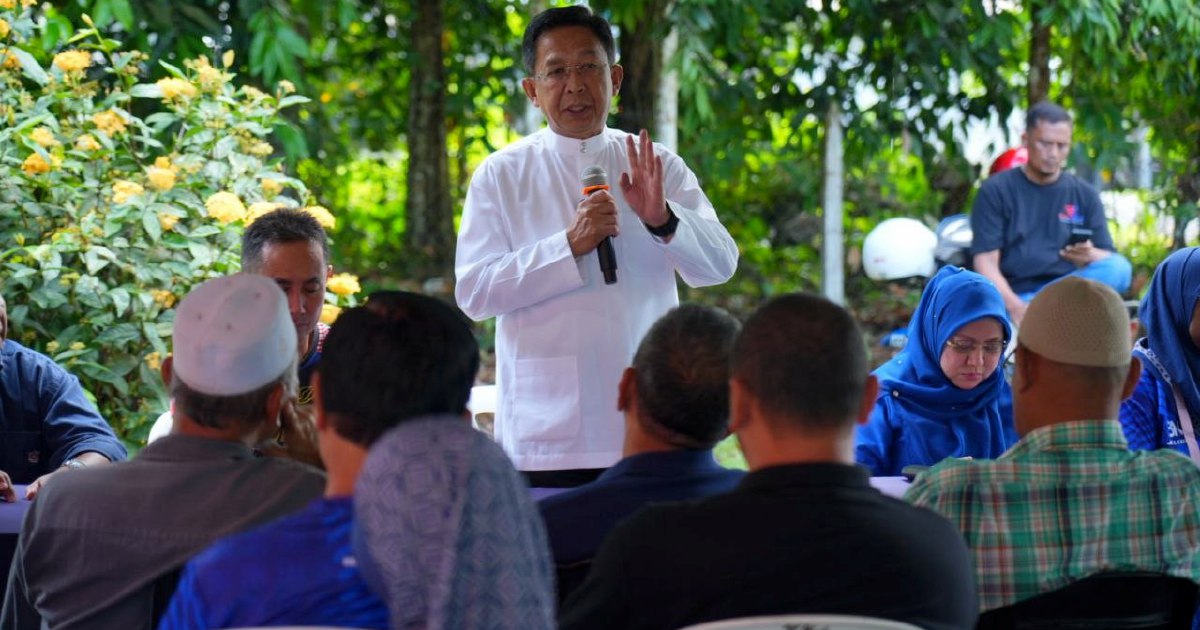
Perikatan Nasional has formally identified Negri Sembilan Umno chairman Datuk Seri Jalaluddin Alias as among the principal candidates to assume the role of menteri besar, contingent upon the coalition's electoral success alongside Barisan Nasional in the August 1 state election.
The nomination reflects PN's strategic positioning within the proposed alliance framework, signalling that the coalition intends to leverage Jalaluddin's standing within the state's Umno machinery should voters deliver victory on polling day. This move underscores the delicate balance both coalitions must navigate in determining leadership positions across contested states, particularly in Negri Sembilan where traditional political strongholds face shifting electoral dynamics.
Jalaluddin's emergence as a leading contender carries significant implications for state-level politics in Negri Sembilan. As the sitting Umno chairman at state level, he commands organisational reach and established networks across party structures, factors that typically weigh heavily in menteri besar selection processes. His nomination signals confidence within PN circles regarding his capacity to galvanise support among traditional BN voters whilst maintaining internal party cohesion during what promises to be a closely contested election.
The explicit identification of potential leadership candidates ahead of polling day represents a calculated political manoeuvre. Rather than maintaining ambiguity until after election results materialise, PN's decision to publicly float Jalaluddin's candidacy serves multiple purposes: it demonstrates commitment to coalition discipline, provides voters with transparency regarding likely governance outcomes, and consolidates support among party members and sympathetic voters who view clear succession planning as evidence of organisational stability.
The PN-BN understanding itself remains the subject of considerable political interest across Malaysia's electoral landscape. Negri Sembilan constitutes one battleground where this alliance structure will face electoral validation, making the state election a significant test of whether the two coalitions can maintain functional working relationships despite their distinct political identities and historical competition. The stakes extend beyond local governance; a successful partnership here could establish precedent for similar arrangements elsewhere, whilst failure might prompt recalibration of coalition strategies nationwide.
Jalaluddin's profile within Negri Sembilan politics deserves scrutiny. His role as state Umno chairman positions him at the intersection of party apparatus and electoral machinery, offering the administrative experience necessary for navigating state administration. Menteri besar roles demand facility with federal-state relations, budget management, and constituent service delivery—competencies typically accumulated through prolonged party work at intermediate organisational levels.
The selection of menteri besar candidates reveals broader patterns within Malaysia's political structure. Unlike Westminster systems where party leadership determines executive positions automatically, Malaysia's state chief ministers emerge through complex negotiations involving federal coalitions, state assemblies, and party power dynamics. This process occasionally produces unexpected outcomes where electoral partners negotiate substantively over key positions, as occurred historically in states like Selangor and Perak.
For Malaysian voters and observers, understanding coalition leadership intentions before election day permits more informed electoral decisions. When major coalitions pre-announce likely chief ministers, they effectively communicate their governance priorities and personnel choices, allowing voters to evaluate not merely party platforms but the individuals who would translate those platforms into state policy. This transparency, whilst sometimes contentious, represents evolution toward greater democratic accountability at subnational levels.
The August 1 election takes place within a distinctive Malaysian political moment. Recent years have witnessed unprecedented coalition realignments, with traditional structures fractured and reformed repeatedly. Negri Sembilan's contest reflects these broader trends, serving as a microcosm of Malaysia's evolving political economy where alliances remain fluid, personalities carry weight alongside party machinery, and electoral outcomes depend increasingly on voter decisions regarding which coalition configuration offers optimal governance outcomes.
Jalaluddin's potential appointment would carry implications extending beyond Negri Sembilan itself. As a prominent Umno figure within a state coalition framework, his elevation would signal ongoing Umno influence within PN's political architecture, demonstrating that larger component parties retain capacity to place senior figures in executive positions. This dynamic matters for internal coalition stability, since perceptions of inequitable power distribution have historically triggered coalition fractures.
The menteri besar position ranks among Malaysia's most significant sub-federal offices, controlling budgets of several billion ringgit, directing tens of thousands of civil servants, and shaping regional development trajectories. State governments manage education delivery, infrastructure development, land administration, and local business regulation—portfolios touching everyday Malaysian life. Consequently, menteri besar selection warrants public attention and scrutiny equivalent to federal cabinet positions.
Looking forward, the campaign period will reveal whether voters respond positively to PN-BN's pre-election transparency regarding leadership intentions, or whether this strategy generates unforeseen complications. Political analysts across Southeast Asia have noted how coalition transparency sometimes consolidates opposition votes among those uncomfortable with predetermined outcomes. Whether such dynamics materialise in Negri Sembilan remains uncertain until August 1 produces definitive electoral results.

