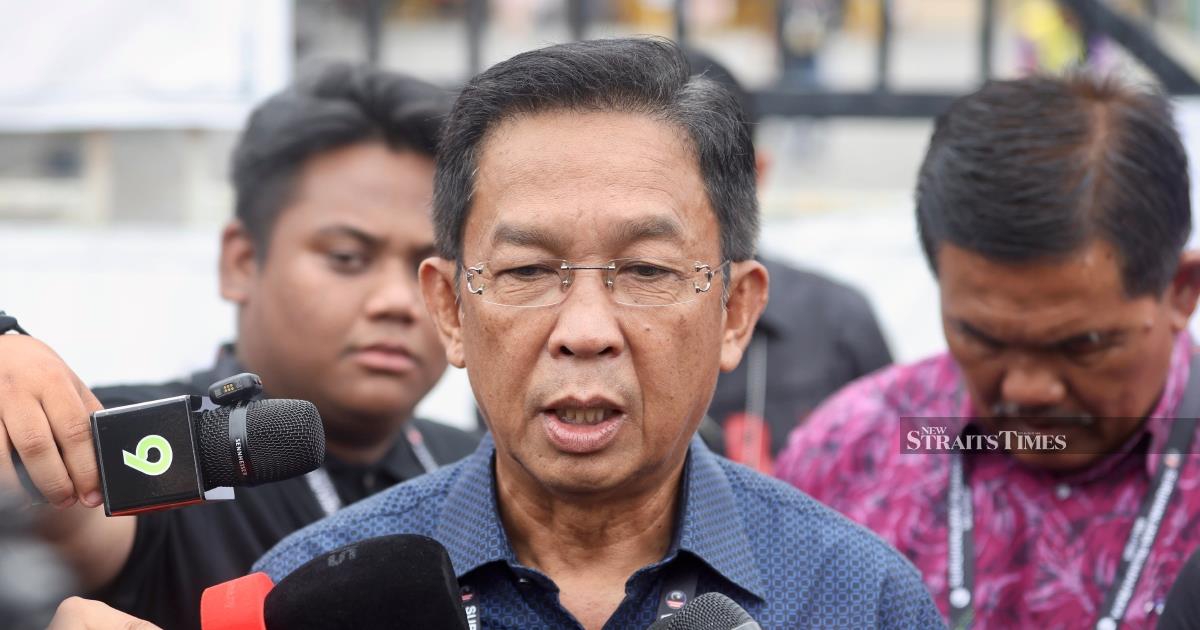
Datuk Seri Jalaluddin Alias, the chairman of Negri Sembilan's Umno Liaison Committee, has moved to address questions surrounding his absence from yesterday's swearing-in ceremony for the state's menteri besar at Istana Besar Seri Menanti. The senior party figure attributed his non-attendance to the abbreviated timeframe between receiving notification of the event and its actual occurrence, suggesting the scheduling did not permit adequate preparation or travel arrangements.
The absence of a figure holding such prominence within Umno's state machinery at a ceremonial occasion of this significance inevitably draws public and political scrutiny in Malaysia's closely watched state-level politics. Swearing-in ceremonies for menteri besars carry considerable symbolic weight, representing the formal transition of executive authority and typically drawing attendance from senior party officials, federal representatives, and state luminaries. When high-ranking party members are notably absent, questions naturally arise regarding the circumstances and any underlying political messaging such absences might convey.
Jalaluddin's explanation reflects a common practical reality in Malaysian political calendars, where officials frequently juggle competing demands and may receive event notifications with limited lead time. However, his clarification also underscores broader questions about the coordination between state-level party structures and government institutions during leadership transitions. The relationship between Umno's organizational hierarchy and the formal machinery of state administration occasionally generates coordination challenges, particularly when multiple stakeholders are involved in planning high-profile constitutional events.
The menteri besar position represents the apex of executive authority at state level, second only to the Yang di-Pertuan Agong in constitutional hierarchy and superior in day-to-day governance matters to the Sultan in their individual capacity. Consequently, the ceremonial formalities surrounding the appointment carry weight beyond mere protocol, embodying the constitutional framework upon which Malaysia's federal structure rests. Attendance at such ceremonies by party leadership serves as both acknowledgment of the constitutional process and a public expression of party unity at critical junctures.
Negri Sembilan's political landscape has experienced considerable volatility in recent years, with shifts in governing coalitions and changes in menteri besar reflecting the fluidity of state-level alignments. Against this backdrop, the communication and coordination surrounding ceremonial occasions assume heightened importance, as they constitute opportunities for senior figures to demonstrate solidarity and institutional coherence. The mention of short notice as the reason for Jalaluddin's absence suggests that procedural gaps may have emerged in the arrangement process.
For Malaysian political observers, such incidents provide minor but noteworthy insights into how party structures interface with state machinery during transitional moments. The explanation offered by Jalaluddin indicates a straightforward logistical matter rather than any indication of factional tension or political discord within Negri Sembilan Umno. Nonetheless, the public nature of his clarification acknowledges that his absence warranted formal explanation, reflecting the visibility of senior party figures and the public expectations surrounding their participation in state ceremonial functions.
The incident also reflects the broader challenge of maintaining seamless communication across Malaysia's complex layers of governance, where state parties, federal party structures, constitutional authorities, and administrative institutions must coordinate to ensure smooth transitions of power. State-level politics in Malaysia frequently involve intricate coordination between Umno's federal leadership, state liaison committees, and the formal governmental apparatus, and occasional communication lapses are not uncommon when events must be organized under time constraints.
Jalaluddin's clarity on this matter helps resolve what might otherwise have become subject to speculation or unfounded rumour within political circles. By promptly addressing the question of his absence, he has prevented any ambiguity from taking root, demonstrating the importance that senior figures attach to clear communication regarding their movements and commitments. This straightforward approach contrasts with instances in Malaysian politics where absences from significant events go unexplained, potentially giving rise to damaging interpretations.
Looking ahead, the incident may prompt Negri Sembilan's Umno machinery and state administration to review coordination protocols for future ceremonial occasions, ensuring that senior party officials receive adequate notice of significant events. Such procedural refinements, while seemingly minor, contribute to the smooth functioning of state-level governance and the institutional coherence that underlies Malaysia's constitutional framework. The clarification offered by Jalaluddin serves as a timely reminder that in high-visibility political roles, transparency regarding one's schedule and whereabouts carries its own political value, particularly during sensitive transitional moments.

