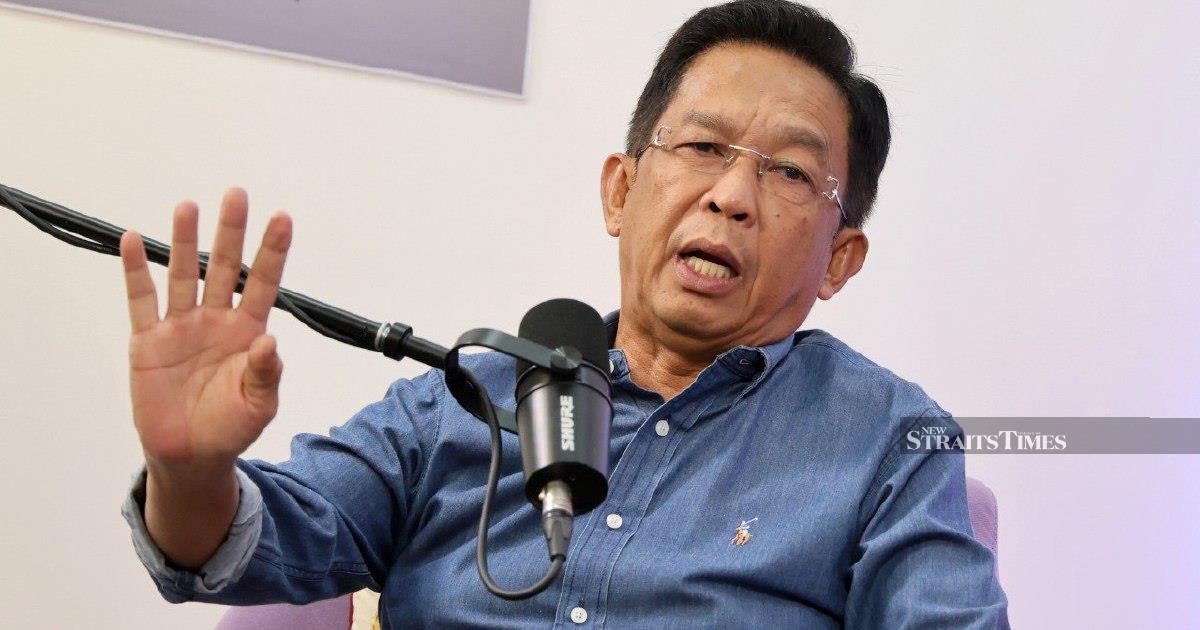
Datuk Seri Jalaluddin Alias, the Negri Sembilan Umno Liaison Committee chairman, has moved swiftly to quell speculation surrounding his exclusion from the menteri besar position, insisting that the broader political objective of restoring Barisan Nasional to power supersedes any individual ministerial aspirations. Speaking in Seremban, Jalaluddin reframed the narrative away from personal disappointment, positioning himself within the larger coalition victory that has reshaped Malaysia's political landscape in recent months.
The statement arrives at a particularly sensitive juncture within Umno's internal dynamics, where questions about patronage, post-election rewards, and factional balance within the party hierarchy continue to simmer beneath the surface. Jalaluddin's measured response appears designed to project loyalty to the coalition's overarching agenda while demonstrating political maturity in accepting party decisions. Such gestures carry weight within Umno's political culture, where public acceptance of leadership choices—even when bypassed for high office—can preserve influence and positioning for future opportunities.
Negri Sembilan's political configuration has long reflected the delicate equilibrium that must be maintained across Barisan Nasional's component parties and their respective factions. The state typically serves as a testing ground for coalition unity, given its mixed demographic composition and the need to balance Umno's traditional strongholds with representation from other parties. The selection of the menteri besar therefore carries implications that extend well beyond a single appointment, affecting power-sharing arrangements and resource allocation within the broader coalition structure.
Jalaluddin's positioning emphasises the thematic consistency that emerged throughout Barisan Nasional's campaign messaging, which centred on economic recovery, institutional stability, and unified governance following the prior period of fractured political control. By subsiding his personal claim to the position and elevating the collective victory narrative, he aligns himself with the coalition's preferred framing of recent developments. This approach also demonstrates awareness of how public displays of discontent might be interpreted as disloyalty or undermining of coalition leadership decisions.
Within Umno's organisational structure, the Liaison Committee role itself carries significant responsibilities, particularly in coordinating party activities across constituencies and managing grassroots engagement. Jalaluddin's retention of this position, combined with his statement, suggests that leadership acknowledges his continued relevance to party operations, even if the menteri besar post went elsewhere. For many party figures in comparable situations, such reassurance regarding ongoing responsibility becomes crucial for maintaining standing among party members and supporters.
The broader context of Barisan Nasional's restoration to executive power across multiple states has created a complex landscape of expectations and accommodations. Every ministerial appointment and senior position becomes subject to scrutiny from party members, rival factions, and coalition partners seeking to assess whether their contributions to electoral victory have been appropriately recognised. Jalaluddin's public magnanimity in this instance may serve to establish a template for how other disappointed aspirants might be expected to conduct themselves in similar circumstances.
Negri Sembilan's electorate, meanwhile, will be observing not only who assumes the menteri besar role but also how such figures interact with senior party leaders like Jalaluddin. These working relationships fundamentally determine the effectiveness of governance and the degree to which development agendas can be implemented efficiently. Public displays of harmony therefore carry practical significance for delivering on the coalition's promises to voters who have entrusted them with renewed responsibility.
The timing of Jalaluddin's clarification also reflects awareness of media and social media dynamics, where silence or ambiguity regarding political disappointments can be interpreted through various lenses by different audiences. By proactively addressing the matter and articulating a coherent narrative, he shapes how his exclusion is understood, both within party circles and among the general public. This tactical dimension of political communication has become increasingly important in Malaysia's contemporary media environment.
Looking forward, the question of how Jalaluddin and other senior figures navigate these post-victory realities will influence not only Negri Sembilan's governance trajectory but also broader signals about coalition stability. Political coalitions remain fragile entities, requiring constant attention to perceived fairness in power distribution. Jalaluddin's statement, while modest in immediate content, contributes to the broader narrative reassuring coalition partners and party members that merit, loyalty, and contribution continue to matter in political advancement, even when particular appointments disappoint individual aspirants.
For observers monitoring Malaysian politics and the dynamics within Barisan Nasional specifically, such moments reveal much about the coalition's current health and the degree to which veteran figures retain the flexibility to accommodate decisions made by higher leadership. Jalaluddin's measured response, emphasising collective victory over personal gain, appears designed to project exactly such flexibility and political sophistication to multiple audiences simultaneously.

