Navigating George Town, the Unesco-listed heritage heart of Penang, becomes considerably simpler when visitors orientate themselves around key thoroughfares and distinctive neighbourhoods. The primary heritage zone comprises several major arteries including Beach Street, Armenian Street, Lebuh Carnavon, Lebuh Chulia and Pengkalan Weld, where restored colonial buildings and well-maintained historical structures dominate the streetscape. Beyond these core routes lies a more sprawling culinary landscape that defies neat categorization, yet can be loosely organized according to dining preferences—halal establishments, street food vendors, cafes serving Western fare, and the ubiquitous nasi kandar restaurants that define Penang's gastronomic identity.
Jalan Burma represents one such thoroughfare worth exploring in depth, particularly given its position as an interface between heritage conservation and contemporary food culture. Stretching nearly five kilometres from the edge of the heritage zone towards the more affluent residential district of Pulau Tikus, this arterial road offers visitors a manageable walking route through multiple layers of Penang's past and present. The journey yields unexpected discoveries: heritage hotels housed in century-old link houses, Michelin-recognized hawker stalls operating from modest coffeeshops, and historical markers revealing the road's evolving identity across generations.
The Burmese heritage of the street itself runs deep. Originally designated Burmah Road on colonial-era maps and signboards, the thoroughfare carried several names across different linguistic communities—Jalan Tarek Ayer and Water Cart Road in Malay, reflecting its original function transporting water via bullock cart during the pre-modern era. When a substantial Burmese settlement established itself in neighbouring Pulau Tikus during the nineteenth century, the road's nomenclature shifted accordingly. Today, this legacy persists in surrounding street names such as Rangoon Road, Mandalay Road and Moulmein Close, whilst the Dhammikarama Burmese Temple, founded two centuries ago on one of Jalan Burma's side lanes, continues serving the local Buddhist community. An information board positioned beneath the Komtar Octopus Pedestrian Bridge provides visitors with a condensed history of these transformations, serving as a useful reference point for those unfamiliar with George Town's layered geography.
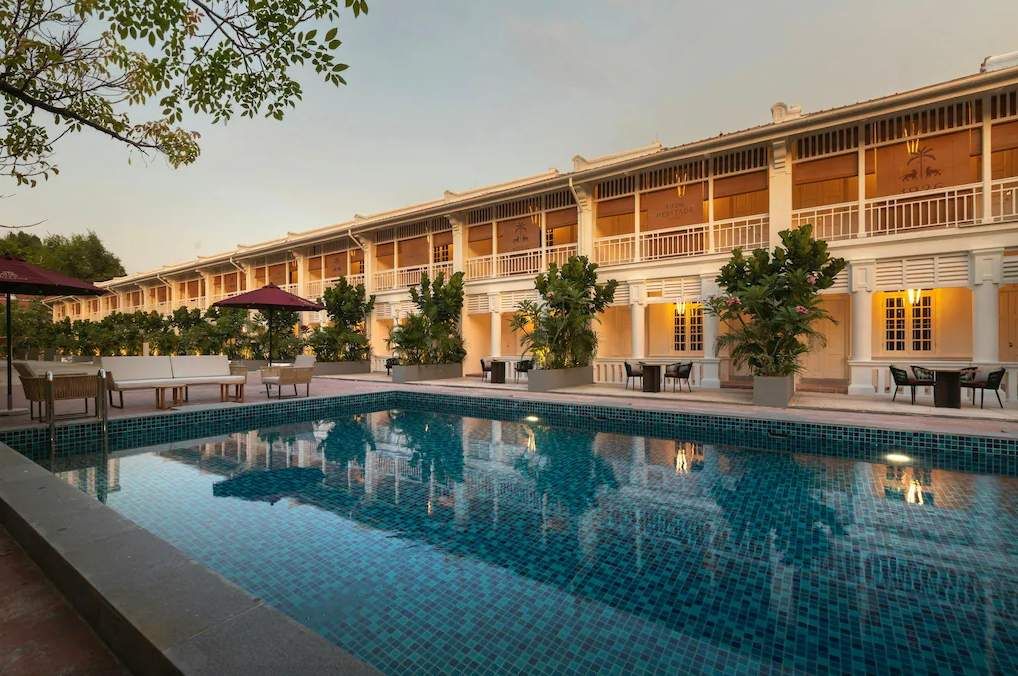
Architectural heritage manifests most prominently at the newly renovated hotel situated along Jalan Burma, marking its centennial year in 2026. Constructed in 1926 as residential quarters for British and local government officials, the structure exemplifies the Anglo-Malay architectural idiom prevalent throughout George Town during the colonial period. Originally comprising twenty-four interconnected link houses, the property underwent conversion into hotel accommodation following acquisition by the Penang Development Corporation in 1999. The current configuration distributes seventy-eight rooms and suites across the original link house structures, with offerings ranging from the Heritage Room suited to solo travellers through to the expansive Straits Suite. High-tech amenities—including WiFi-enabled water filtration systems within guest rooms—juxtapose intriguingly against period architectural features, creating a consciously curated blend of heritage conservation and contemporary hospitality.
Food culture along Jalan Burma demonstrates the sophisticated recognition accorded to Penang's hawker scene by international gastronomic authorities. Of the seventy-four Michelin-recognized eateries operating throughout Penang, many concentrate within George Town itself. The broader Michelin Penang scheme distributes recognition across multiple tiers: two establishments carry one-star status, thirty-three qualify for inclusion on the Bib Gourmand list acknowledging exceptional value at modest prices, whilst thirty-nine receive Michelin Selected designation. Rather than seeking out formal fine dining establishments, discerning visitors often gravitate towards these Bib Gourmand venues, particularly when situated within traditional coffeeshop or food court settings. The multisensory experience of such environments—the cacophony of sizzling woks, layered aromatic profiles drifting across open courtyards, the visual theatre of skilled cooks assembling meals with practiced efficiency—creates an experiential richness arguably absent from refined dining rooms.
A practical itinerary along Jalan Burma might commence with Duck Blood Curry Mee, a stall offering the namesake white curry noodles that exemplify local hawker craft. Mere doors away lies Restoran Old Green House, housing the original iteration of Green House Prawn Mee & Loh Mee, recognized on the Bib Gourmand list. Locals distinguish between this original establishment and a subsequent branch operating further down Jalan Burma towards Jalan Penang, though consensus points towards the original venue as the superior option. A sequential consumption of both curry noodles and prawn noodles varieties provides substantial sustenance, amply justifying the leisurely walk subsequently undertaken through the heritage zone proper. Shopping districts concentrated on Lebuh Campbell, Lebuh Kimberley and Beach Street remain readily accessible via Jalan Burma, positioned approximately four kilometres return journey on foot through relatively safe, pedestrian-friendly stretches—though occasional sections lack formal pavements requiring modest navigation care.
The practical logistics of traversing George Town in tropical heat merit consideration. Borrowed umbrellas and small towels from hotel quarters provide essential protection, whilst refillable water bottles utilising in-room filtration systems offer convenient hydration solutions. The cumulative experience of substantial meals, extended ambulatory exploration, and tropical conditions typically culminates in evening fatigue sufficiently profound to render further activity inadvisable. Root House by Gen, a contemporary Chinese restaurant situated within the heritage hotel itself, provides a convenient dinner venue requiring minimal additional exertion. The establishment's six-course offerings demonstrate considerable culinary sophistication, though the cumulative caloric intake across multiple meals throughout the day renders digestive ease a diminishing probability.
Beyond formal commercial establishments, George Town's experiential offerings extend to weekend cultural markets. The Hin Bus Depot marketplace, operating exclusively during weekends, aggregates local vendors purveying curios, artworks, handmade garments, and professional services including caricature portraiture. Homemade food and beverage offerings proliferate throughout the venue, with diners consuming meals whilst enjoying live musical performances—a distinctly informal yet culturally immersive alternative to conventional restaurant dining. Such venues represent the organic, community-driven dimension of Penang's food culture, operating outside formal recognition systems yet capturing the authentic character that distinguishes George Town's culinary scene from more standardized tourism destinations.
Jalan Burma ultimately encapsulates the multivalent character defining contemporary George Town: a thoroughfare wherein colonial architectural preservation intersects with international gastronomic recognition, where historical markers commemorate nineteenth-century Burmese settlement patterns, and where street-level hawker commerce maintains cultural continuity across generations. The five-kilometre pedestrian route presents neither excessive physical demand nor excessive expenditure, yet yields encounters with heritage hotels, Michelin-recognized noodle stalls, and the layered historical narratives embedded within street nomenclature and temple precincts. For visitors seeking authentic engagement with Penang's character rather than superficial heritage tourism, Jalan Burma offers compelling reasons to venture beyond the conventionally demarcated heritage zone into the adjoining neighbourhoods where contemporary life intersects with historical legacies.
%22%2F%3E%3C%2Fpattern%3E%3C%2Fdefs%3E%3Crect%20width%3D%22100%25%22%20height%3D%22100%25%22%20fill%3D%22url(%23ph56fyng)%22%2F%3E%3Crect%20width%3D%22100%25%22%20height%3D%22100%25%22%20fill%3D%22url(%23ph56fynp)%22%2F%3E%3Ctext%20x%3D%2250%25%22%20y%3D%2250%25%22%20text-anchor%3D%22middle%22%20dominant-baseline%3D%22central%22%20fill%3D%22rgba(255%2C255%2C255%2C0.95)%22%20font-family%3D%22Georgia%2C%20'Times%20New%20Roman'%2C%20serif%22%20font-weight%3D%22700%22%20font-size%3D%22151%22%20letter-spacing%3D%22-0.02em%22%3EMalaysian%3C%2Ftext%3E%3C%2Fsvg%3E)