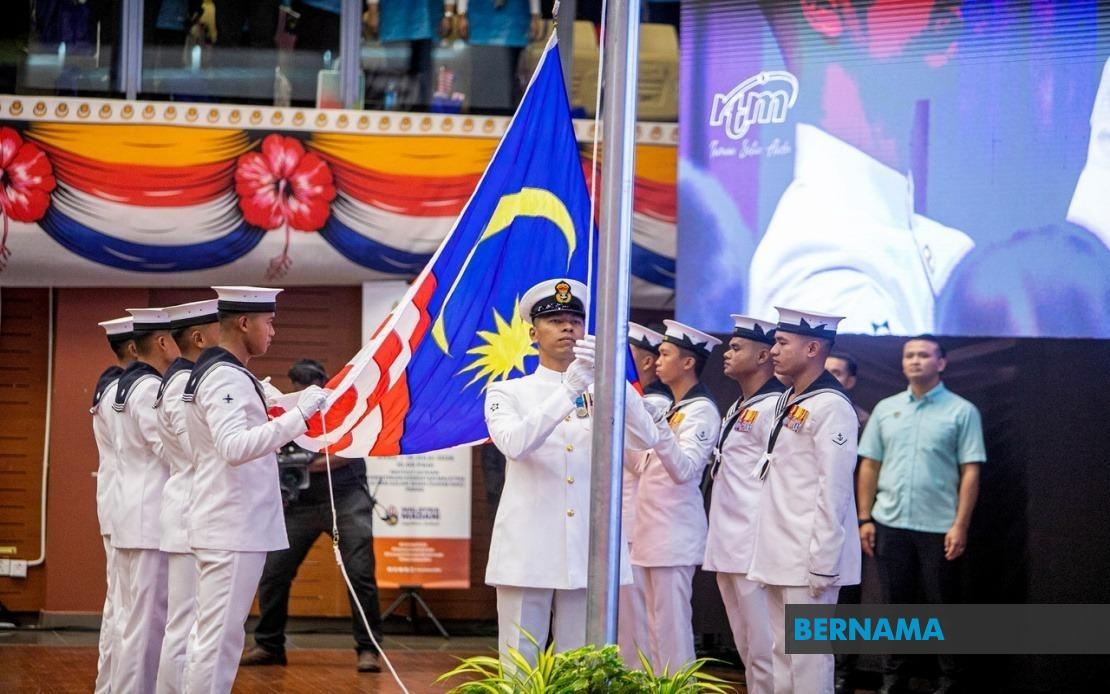
The ceremonial raising of the Jalur Gemilang has returned to the national calendar, marking a symbolic renewal of Malaysia's patriotic traditions during the launch of the 2026 National Month and Fly the Jalur Gemilang campaign. Prime Minister Datuk Seri Anwar Ibrahim officiated the event at the Sultan Azlan Shah Ministry of Health Training Institute in Tanjung Rambutan, Ipoh, restoring a practice that had been absent for the past two years. The revival of this particular ceremony underscores the government's emphasis on rekindling national pride and unity as the country approaches its upcoming independence commemorations.
At the heart of the ceremony was the formal handover of a 1.82-metre by 3.65-metre Jalur Gemilang to a nine-member team from the Royal Malaysian Navy's Lumut Base, led by Chief Petty Officer Mohamad Razif Aliff Md Yusof. This symbolic gesture represented the beginning of the nationwide campaign, with the flag raised solemnly while attendees sang the national anthem, Negaraku. The ceremonial elements reflected a deliberate effort to infuse the National Month launch with the gravitas and reverence associated with formal state occasions, signalling to Malaysians the importance placed on this year's celebrations.
The Fly the Jalur Gemilang campaign, which accompanies these annual festivities, represents a broader push to encourage citizens across the country to display the national flag prominently in their homes and communities. This grassroots approach to patriotism complements the more formal governmental ceremonies, creating multiple touchpoints through which Malaysians can express their connection to the nation. The campaign's expansion has made flag-flying a visible marker of national sentiment during August and September, transforming public and private spaces into expressions of civic unity during the extended celebration period.
Following the flag-raising, ILKKM SAS trainee Muhammad Ammar Mohd Asri led attendees in reciting the Rukun Negara pledge, further cementing the day's focus on shared national values and foundational principles. The gathering stood in respectful silence, a moment designed to reinforce the solemnity of national observance and the collective commitment to Malaysia's core ideals. Such ceremonial rituals serve important psychological functions in democratic societies, creating shared experiences that transcend individual differences and reinforce common purpose among diverse populations.
Anwar officially launched the campaign during the event, formalising what has become an anticipated annual ritual within Malaysia's civic calendar. The Prime Minister's direct involvement in the ceremony underscored the government's institutional commitment to these celebrations and signalled that national unity remains a priority concern for the current administration. Such high-level participation helps establish the tone for celebrations across all thirteen states and federal territories, encouraging regional and local governments to organise their own commemorative activities with similar enthusiasm and formality.
A fresh addition to this year's celebrations came with the unveiling of "Aku Berjanji" as the official theme song for the 2026 National Day and Malaysia Day (HKHM 2026) observances. Composed and performed by musician Faizal Tahir, the song became available for public download through the Merdeka360 portal beginning at 12.30 pm on the day of the ceremony. This musical component adds a contemporary cultural dimension to the celebrations, allowing modern artistic expression to complement traditional ceremonial forms and potentially reaching younger demographics who might engage more readily with the campaign through popular music.
The National Month celebrations represent a sustained period of patriotic engagement spanning from the launching event through to the culmination of Malaysia Day on September 16. Between these bookends, the country experiences an extended season of cultural programming, community activities, and educational initiatives designed to reflect on national achievements and contemplate future aspirations. For Malaysian students, civil servants, and community organisations, this period typically involves competitions, exhibitions, seminars, and cultural performances that collectively form a comprehensive national conversation about identity and progress.
The restoration of the Jalur Gemilang raising ceremony after a two-year absence carries particular significance in the Malaysian context, where ceremonial practices and public rituals retain considerable cultural importance. The hiatus likely resulted from pandemic-related disruptions to large public gatherings, making the ceremony's return a symbolic indicator of normalised civic life and restored public confidence in shared institutional spaces. The decision to revive the tradition reflects confidence that Malaysians have sufficiently recovered from recent health crises to resume customary patriotic observances without impediment.
Regional observers noting Malaysia's approach to national celebrations will find the emphasis on inclusive, participatory patriotism noteworthy. Rather than confining National Month to government ceremonies and official pronouncements, the Fly the Jalur Gemilang campaign explicitly invites all citizens to participate in flag displays, democratising what might otherwise remain an elite governmental practice. This bottom-up approach to national pride-building represents a deliberate strategy to strengthen emotional connections to the nation among the general populace, recognising that patriotism becomes most resilient when citizens actively participate in its expression rather than passively consuming official narratives.

