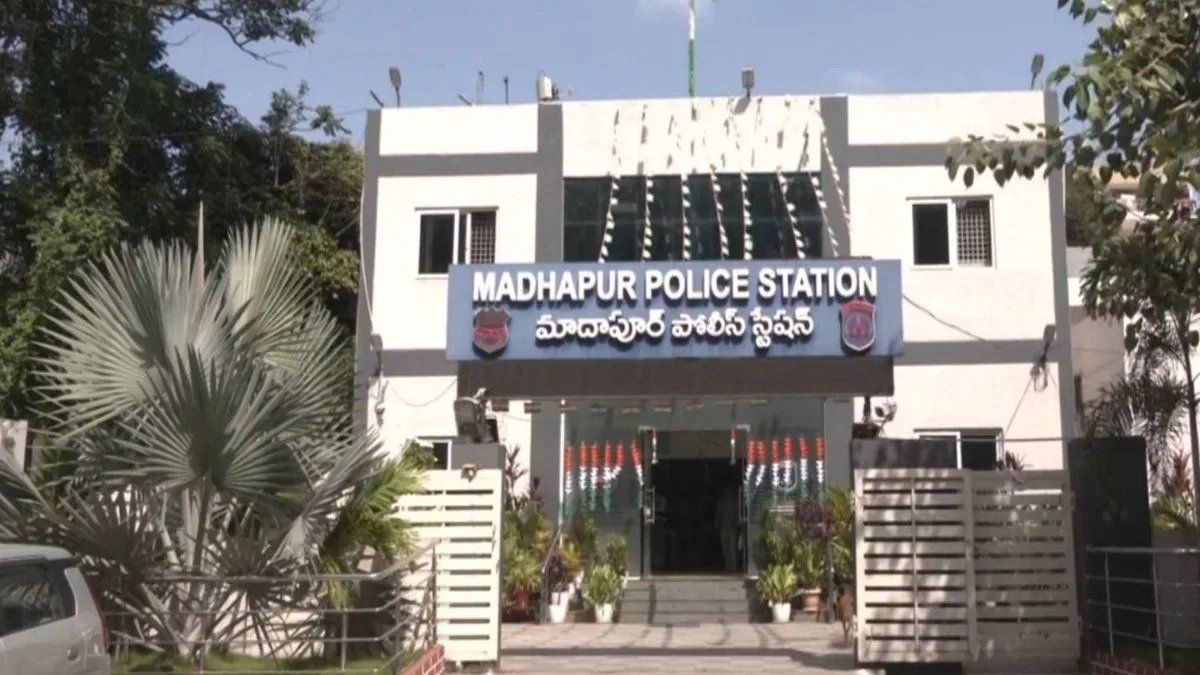
A high-profile road fatality in Hyderabad has sparked political controversy after Lingamaneni Sanjush, the 21-year-old son of Jana Sena Party MP Lingamaneni Ramesh, received station bail following a fatal collision allegedly involving the luxury sports vehicle he was driving. The incident, which unfolded outside the Inorbit Mall in the Madhapur area around 3 pm on August 16, claimed the life of Bharati Mukhi, a 26-year-old employee at a Lifestyle retail outlet within the mall complex. Police confirmed that Sanjush was released on bail after being served a notice under Section 35(3) of the Bharatiya Nagarik Suraksha Sanhita, the newly enacted criminal procedure code that replaced the older Code of Criminal Procedure.
The circumstances surrounding the collision paint a troubling picture of negligence and speed. According to statements from law enforcement officials in the Madhapur police district, Bharati and a colleague, Pooja Ashok, had ventured toward the nearby ITC Kohenur establishment to collect meals during their working hours. As they made their way back to the mall, Bharati stepped onto the road to cross it when she was struck by the Aston Martin, which investigators allege was being operated at excessive velocity and in a reckless manner. The impact proved catastrophic, resulting in severe head trauma that proved fatal despite immediate medical intervention at Apollo Hospital in Jubilee Hills, where Bharati was pronounced dead upon arrival.
The police investigation unfolded with considerable procedural attention. Sanjush was apprehended on the same day as the incident after officers identified him as the person behind the steering wheel at the moment of collision. Standard protocols were followed, including breathalyser testing for alcohol impairment and screening for narcotic substances. Blood samples were extracted and forwarded to the Forensic Science Laboratory for comprehensive toxicological analysis. Authorities have impounded the vehicle involved in the fatal encounter, and investigators remain engaged in collecting post-mortem examination reports and other evidentiary material to construct their case. A formal charge has been registered at Madhapur Police Station under Section 106(1) of the Bharatiya Nyaya Sanhita, which pertains to causing death through negligence or rash conduct.
The grant of station bail to a person accused of such a serious offense has, however, ignited accusations of preferential treatment rooted in political patronage. YSRCP national spokesperson Karthik Yellapragada has levelled allegations that authorities have deliberately suppressed information about the case, noting the conspicuous absence of public discourse or official statements throughout the five days following the registration of the formal case. Yellapragada's critique extends beyond merely questioning the speed with which bail was granted, instead framing the incident within a broader narrative of political accommodation between Telangana's ruling establishment and neighbouring state leadership. He insinuated that an understanding between Chief Minister Revanth Reddy and Andhra Pradesh leader Chandrababu Naidu has created conditions for the matter to be handled with undue circumspection.
These allegations, while carrying considerable political weight in the volatile landscape of Indian state politics, remain unsubstantiated by concrete evidence presented in official police records or judicial proceedings to date. The distinction between procedural propriety and substantive justice becomes critical in evaluating such claims. Station bail, as a legal mechanism, is frequently granted to accused individuals after preliminary investigation when authorities conclude that custodial detention is not necessary to further the investigative process. The decision to grant such bail does not necessarily indicate bias or cover-up; rather, it reflects the legal framework's presumption of innocence and graduated approach to criminal procedure. Nevertheless, the optics of a young person from a politically connected family receiving bail swiftly in a fatal accident case can naturally generate public scepticism, particularly in a society where road safety remains a pressing concern and traffic fatalities continue to mount.
The incident reflects broader anxieties within Indian society regarding road safety, particularly in metropolitan areas where luxury vehicles, inexperienced young drivers, and crowded pedestrian zones intersect dangerously. The Telangana region has experienced recurring instances of fatal collisions involving high-performance vehicles operated by youthful drivers from affluent backgrounds, frequently generating public outcry and accusations of unequal justice. Each such tragedy reopens debates about driver licensing standards, vehicle safety regulations, and the adequacy of traffic enforcement mechanisms. The contrast between the speed with which Sanjush was released and the permanent consequences visited upon Bharati Mukhi and her family inevitably resonates within public consciousness as emblematic of systemic inequalities.
For Malaysian readers observing regional developments in Indian state politics, this incident illuminates the recurring intersection of wealth, political connection, and criminal justice outcomes that transcends national boundaries. While Malaysia's legal system operates under different constitutional and procedural frameworks, the fundamental tension between formal legal processes and public perceptions of fairness remains universally relevant. The case underscores how traffic infractions can rapidly escalate into matters of substantial political significance when the accused enjoys family connections to elected representatives, transforming what might otherwise be a routine criminal investigation into a proxy battleground for inter-party rivalry.
The Jana Sena Party, which holds the bail in question, maintains coalition relationships within the complex political architecture of southern Indian states, making the handling of this case laden with implications for coalition stability and political credibility. Opposition parties perceive opportunities to attack the government's integrity and evenhandedness, while ruling coalition partners face pressure to demonstrate that no sacred cows exist within their ranks. The investigation's continuation and the eventual disposition of charges against Sanjush will thus carry significance extending well beyond the immediate facts of the traffic collision, resonating through electoral calculations and political reputation management across the region.
The police's comprehensive investigative procedures—including toxicological testing, forensic examination, and proper documentation—suggest that institutional mechanisms exist to uncover material facts regardless of the accused's social standing. However, the perception that outcomes differ based on political affiliation or familial connections remains deeply corrosive to public confidence in law enforcement impartiality. Yellapragada's demand for "immediate justice" reflects not merely a call for appropriate legal consequences, but an implicit assertion that the political environment itself has compromised the investigation's integrity from inception. Whether such concerns prove justified will depend upon the investigation's substantive findings and the judicial system's ultimate determination regarding culpability and appropriate sanctions.

