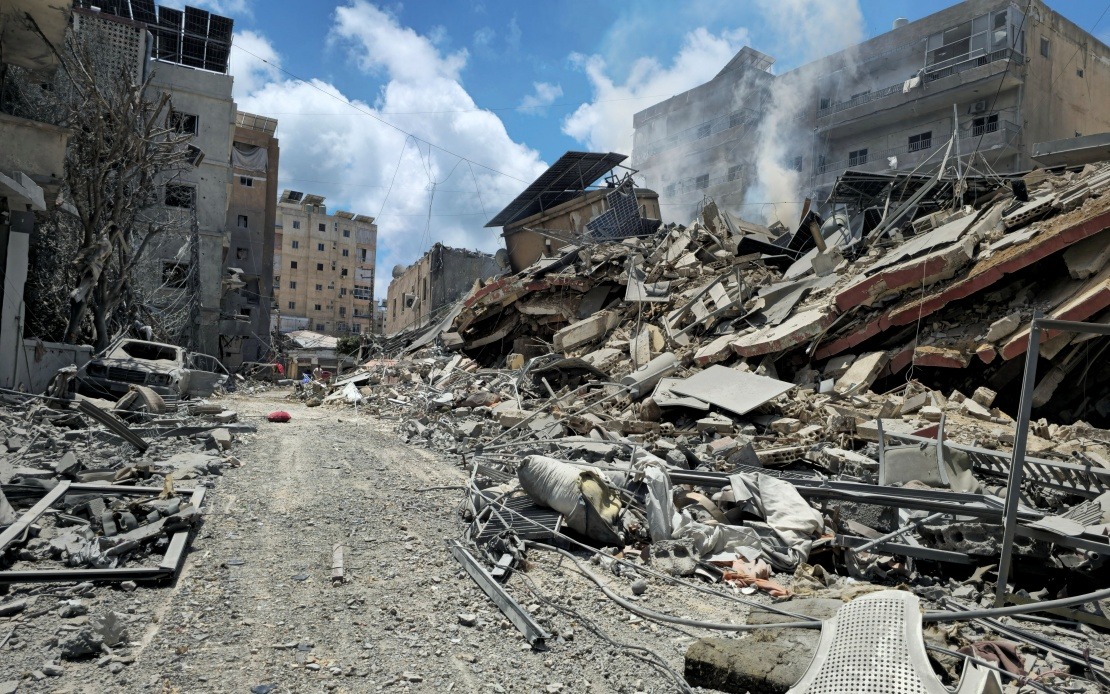
Japan announced on Friday a substantial emergency aid package worth US$15 million designed to alleviate humanitarian suffering across three conflict-affected regions in West Asia, reflecting Tokyo's strategic commitment to regional stabilisation. Foreign Minister Toshimitsu Motegi unveiled the allocation during a press briefing, emphasising that approximately US$10 million would flow to Iran, with the remaining funds split between Lebanon at US$4 million and Palestinians in the West Bank at US$1 million. The assistance represents Japan's response to escalating humanitarian crises across the Middle East and signals the country's intention to play a constructive role in addressing civilian needs amid geopolitical tensions.
The Japanese government will channel this aid exclusively through established international organisations rather than bilateral arrangements, a methodological choice that underscores Tokyo's preference for working within multilateral frameworks in sensitive geopolitical contexts. This distribution mechanism ensures transparency and operational efficiency while reducing the risk of aid becoming entangled in contentious diplomatic disputes between nations. The decision to utilise international bodies also reflects Japan's historical approach of maintaining diplomatic flexibility and avoiding direct confrontation while still demonstrating humanitarian concern.
The composition of the aid packages reveals Japan's nuanced assessment of where urgent humanitarian needs are most acute. Iran, as the largest recipient, faces compounded challenges stemming from ongoing conflict impacts, economic pressures, and limited access to international resources. The allocation to Iran is particularly significant given Japan's delicate balancing act between maintaining relationships with the United States and preserving its own commercial and diplomatic ties with Tehran. By designating such a substantial portion to Iran, Japan signals that humanitarian considerations transcend geopolitical divides and that civilian welfare remains a priority regardless of political tensions.
Lebanon's allocation of US$4 million addresses a nation grappling with multiple overlapping crises including political instability, economic collapse, and the ongoing impact of regional conflicts. The country's humanitarian situation has deteriorated markedly in recent years, with shortages of food, medicine, and essential services affecting millions of residents. Japan's contribution, while modest in absolute terms, demonstrates recognition that Lebanon requires sustained international support to prevent further humanitarian deterioration and socioeconomic collapse.
The US$1 million designated for Palestinians in the West Bank, though the smallest portion, carries symbolic weight in affirming Japan's commitment to Palestinian welfare during a period of escalating tensions and humanitarian challenges. The allocation reflects Japan's longstanding advocacy for Palestinian rights and its consistent support for international efforts to improve living conditions in occupied territories. This component of the aid package illustrates how Japan attempts to maintain balanced engagement across multiple actors and communities within the region.
The practical implementation of these funds will focus on immediate humanitarian necessities including food security, medical supplies, and essential health services. These categories represent the most pressing needs across all three recipients, where civilian populations face acute shortages of basic commodities. By concentrating on these fundamentals rather than broader development or reconstruction initiatives, Japan addresses the most urgent crisis-driven requirements while acknowledging that longer-term stabilisation efforts require political solutions beyond humanitarian assistance alone.
Forein Minister Motegi's public remarks emphasised that Middle Eastern peace and stability hold strategic importance for Japan, a statement reflecting Tokyo's recognition that regional instability carries ripple effects extending far beyond the immediate area. Japan's substantial reliance on Middle Eastern energy resources, coupled with its broader interests in maritime security and trade corridors, makes regional stability a matter of direct national interest rather than pure altruism. This articulation of strategic interest distinguishes Japan's humanitarian approach from purely charity-based motivations and positions the aid as an investment in long-term regional security.
Japan's announced intention to continue collaboration with relevant governments and international organisations signals a commitment to sustained engagement rather than one-off assistance. This language suggests that Tokyo views the current allocation as part of an ongoing process of humanitarian support and diplomatic coordination. The emphasis on working closely with partners reflects Japan's diplomatic preference for consensus-building and multilateral problem-solving approaches, characteristics that have defined its foreign policy orientation for decades.
For Malaysian readers and Southeast Asian observers, Japan's aid package carries implications regarding how regional powers approach humanitarian crises in neighbouring areas. Japan's measured, multilateral approach contrasts with more assertive regional powers that might pursue aid as a tool of direct political influence. The allocation also demonstrates how developed nations attempt to balance commercial interests, geopolitical considerations, and genuine humanitarian concerns—a complex calculus that many Southeast Asian countries themselves navigate when addressing transnational crises.
The timing of Japan's announcement, occurring amid broader Middle Eastern tensions, reflects Tokyo's desire to position itself as a constructive voice advocating for civilian welfare above narrow political interests. By publicising this commitment, Japan seeks to reinforce its image as a responsible global actor invested in humanitarian principles. This public diplomacy dimension serves multiple purposes: demonstrating to international partners Japan's reliability and principled approach, signalling to affected populations that external support exists despite their governments' geopolitical challenges, and potentially encouraging other developed nations to contribute comparable resources.
The announcement underscores growing recognition among developed nations that humanitarian crises in strategically important regions demand serious financial commitments and sustained international coordination. Japan's US$15 million contribution, while representing a significant sum, exists within the context of far larger humanitarian needs across the Middle East. The allocation raises questions about the adequacy of international humanitarian responses to regional crises and whether sustained efforts will materially improve conditions or merely provide temporary relief without addressing underlying drivers of instability. Nevertheless, Japan's willingness to engage financially and diplomatically affirms that humanitarian assistance remains an important instrument within the broader toolkit of international relations and conflict mitigation.

