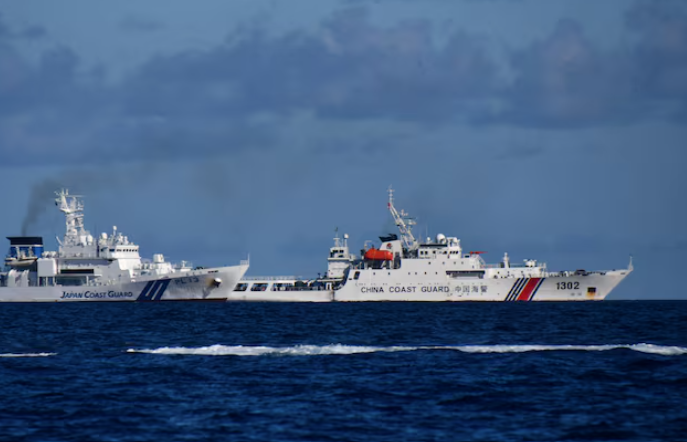
Japan's coast guard has moved to eject two Chinese vessels operating near the strategically significant Senkaku Islands, the latest confrontation in a territorial dispute that has become increasingly fraught with Beijing over the past eight months. The incident occurred on Tuesday, July 7, when the Chinese ships were detected approaching Japanese waters where a domestic fishing vessel was operating. The Japanese coast guard issued expulsion orders that succeeded in forcing both vessels out of Japanese territorial waters by approximately 9:20 am local time, with the statement emphasizing that the action was taken in accordance with international law.
The Senkaku Islands, referred to as the Diaoyu by China, represent one of the most persistently contentious flashpoints in East Asia's geopolitical landscape. Located in the East China Sea between Taiwan and Japan's Okinawa prefecture, these islands sit atop areas believed to contain substantial reserves of oil and natural gas, making them valuable beyond mere territorial pride. For decades, Japan has administered the islands while China has contested this claim, creating a situation where neither side shows any willingness to concede. The area has become a testing ground for maritime power projection, with both nations' coast guards engaging in increasingly assertive patrols and enforcement operations.
According to Japan's coast guard statement, the situation on Tuesday involved four Chinese vessels in the vicinity of the islands before two of them penetrated what Tokyo considers its territorial waters. The deliberate approach toward the Japanese fishing boat operating in the area represents an escalation in tactics, as such direct confrontations remain comparatively rare despite the routine presence of Chinese maritime enforcement vessels in the disputed zone. This departure from the standard pattern of shadowing and deterrence suggests a more confrontational stance by Beijing's coast guard operations in the region.
The immediate trigger for this elevated tension can be traced to statements made by Japanese Prime Minister Sanae Takaichi in November of the previous year regarding Tokyo's potential military response to any armed aggression against Taiwan. Her remarks, which explicitly raised the possibility of Japanese military intervention should Taiwan face attack, provoked an angry response from Beijing, which views the self-governed island as a renegade province with no right to external military support. China has made abundantly clear that it has not excluded the option of forcibly unifying Taiwan with the mainland, making any suggestion of Japanese military involvement in Taiwan's defense deeply threatening to Beijing's strategic calculations.
Beijing's response to Takaichi's Taiwan comments has been multifaceted and deliberately punitive. Beyond the escalated maritime operations, Chinese authorities have discouraged their citizens from traveling to Japan and imposed trade restrictions targeting select Japanese companies, creating economic pressure alongside the military posturing. These measures reflect a broader Chinese strategy of demonstrating costs for what Beijing perceives as interference in its internal affairs, particularly regarding Taiwan. The timing of the Senkaku incident, occurring roughly eight months after the prime minister's remarks, suggests that Beijing continues to view these waters as an appropriate venue for expressing displeasure with Japanese policy.
The June 10 intrusion, which preceded Tuesday's incident by less than a month, indicated that Chinese coast guard operations in the disputed waters had resumed their regular pattern after a period of relative restraint. However, Tuesday's incursion distinguishes itself through the apparent targeting of a Japanese civilian fishing vessel, which adds a dimension of pressure on Japan's civilian maritime operations. This tactic, if repeated, could have serious implications for the sustainability of Japanese commercial fishing activities in waters that Tokyo claims as its own, creating economic pressure beneath the surface of the formal territorial dispute.
Japan's coast guard has framed its response as both measured and resolute, emphasizing that it will continue to operate according to established international and domestic legal frameworks. The deployment of vessels around the Japanese fishing boat to ensure its safety demonstrates the security dilemma inherent in these confrontations—a situation where one side's defensive measures are perceived by the other as provocative escalation. This dynamic has the potential to spiral, as each nation interprets the other's actions through a lens of suspicion and historical grievance.
The strategic importance of these disputes extends far beyond the bilateral relationship between Japan and China. Southeast Asian nations with competing claims in the South China Sea and East China Sea watch these confrontations closely, as they establish precedents for how maritime disputes might be managed or escalated in the region. Malaysia, Vietnam, and the Philippines all maintain overlapping claims with China in contested waters, making the Senkaku situation a microcosm of broader regional tensions. The pattern of Chinese coast guard assertiveness in these areas signals Beijing's willingness to use maritime enforcement vessels as instruments of territorial pressure, a tactic that reverberates throughout Southeast Asia.
The East China Sea's significance as a potential energy resource zone adds economic weight to what might otherwise be dismissed as mere nationalist posturing. The belief that substantial oil and gas deposits lie beneath these disputed waters transforms the territorial question from one of abstract sovereignty into a competition for tangible resources. As energy security becomes increasingly important in a world focused on transitioning away from fossil fuels, these deposits retain strategic importance even as the broader global energy landscape shifts. China's continued efforts to assert control over these resources, despite international condemnation and Japanese protests, suggests that Beijing views long-term resource security as a priority justifying near-term diplomatic and military costs.
Looking forward, the trajectory of these maritime confrontations will likely depend on whether diplomatic channels between Tokyo and Beijing can be reactivated and whether either side shows willingness to de-escalate after the friction created by Taiwan-related comments. The coast guard agencies on both sides will continue their patrols and enforcement operations, creating multiple opportunities for miscalculation or inadvertent escalation. The presence of civilian fishing vessels in these contested waters, often operating without direct military protection, introduces an element of vulnerability that could accidentally trigger a larger confrontation. Japan's coast guard presence provides a buffer, but this arrangement remains inherently unstable and dependent on the restraint of all parties involved in these tense maritime encounters.

