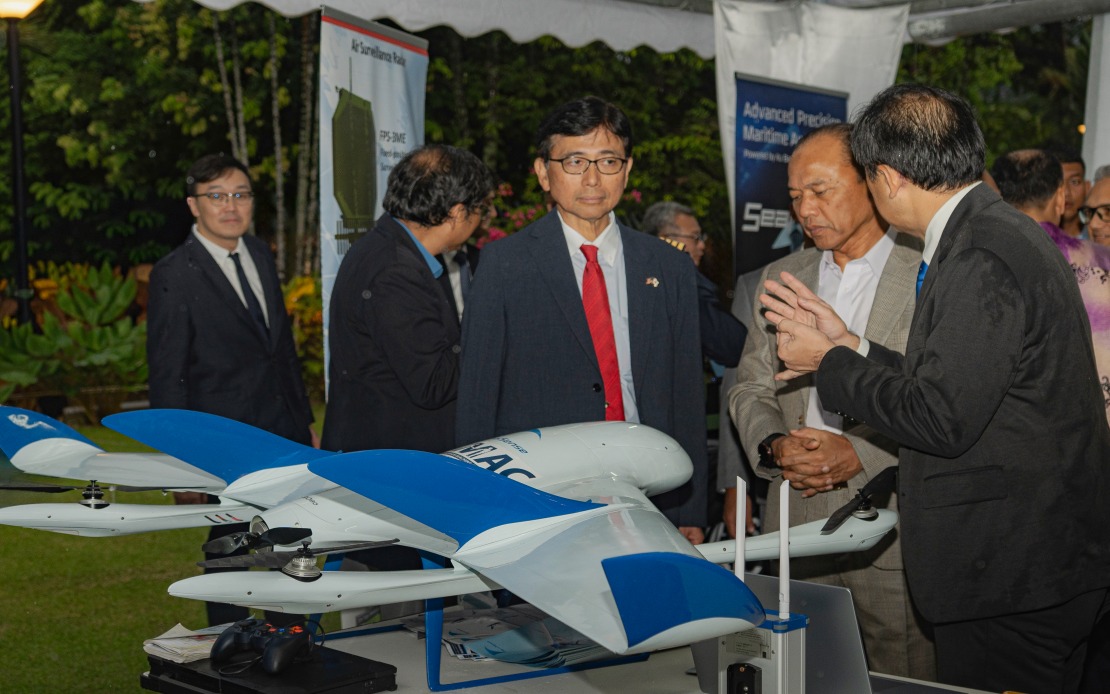
Japan's diplomatic mission in Kuala Lumpur has signalled a significant expansion of defence and security cooperation with Malaysia, reflecting Tokyo's broader strategic commitment to maintaining stability across the Indo-Pacific as geopolitical tensions continue to mount. Japanese Ambassador Noriyuki Shikata made the announcement during remarks at the 72nd Japan Self-Defence Forces Day Reception in the capital on Wednesday, underscoring Japan's readiness to deepen collaborative security efforts at a time when the region faces increasingly intricate strategic challenges.
The strengthened partnership initiative follows Malaysian Prime Minister Datuk Seri Anwar Ibrahim's recent visit to Japan, during which he met with Japanese Prime Minister Sanae Takaichi. The two leaders reaffirmed their mutual commitment to advancing strategic cooperation, with defence and security positioned as the foundation of bilateral engagement. This high-level diplomatic exchange signals that both governments view their security relationship as essential to regional prosperity and stability, moving beyond traditional economic or cultural partnerships to address contemporary military and strategic concerns.
A cornerstone of the enhanced cooperation is the alignment between Japan's Free and Open Indo-Pacific (FOIP) vision and ASEAN's Outlook on the Indo-Pacific. These complementary strategic frameworks reflect a shared commitment among regional democracies to preserve freedom of navigation, uphold international law, and resist unilateral attempts to alter the status quo through coercion or military intimidation. The convergence of these visions is particularly significant for Malaysia, which sits at the nexus of major shipping lanes and competing great-power interests, making it a key player in regional stability efforts.
The relationship between Japan and Malaysia reached a critical juncture in 2023 with the elevation of their bilateral ties to a Comprehensive Strategic Partnership, a designation typically reserved for nations with aligned strategic interests and deep institutional linkages. Ambassador Shikata highlighted this milestone while noting that next year marks the 70th anniversary of formal diplomatic relations between the two countries, framing the current moment as an opportune time to advance cooperation across multiple domains. The ambassador's commitment to taking the partnership "to the next level in every field, including defence and security" suggests Tokyo views Malaysia as a priority partner in its broader Indo-Pacific strategy.
Practical military cooperation has already taken concrete form through the MALPAN bilateral exercise series, conducted regularly in the South China Sea and Strait of Malacca. These joint operations, which traditionally involved the Japan Maritime Self-Defence Force and Royal Malaysian Navy, expanded in April to include the Royal Malaysian Air Force, creating opportunities for enhanced coordination across maritime and air domains. Such exercises serve multiple functions: they build institutional trust between armed forces, improve tactical interoperability, establish communication protocols for crisis scenarios, and collectively signal to other regional actors the commitment of both nations to maintaining open sea lanes and freedom of navigation.
Beyond traditional military exercises, Japan has deployed its Official Security Assistance (OSA) programme as a mechanism for strengthening Malaysia's defence capabilities. Launched in 2023, the OSA framework represents a shift in Japan's security engagement approach, moving beyond advisory relationships toward providing concrete military hardware. Malaysia was among the first recipients under this scheme, receiving unmanned aerial vehicles and rescue boats in the initial phase. For 2025, Japan has expanded its assistance to include equipment for ceasefire monitoring operations deployed with the ASEAN Observer Team and is committed to providing a diving support vessel to the Royal Malaysian Navy, demonstrating sustained commitment to Malaysian maritime security needs.
These equipment transfers carry significance beyond their face value, addressing specific operational gaps within Malaysian defence forces while simultaneously strengthening the interoperability of regional military systems. The provision of UAVs enhances Malaysia's surveillance and intelligence-gathering capabilities across its extensive maritime territories, while diving support vessels strengthen capacity for underwater operations and marine infrastructure protection. Such assistance reflects Japan's understanding of Malaysia's security priorities and geographic vulnerabilities, positioning Tokyo as a reliable and responsive partner.
Defence industry cooperation has emerged as a secondary but equally important pillar of the expanded partnership. Japanese defence companies demonstrated their commitment to the Malaysian market through substantial participation in Defence Services Asia 2026, held in Kuala Lumpur, where ten Japanese firms showcased advanced defence technologies and equipment. More significantly, Japan and Malaysia formally established a bilateral defence industry dialogue during the exhibition, creating institutional mechanisms for ongoing engagement between their respective defence industrial bases. This dialogue framework promises to facilitate technology transfer, joint development initiatives, and knowledge-sharing arrangements that could benefit Malaysia's long-term defence modernisation objectives.
The strategic context undergirding these initiatives cannot be separated from broader regional security dynamics. The Indo-Pacific remains subject to tension between established and rising powers, with maritime disputes, territorial claims, and competition for influence creating persistent uncertainties. Malaysia, as a middle power with significant maritime interests and ASEAN leadership responsibilities, must carefully balance relationships while protecting its sovereignty and economic interests. Japan's security partnership offers Malaysia a connection to a technologically advanced, rule-based democratic system without the strategic coercion or political conditionality that might accompany assistance from other sources.
For Malaysian observers, the deepening security relationship with Japan represents one element of a broader diversification strategy aimed at preventing any single power from dominating regional affairs. The emphasis on upholding international law, maintaining open sea lanes, and supporting ASEAN unity suggests that both Tokyo and Kuala Lumpur share concerns about unilateral attempts to alter the regional balance. The partnership is notably non-exclusive and consistent with Malaysia's ASEAN identity, since Japan's FOIP vision explicitly includes engagement with ASEAN as a collective entity rather than attempting to divide member states through bilateral arrangements.
Looking forward, the trajectory of Japan-Malaysia cooperation suggests an expanding security relationship across multiple dimensions. As the two nations approach their 70th anniversary of diplomatic ties, the convergence of strategic interests, the maturation of defence partnerships, and the expansion of military-to-military cooperation create momentum for further integration. General Tan Sri Malek Razak Sulaiman's presence at the reception as Malaysia's Armed Forces chief underscored the institutional buy-in from Kuala Lumpur's military establishment, suggesting these partnerships enjoy broad support among Malaysian defence decision-makers.
The security cooperation framework between Japan and Malaysia ultimately reflects a shared commitment to maintaining a rules-based regional order in an increasingly competitive strategic environment. Through practical exercises, technology transfers, equipment provision, and industrial dialogue, both nations are building resilient institutions and capabilities designed to preserve stability and prosperity in one of the world's most economically vital regions. For Malaysia specifically, this partnership provides access to advanced defence technologies, professional military education, and political alignment with a trusted democratic partner, while Japan gains a committed ally in maintaining regional balance and upholding the international law framework upon which its own prosperity depends.

