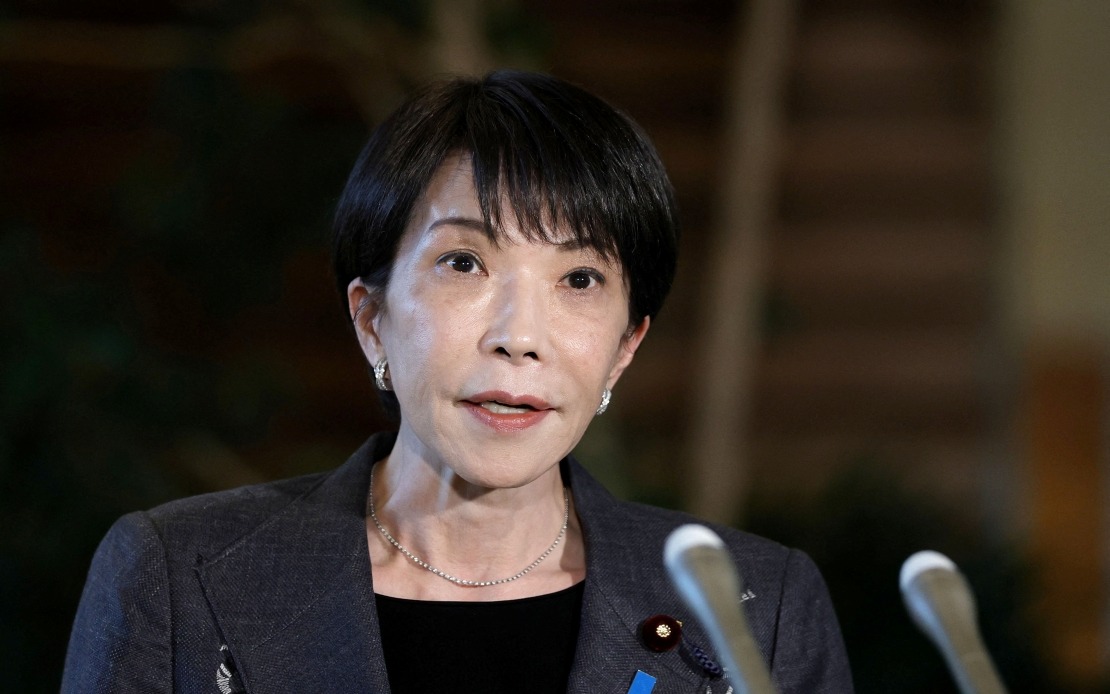
Japanese Prime Minister Sanae Takaichi marked the 81st anniversary of the end of World War II on Saturday by dispatching a ritual offering to Yasukuni shrine in Tokyo, a symbolic gesture that underscores Japan's complex relationship with its wartime past. The contribution, funded personally by Takaichi in her capacity as president of the ruling Liberal Democratic Party, represents her engagement with the shrine's commemoration without making a physical appearance at the site. This carefully calibrated approach reflects the political sensitivities surrounding visits to the controversial Shinto shrine, which has become a flashpoint in regional diplomacy across East Asia.
Defence Minister Shinjiro Koizumi made an in-person visit to Yasukuni on the same day, becoming the first serving defence minister confirmed to have visited during the war anniversary since Minoru Kihara's appearance on August 15, 2024. Kihara, now serving as chief Cabinet secretary in Takaichi's administration, had previously visited the shrine on the same date in his earlier capacity. Additionally, Hitoshi Kikawada, a Cabinet member overseeing matters related to Japan's territorial disputes with Russia, also paid respects at the shrine, reflecting how various government officials continue to engage with the site despite diplomatic complications.
The Yasukuni shrine houses the venerated spirits, or kami, of approximately 2.5 million individuals who died in Japan's military conflicts, including those responsible for orchestrating imperial Japan's expansionist campaigns. Among the enshrined are fourteen wartime leaders who were formally elevated to the status of deities in 1978, a designation that remains deeply controversial. These individuals include General Hideki Tojo, who served as prime minister during much of the Pacific War before his execution in 1948 following conviction for crimes against peace at the International Military Tribunal for the Far East. The enshrinement of these figures transformed Yasukuni from a traditional memorial site into a symbol of Japan's wartime militarism that continues to provoke diplomatic tensions nearly eighty years after the war's conclusion.
Takaichi's decision to refrain from visiting the shrine personally since her assumption of office last October represents a departure from her previous practice of attending seasonal festivals and the August 15 commemoration. This restraint appears calculated to minimize international backlash during her tenure as prime minister, though her financial contribution maintains a symbolic connection to the site. The distinction between sending an offering and making a physical visit reflects the intricate political balancing act required of Japan's leaders when addressing historical grievances that remain unresolved across the region. Senior party officials, including LDP Secretary General Shunichi Suzuki, General Council head Haruko Arimura, and Election Strategy Committee chairman Yasutoshi Nishimura, proceeded with their own visits, suggesting a broader institutional engagement with the shrine despite the prime minister's more restrained approach.
China and South Korea maintain particularly strong objections to any governmental engagement with Yasukuni, viewing such actions as minimizing or denying Japan's historical responsibility for wartime atrocities. Japan's 1910-1945 colonization of the Korean Peninsula and occupation of vast territories across China resulted in millions of casualties and inflicted deep historical wounds that continue to shape contemporary regional relations. Official visits to Yasukuni are frequently interpreted in Beijing and Seoul as attempts to rehabilitate Japan's wartime legacy rather than as genuine historical reflection, thereby complicating diplomatic negotiations on a range of contemporary security and economic issues affecting Northeast Asia.
Japan's constitutional framework since 1947 has explicitly renounced war and committed the nation to peaceful conflict resolution, representing a fundamental break with its imperial past. However, the country's evolving security posture reflects what Tokyo characterizes as an increasingly challenging regional environment. Facing rising military capabilities in the region and ongoing tensions related to Taiwan, territorial disputes in the South China Sea, and North Korea's weapons development, Japan has substantially increased defence spending and capabilities over recent years. This modernization effort coexists uneasily with the nation's pacifist constitution and its historical positioning as a force for regional stability, creating tensions between security imperatives and historical consciousness.
The August 15 commemoration carries special significance as the date marking Japan's formal surrender in 1945, yet it remains interpreted differently across the political spectrum. Conservatives tend to emphasize national resilience and recovery following the war, while progressive voices stress accountability and reconciliation. This ideological divide plays out annually through the symbolic choices made by political leaders regarding Yasukuni, with each decision subject to intense scrutiny both domestically and internationally. Takaichi's hybrid approach—financial contribution without physical presence—attempts to navigate this contested terrain while managing both domestic conservative constituencies and international diplomatic relationships.
For Malaysia and other Southeast Asian nations with their own experiences of Japanese occupation during the Pacific War, these annual commemorative rituals carry particular resonance. The region endured significant suffering under Japanese military rule, and official Japanese acknowledgment of this history remains important for building trust and deepening regional cooperation frameworks. While Japan's postwar record of peaceful development and economic cooperation with ASEAN nations has largely superseded historical grievances in contemporary bilateral relations, the continued sensitivity surrounding Yasukuni demonstrates how historical memory continues shaping diplomatic calculations across the region.
The broader context of Japan's engagement with its wartime past illustrates the challenge democratic societies face when reconciling national pride with historical accountability. Unlike Germany's comprehensive institutional mechanisms for historical reckoning, Japan's approach has been more varied and contested, with political actors employing different strategies to address or deflect from uncomfortable historical realities. Takaichi's measured response to Yasukuni—neither completely rejecting nor fully embracing the shrine—reflects this ongoing ambivalence, suggesting that Japan continues to wrestle with how best to remember its wartime period in ways that satisfy both domestic constituencies and international sensitivities. As Japan strengthens its regional security posture and deepens its diplomatic engagement across Asia, resolving these historical questions remains an ongoing challenge that affects contemporary alliance-building and regional stability calculations.

