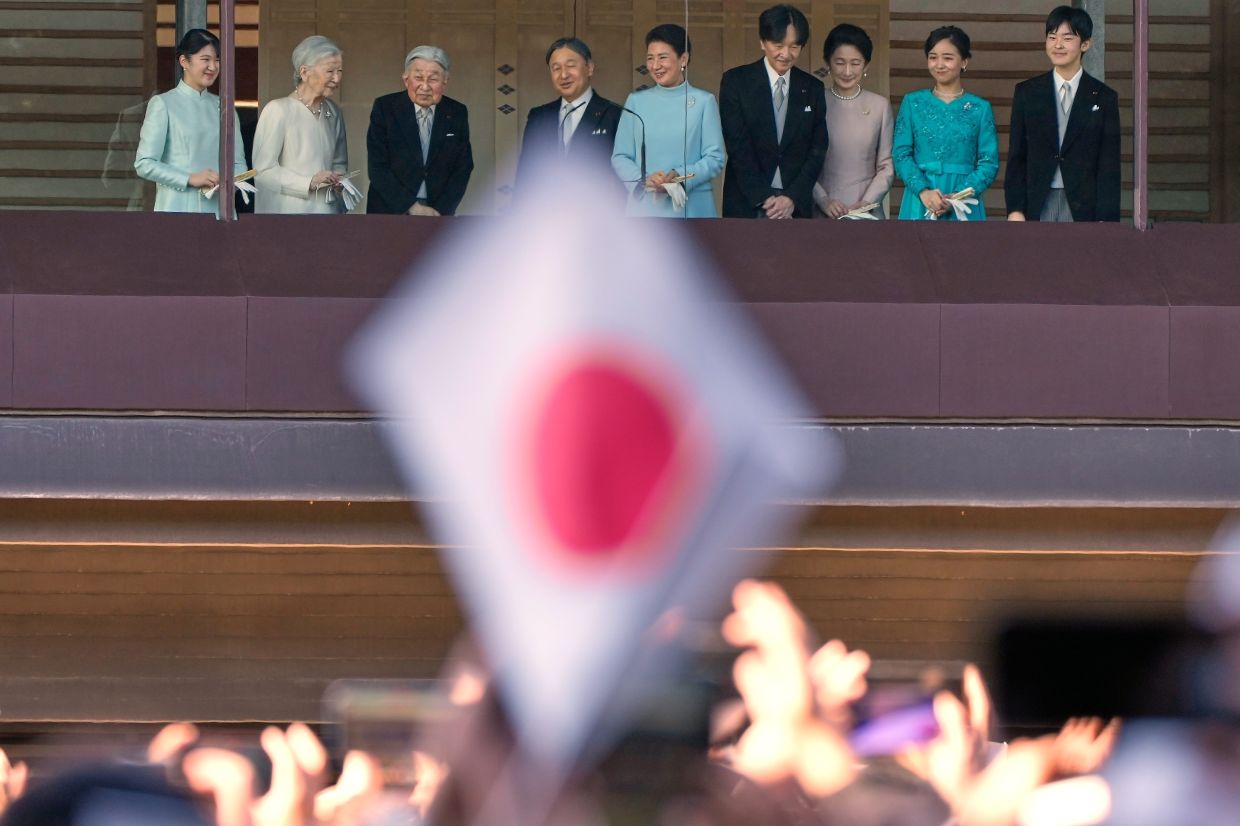
Japan's legislature has enacted modifications to its imperial succession framework, yet the fundamental prohibition against female emperors remains intact despite polling indicating widespread public appetite for change. The upper house passed the revised legislation on Friday, with backing from across the political spectrum, though the new measures fall considerably short of addressing the succession concerns that have preoccupied palace officials and constitutional scholars for years.
The imperial line faces an increasingly precarious situation centred on the young Prince Hisahito, nephew to the reigning Emperor Naruhito and currently aged 19. As the sole remaining male heir within the immediate imperial circle, Hisahito represents the last realistic prospect for male-line continuity under existing constitutional constraints. The teenager, who recently completed his schooling and is now pursuing biological studies with a particular interest in entomology, remains unmarried with no immediate prospect of fathering children. Should he fail to produce a son, the unbroken male succession stretching back centuries would terminate entirely.
The legislative package enacted this week attempts to address this demographic crisis by permitting the reinstatement of male descendants from imperial branch families—those who relinquished their royal status following World War II—provided they are at least 15 years old and currently unmarried. Additionally, the reform grants women who marry outside the imperial household the right to maintain their royal designation, a privilege already extended to male family members. While these adjustments represent meaningful procedural shifts, they deliberately circumvent the more fundamental question of female succession that has dominated recent public discourse.
Japan's Imperial Household Law, adopted during the postwar reconstruction period in 1947, enshrines the restriction of imperial succession exclusively through the male line—a principle rooted in centuries of tradition but increasingly at odds with contemporary Japanese values. The legislation effectively excludes from consideration Princess Aiko, daughter of the current emperor and widely admired throughout the nation, along with Hisahito's two elder sisters. Despite her evident popularity and her status as direct offspring of the reigning monarch, Aiko remains constitutionally barred from ever occupying the Chrysanthemum Throne.
The political pathway to these reforms proved contentious within the governing Liberal Democratic Party, now led by Prime Minister Sanae Takaichi, the nation's first woman chief executive. Remarkably, Takaichi herself opposes the prospect of female succession, creating an apparent contradiction that prompted considerable internal party debate. Conservative elements within the LDP hierarchy resisted more sweeping changes, ultimately producing a compromise measure that addresses only the margins of the succession question rather than its core.
Criticism of the government's cautious approach has emerged from unexpected quarters. Seiichiro Murakami, a veteran lawmaker within the ruling party, publicly characterised the decision to exclude Princess Aiko as "utterly outrageous" following the lower house vote on 10 July. Even the Yomiuri Shimbun, Japan's highest-circulation newspaper and traditionally a staunch LDP supporter, has editorially rebuked the government for its unwillingness to embrace female succession, signalling that mainstream conservative opinion has begun to shift on this question.
Former imperial family member Asahiro Kuni, now 81 and himself a former prince, has articulated significant practical reservations about the strategy of recruiting distant male relatives from outside the imperial system. Kuni belongs to one of eleven branch families that severed their official connection to the imperial register during the immediate postwar era, and he has publicly expressed scepticism that such individuals could realistically adapt to the extraordinary constraints of imperial life. Speaking to the Asahi Shimbun newspaper, Kuni observed that by age 15, a young person has already developed expectations of personal freedom that would prove incompatible with the rigid protocols of the imperial household.
Kuni elaborated further on the psychological and social difficulties inherent in imperial service, suggesting that while some individuals might theoretically embrace membership in the imperial family, the practical realities of royal life would likely prove disillusioning. He indicated that many potential candidates, upon understanding the genuine hardships entailed by such service, would decline the honour regardless of the prestige attached. This assessment from someone with direct experience of imperial family dynamics carries particular weight and suggests that the legislative solution may prove unworkable in practice.
Public sentiment on the succession question diverges sharply from the government's conservative legislative approach. An Asahi Shimbun poll conducted in May found that 72 percent of Japanese respondents favour changing the constitutional framework to permit female succession, indicating that this position commands substantial majority support across the general population. This substantial endorsement suggests that the restriction on female emperors increasingly reflects the preferences of political and institutional elites rather than the broader public will.
The imperial household currently comprises 16 members in total, with only five male individuals of imperial status remaining. These include retired Emperor Akihito, now 92 years old; his brother, aged 90; the reigning Emperor Naruhito, 66; Naruhito's brother; and Prince Hisahito. This demographic composition underscores the urgency of the succession question and the limited pool of possible heirs under the existing male-line restriction. The mathematics of imperial demographics increasingly favour consideration of female succession as a practical necessity rather than merely a matter of principle.
The reforms passed on Friday represent an interim solution to an intensifying constitutional dilemma. Rather than confronting the fundamental tension between traditional succession principles and contemporary governance requirements, the legislation attempts to extend male-line continuity through secondary mechanisms. Whether these measures will prove sufficient to prevent the imperial bloodline's extinction remains an open question that will ultimately depend upon the reproductive choices of Prince Hisahito and the willingness of distant male relatives to join the imperial family despite the reservations articulated by former members.

