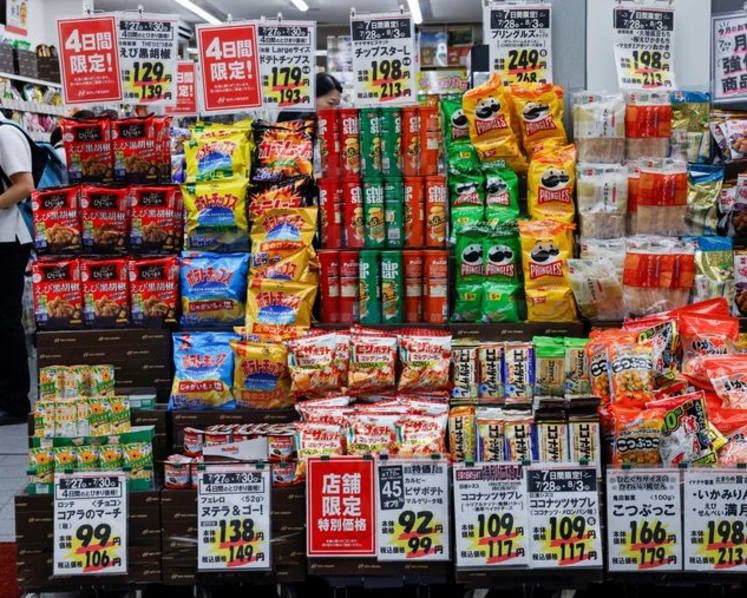
Japan's newly elected Prime Minister Sanae Takaichi has unveiled an ambitious plan to temporarily slash consumption tax on food to a mere 1%, down from the current 8% rate, effective from April 2025. The historic reduction represents the first such cut since the consumption tax system was first introduced in Japan in 1989, signalling a significant policy shift as the administration grapples with mounting inflationary pressures that are squeezing household budgets across Asia's second-largest economy. The tax rate on food and beverages will revert to the standard 8% after the two-year trial period concludes in 2029.
The decision reflects growing political recognition that ordinary Japanese families face genuine hardship as living costs accelerate due to multiple economic headwinds. The depreciation of the yen against the US dollar, a consequence of diverging monetary policies between the Bank of Japan and the Federal Reserve, has made imported goods substantially more expensive. Simultaneously, global energy and commodity price spikes—partly driven by geopolitical instability in the Middle East—have cascaded through supply chains, raising the cost of everything from petrol to basic foodstuffs. For consumers in Japan, these pressures have compounded existing concerns about stagnant wages and rising social insurance contributions.
Takaichi's pledge to tackle food affordability formed a central plank of her electoral campaign, and this announcement delivers on that commitment ahead of the two-year implementation window. The measure carries profound political weight; she secured a resounding victory in recent lower house elections partly on the strength of this populist promise to ease the tax burden on essential goods. The government framed the policy as a direct response to voter demand for tangible relief from cost-of-living pressures, positioning it as part of a broader effort to restore household purchasing power and support economic growth.
Economically, the initiative carries a hefty price tag that demands scrutiny given Japan's already precarious fiscal position. The government estimates the two-year tax cut will reduce revenues by approximately 10 trillion yen, equivalent to roughly US$61 billion. This substantial loss comes at a particularly delicate moment for Japanese public finances. Japan carries the highest debt-to-GDP ratio among advanced industrial economies, with government liabilities exceeding twice the nation's annual economic output. The International Monetary Fund and credit rating agencies have long expressed concern about the sustainability of Japan's debt trajectory, making large unfunded expenditures a matter of significant economic risk.
To offset the revenue shortfall, the administration has committed to exploring various compensatory measures rather than resorting to debt financing. Takaichi explicitly pledged that the government would avoid relying on special government bonds—essentially temporary borrowing mechanisms—to fund the tax cut. Instead, officials have signalled an intention to reassess existing tax reliefs and subsidy programmes, seeking to redirect funds from less efficient or less pressing programmes toward food price relief. This approach suggests a reallocation of expenditure priorities rather than outright fiscal expansion, though the mechanics of identifying and redirecting savings remain unclear and will undoubtedly prompt intense parliamentary scrutiny.
The timing of the April 2025 start date coincides strategically with the government's introduction of more targeted income support mechanisms aimed specifically at lower-income workers struggling with elevated social insurance premiums. By 2029, when the food tax rate returns to 8%, the administration plans to have implemented these more precisely calibrated subsidies that will ostensibly maintain living standards for vulnerable populations without the broad-brush approach of across-the-board tax cuts. This sequencing reflects a policy philosophy that universalised tax relief should eventually yield to means-tested assistance more carefully designed to support those genuinely in need.
For Malaysian and Southeast Asian observers, Japan's decision offers instructive lessons about the political imperatives driving fiscal policy in wealthy democracies facing inflation. Unlike many developing economies in the region that lack the fiscal capacity to absorb substantial revenue losses, Japan's mature institutions and investment-grade credit rating provide greater flexibility to implement populist economic measures. However, the underlying tension remains universal: how to balance immediate relief for struggling households against longer-term fiscal sustainability concerns. Malaysia, facing its own inflation pressures and elevated public debt levels, may view Japan's approach with both interest and caution, recognising both the political appeal of such measures and the genuine constraints they impose on future policy options.
The international dimension of this policy shift merits particular attention. Japan's weak yen, which has contributed significantly to import-driven inflation, partly reflects the divergence between the Bank of Japan's accommodative monetary stance and aggressive rate hikes pursued by the US Federal Reserve. A tax cut that sustains domestic demand may have subtle implications for currency markets and Japan's external balance, though the effect will likely be modest. More broadly, Japan's inflation challenge, though real, remains modest compared to the double-digit price pressures experienced in Western economies or several developing Asian nations, suggesting that Japanese policymakers have considerable room to implement consumer-friendly measures without risking runaway inflation.
The broader policy landscape in Japan indicates that cost-of-living concerns will likely dominate domestic political discourse for years ahead. Public sentiment clearly favours direct interventions that ease household budgets, as demonstrated by Takaichi's electoral success. Whether the two-year food tax experiment successfully stabilises prices without undermining fiscal credibility will significantly influence the trajectory of Japanese economic policy beyond 2029. If the measure succeeds in easing inflation without sparking new fiscal crises, it may establish a precedent for similar interventions. Conversely, if it proves ineffective or compounds Japan's debt predicament, it could trigger a policy reversal or more austere fiscal consolidation later in the decade.

