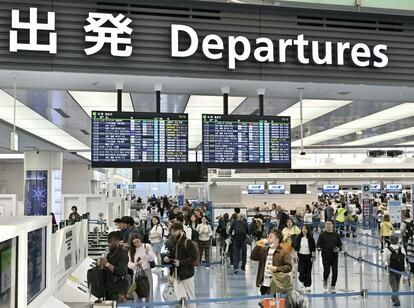
Japan has implemented substantial increases to its departure and visa fees, signalling a strategic shift in how the government manages the economic and social consequences of record tourism numbers. From July 1, the departure tax climbed to 3,000 yen per person, representing a threefold jump from the previous 1,000 yen threshold. Simultaneously, foreign visitor visa fees surged to 15,000 yen for single-entry permits and 30,000 yen for multiple-entry visas, marking the first adjustment to these rates in nearly five decades. The twin measures underscore Tokyo's determination to strike a careful balance between welcoming international guests and containing the mounting pressures on infrastructure, public spaces, and quality of life in major tourism hotspots.
The departure levy, formally known as the international tourist tax, operates as a broad-based charge levied on all travellers leaving Japan by air or sea, irrespective of nationality. Airlines, cruise operators, and travel agencies collect the fee at the point of ticket purchase and remit proceeds to the government through the Japan Tourism Agency. This mechanism ensures comprehensive coverage while distributing collection responsibilities across the travel industry. In the fiscal year ending March 2025, the tax generated approximately 49 billion yen, a figure expected to nearly triple to around 130 billion yen in fiscal 2026, reflecting both the increased rate and anticipated growth in international departures.
The revenue from the enhanced departure tax will be channelled strategically into infrastructure improvements and visitor management initiatives. Priority spending focuses on addressing chronic congestion at Japan's most celebrated tourist attractions, particularly iconic photography locations that routinely attract overwhelming crowds. The government plans to establish designated viewing and photography zones at these sites to distribute visitor flow more evenly and reduce bottlenecks that degrade the experience for both domestic and international guests. Beyond managing famous landmarks, the broader spending programme encompasses regional tourism development projects designed to redirect visitors away from saturated urban centres towards lesser-known destinations and local experiences.
Regional revitalisation projects funded by the tax include initiatives to transform local railway networks into tourist attractions themselves, capitalising on Japan's extensive rail infrastructure to encourage exploration beyond the Tokyo-Kyoto corridor. Station building renovations will enhance both functionality and aesthetic appeal, making provincial hubs more inviting gateways to surrounding communities and natural attractions. These investments reflect recognition that sustainable tourism growth requires distributing visitor spending across Japan's geography rather than concentrating it in a handful of major metropolitan areas. For rural prefectures facing demographic decline and economic stagnation, redirected tourism flows represent a genuine opportunity for revenue generation and employment creation.
The visa fee increase, while substantial, carries particular significance as the first adjustment since 1978. Foreign Minister Toshimitsu Motegi framed the increases as necessary corrections reflecting decades of inflation and currency depreciation, positioning the move as a technical recalibration rather than a deterrent to tourism. Officials explicitly stated that the fee changes are not anticipated to suppress demand for Japan visas, a politically important assertion given that record inbound tourism has become a cornerstone of Japan's economic strategy under recent administrations. However, the timing and magnitude of the increase merit scrutiny for Malaysian travellers and other regional visitors accustomed to Japan's historically competitive visa costs relative to other Group of Seven nations. Japan's visa fees had ranked among the lowest charged by major developed economies, providing a comparative advantage that the new rates meaningfully erode.
The visa fee structure differentiates between single-entry and multiple-entry permits, with the latter now costing double the single-entry rate at 30,000 yen. This pricing strategy incentivises repeat visitors and tourism professionals to opt for multiple-entry visas despite the steeper upfront cost, potentially enhancing revenue while encouraging longer-term tourism relationships. The fee adjustment affects foreign nationals across all jurisdictions applying for Japanese visas, though the impact falls heaviest on travellers from countries with weaker currency positions relative to the strengthened yen. For Southeast Asian visitors, already managing the effect of Japanese currency appreciation on travel costs, the visa fee increase compounds existing affordability pressures.
Paralleling the tourism-related fee increases, the Japanese government simultaneously reduced passport application costs for its own citizens, a deliberate policy choice designed to offset the departure tax burden on domestic travellers. Passport fees dropped substantially for standard applications at designated counters, with ten-year passports declining to 9,300 yen from 16,300 yen for adults, while five-year passports were standardised at 4,800 yen for applicants under eighteen. Online applications receive further discounts, dropping to 8,900 yen and 4,400 yen respectively, creating incentive structures that promote digital application processing and reduce administrative costs. This differentiation acknowledges that Japanese citizens departing the country now face the elevated departure tax, and the government sought to mitigate this burden through lower passport renewal costs.
The passport fee reductions serve a secondary policy objective beyond compensating for the departure tax: increasing Japan's passport ownership rate, which remains notably low compared with other advanced economies. Higher passport ownership facilitates greater outbound tourism and international mobility, supporting Japan's diplomatic objectives and cultural influence abroad while potentially stimulating demand for overseas travel experiences. The fee structure particularly incentivises young people and frequent travellers through discounted online channels, aiming to normalise international mobility as Japanese society confronts demographic stagnation and internal market limitations. For foreign affairs planners, expanded passport ownership amplifies Japan's soft power projection and diaspora engagement capacity.
Certain traveller categories receive exemption from the departure tax, reflecting policy considerations around transit traffic and family travel burdens. Passengers transiting through Japan with stays shorter than twenty-four hours are exempt, ensuring that connecting travellers using Japanese airports do not subsidise tourism infrastructure improvements from which they derive minimal benefit. Children under two years old are similarly exempt, recognising that infant international travel often involves accompanying adults who bear the tax burden. These exemptions narrow the departure tax base slightly but preserve the policy's fairness credentials and avoid discouraging family travel to Japan, which generates substantial secondary spending despite limited direct taxation opportunities.
The timing of these changes reflects Japan's confidence in maintaining tourism growth despite higher costs, resting on several underlying factors. Japan's distinctive cultural offerings, world-renowned hospitality standards, and position as a technological showcase continue generating powerful visitation demand that price elasticity alone is unlikely to suppress significantly. Regional competition exists from Thailand, Vietnam, and other Southeast Asian destinations offering lower costs, yet Japan's premium positioning in the global tourism market sustains demand among affluent international travellers less sensitive to moderate fee increases. The departure tax increase particularly targets this affluent demographic through price points that discourage casual day-trippers or budget-conscious backpackers while remaining manageable for tourists with meaningful spending capacity.
For Malaysian and broader Southeast Asian perspectives, these developments carry layered implications. Higher visa fees marginally increase the cost of Japan travel, potentially affecting visit frequency among middle-income Malaysian tourists while remaining manageable for affluent visitors. The departure tax applies equally to all nationalities, creating a level field internationally while subtly raising the effective cost of multi-destination Asian itineraries that include Japan as a stop. However, the infrastructure improvements and regional tourism development funded by these revenues may enhance visitor experiences by reducing crowding at popular sites and creating new destination options outside Tokyo and Kyoto. Malaysian travel agencies and tour operators will need to adjust pricing and package structures to reflect the new fee environment, though competition for market share may limit their ability to fully pass through cost increases to consumers.

