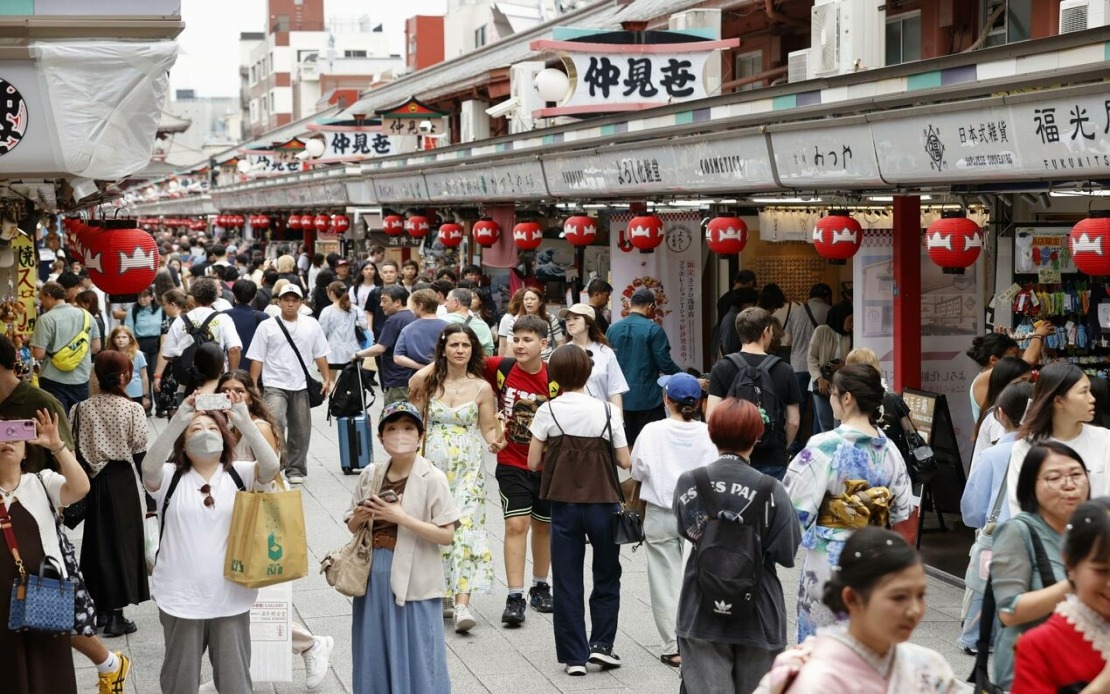
The Japanese summer travel season is facing headwinds this year as currency weakness and inflation combine to dampen consumer appetite for overseas getaways. Major travel agency JTB Corp projects that Japanese travellers will take 8.8 per cent fewer international trips during the July 15 to August 31 period, totalling 2.17 million journeys. This represents the first year-on-year decline since tourism rebounded following the COVID-19 pandemic in 2023, signalling a shift in spending behaviour among Japanese households as economic pressures mount.
The underlying cause is multifaceted. Japan's persistently weak yen means that every trip abroad becomes substantially more expensive for travellers accustomed to stronger purchasing power. When converted to the prices they actually pay, international holidays now cost roughly six per cent more per person than they did last summer, with average spending climbing to 323,000 yen per trip. This currency headwind is compounded by aviation fuel surcharges that have surged in response to geopolitical tensions in West Asia, adding another layer of cost that discourages both budget-conscious families and middle-class leisure travellers.
For Malaysian readers, this Japanese pullback offers an important barometer of broader travel trends in East Asia. Japan represents one of the largest sources of tourists to regional destinations, and a contraction in outbound travel—even a modest one—typically reverberates across Southeast Asian hospitality and tourism sectors. The data reveals that Japanese visitors are becoming far more selective about where they spend their money, reshaping which destinations benefit from spending and which struggle.
Geography is emerging as the primary driver of destination choices in this constrained environment. Nearby Asian neighbours are capturing an outsized share of Japanese summer travel. South Korea is leading the charge with 26.2 per cent of international trips, while Taiwan follows closely at 16.2 per cent. These short-haul options offer the dual advantage of lower airfares and cultural proximity, making them natural choices when budgets tighten. By contrast, long-distance markets like North America and Australia are facing considerably reduced visitor numbers as travellers balk at fuel surcharges and the extended expense of such trips.
China presents a striking case within this landscape. The number of Japanese visiting the country is forecast to reach just 10.1 per cent of international trips, representing a fifty per cent collapse from the previous year. This dramatic decline reflects not purely economic calculation but also diplomatic strain. Prime Minister Sanae Takaichi's remarks on Taiwan in November last year rattled bilateral relations between Tokyo and Beijing, creating an additional disincentive for travel beyond price considerations alone. For regional geopolitics, this demonstrates how political friction can quickly translate into tangible economic consequences for tourism and people-to-people exchange.
Domestically, Japanese consumers are tightening their belts as well. A projected 4.4 per cent drop in domestic travel to 69 million trips suggests that the pullback is not merely about avoiding expensive international flights but reflects broader anxiety about household budgets. Interestingly, while fewer Japanese are travelling within their own country, those who do venture domestically are spending slightly more per person—up 3.2 per cent to 48,500 yen. This apparent contradiction illuminates the polarisation that JTB has identified within the consumer base.
The geography of domestic travel offers clues about which regions are managing to retain visitor interest despite economic headwinds. Eastern Japan's Kanto region, centred on Tokyo, remains the dominant draw at 19.0 per cent of domestic trips, likely benefiting from its concentration of attractions and accessibility for short urban breaks. The Kinki region in western Japan attracts 14.9 per cent of domestic travellers, while Hokkaido in the north claims 11.2 per cent. These patterns suggest that travellers are concentrating their spending on established, convenient destinations rather than exploring new regions, another indicator of cost-consciousness shaping decisions.
JTB's official commentary captures an essential tension in contemporary consumer behaviour: a growing split between those sharply curtailing holiday plans through shorter trips or lower-cost alternatives, and those with sufficient means or desire who are willing to pay premium prices for their desired experiences. This bifurcation has significant implications for the travel industry, forcing operators to develop offerings that appeal either to budget-conscious segments seeking value or to affluent travellers indifferent to price. Mid-market options face particular pressure.
The currency dynamics underpinning these trends deserve close attention from Malaysian observers. The weak yen reflects broader monetary policy divergence between Japan and other developed economies, with the Bank of Japan maintaining accommodative rates while central banks elsewhere have hiked aggressively. As long as this divergence persists, Japanese travellers will face structural cost disadvantages abroad. For Southeast Asian destinations competing to attract Japanese visitors, this environment requires either developing value propositions or targeting the affluent segment willing to pay regardless of exchange rates.
These summer projections, derived from JTB's June online survey of prospective travellers, capture shifting consumer sentiment at a critical moment. Japanese households are recalibrating their expectations and priorities as inflation persists and currency weakness erodes purchasing power. The decline marks a turning point in the post-pandemic travel recovery narrative, suggesting that the rebound phase has given way to a more cautious, selective era in Japanese travel habits that could persist if macroeconomic conditions do not improve significantly in coming quarters.

