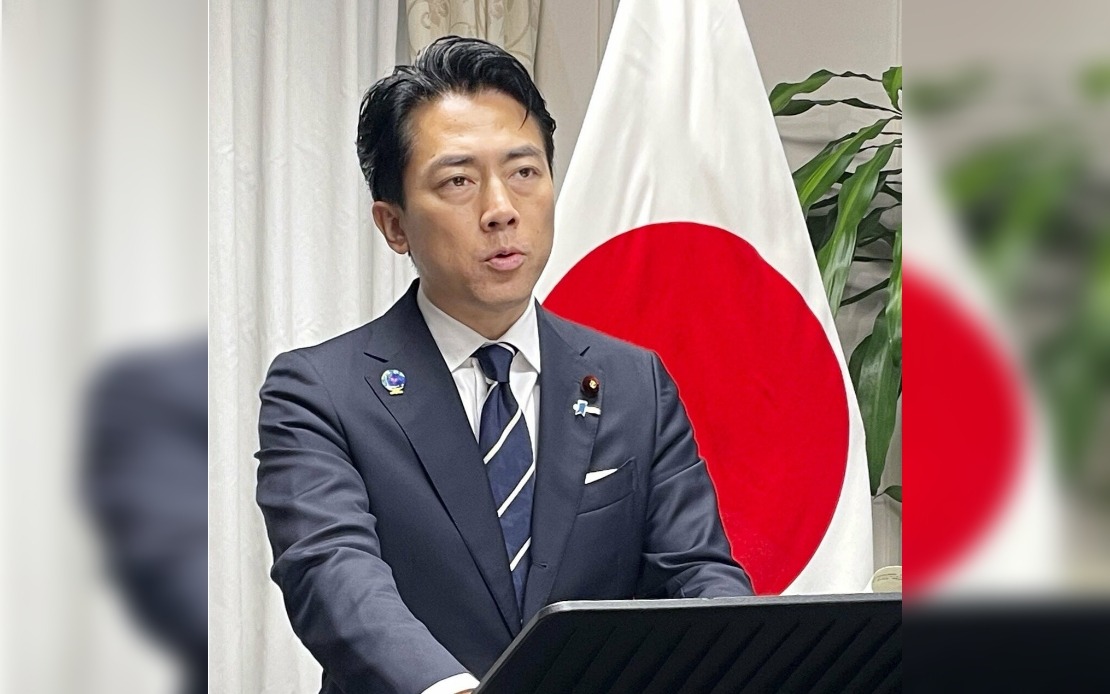
Japan's Defence Minister Shinjiro Koizumi has called for an open national debate on nuclear weapons, marking a significant shift in discourse for a nation that has historically maintained strict restrictions on nuclear armaments. Speaking during an online programme released on Friday, Koizumi framed the discussion as essential given the evolving security landscape, particularly as several European nations have recently adopted more assertive nuclear deterrence strategies. His remarks signal the government's intention to broaden the scope of its security policy review, with comprehensive revisions to three foundational national security documents scheduled for completion by year's end.
The Defence Minister specifically highlighted France and Finland as examples of countries recalibrating their nuclear posture in response to regional threats. Finland's parliamentary approval in June of legislation permitting nuclear weapons deployment within its borders represents a notable policy shift for a nation historically aligned with nuclear-free principles. Simultaneously, French President Emmanuel Macron announced in March that France intends to expand its nuclear warhead arsenal, underscoring how established democracies are reassessing the role of nuclear deterrence in contemporary geopolitics. For Southeast Asian observers, these European developments carry particular significance as they reflect broader patterns of strategic recalibration occurring across multiple regions.
Japan's position has long been distinctive among technologically advanced nations. As the sole country to experience nuclear weapons use during wartime, Japan adopted three foundational principles in the aftermath of Hiroshima and Nagasaki: the nation would not produce, possess, or permit nuclear weapons on its territory. These principles have remained embedded in Japanese security doctrine for decades, supported by a strong domestic consensus rooted in the country's unique historical trauma. However, Koizumi's intervention suggests the government believes this foundational consensus requires re-examination in light of contemporary strategic realities, particularly given rising tensions on the Korean Peninsula and China's expanding military capabilities.
While Japan maintains its dependence on the United States nuclear umbrella through bilateral security arrangements, Koizumi argued that the current security environment has fundamentally deteriorated, necessitating a more open examination of previously taboo topics. He suggested that the existing prohibition on discussing nuclear weapons has itself become an impediment to rational security planning. This framing represents a calculated attempt to legitimise conversation about policies previously considered politically radioactive, even among conservative policymakers who might have privately questioned the three principles' ongoing viability.
The Defence Minister's comments do not represent an isolated initiative within Japan's political establishment. In December of the previous year, a government official involved in security policy formulation under what was then Prime Minister Sanae Takaichi's administration suggested that Japan should actively pursue nuclear weapons capability. That proposal generated substantial domestic opposition from parliamentary opposition parties and diplomatic criticism from neighbouring countries, yet it reflected genuine debate occurring within Japan's security planning circles. Former Defence Minister Itsunori Onodera similarly ventured into this territory late last year, arguing that the nation's non-nuclear principles warrant fundamental reconsideration.
The timing of Koizumi's intervention carries particular significance given the government's broader security strategy review. By initiating this discussion before the formal revision of national security documents, Tokyo appears to be attempting to establish intellectual and political space for policy options that might have seemed unthinkable only a few years ago. The approach reflects a sophisticated understanding that major policy shifts typically require extended periods of public discourse and gradual normalisation of previously contested ideas. Rather than announcing dramatic policy changes precipitously, Japan's leadership is methodically building the foundation for potential future reorientation.
For regional stakeholders, Japan's potential reconsideration of its nuclear policy carries profound implications. Any significant alteration to Japan's non-nuclear posture would represent one of the most consequential shifts in Northeast Asian security architecture since the Cold War's conclusion. Such a development would likely trigger substantial diplomatic reverberations throughout Southeast Asia, where nations have constructed security frameworks partly around assumptions of Japanese restraint and non-militarisation. Malaysia and other ASEAN members have benefited from the relative stability provided by Japan's defensive security posture and its integration within the existing international order.
China, meanwhile, would almost certainly view any Japanese nuclear capability development as a strategic escalation requiring compensatory military expansion. Korea, both North and South, would confront fundamentally altered regional calculations. The United States, while publicly committed to the extended deterrence relationship with Japan, would face complex questions about managing alliance dynamics and nuclear proliferation risks. These cascading strategic consequences underscore why the debate Koizumi is proposing cannot remain confined to Japanese policy circles but instead constitutes a matter of pressing regional concern.
The Defence Minister's call for debate also reflects acknowledgment that Japan's security dilemmas have intensified beyond the scope of the existing policy framework. North Korea's accelerating weapons development, China's rising military capabilities and assertiveness in the East China Sea, and Russia's demonstrated willingness to employ military force outside its borders have collectively created conditions that strain the assumptions undergirding Japan's traditional security model. Yet any decision to abandon the three non-nuclear principles would represent a watershed moment for a nation that has used its peaceful constitution and nuclear restraint as cornerstones of its post-war identity and international legitimacy.
Koizumi's framing emphasises that genuine security strategy requires willingness to examine uncomfortable questions without ideological preconditions. By characterising the debate itself as necessary rather than endorsing any particular conclusion, the Defence Minister attempts to position government openness to discussion as pragmatic rather than provocative. This rhetorical strategy acknowledges that Japan's security establishment feels constrained by existing policy consensus, yet simultaneously recognises that abandoning that consensus would carry profound domestic and international costs that warrant careful deliberation rather than hasty action.
The significance of this debate extends beyond Japan's specific circumstances to broader questions about how middle-power democracies adapt security strategies to changing geopolitical conditions. Japan's potential reconsideration of nuclear weapons policy, should it eventually materialise, would demonstrate that even nations with deeply embedded policy frameworks and strong historical reasons for restraint may ultimately reassess their security postures when confronted with sufficiently altered threat environments. For Malaysia and other nations observing this development, Japan's deliberative process offers instructive lessons about how established security frameworks adapt or resist change under pressure.

