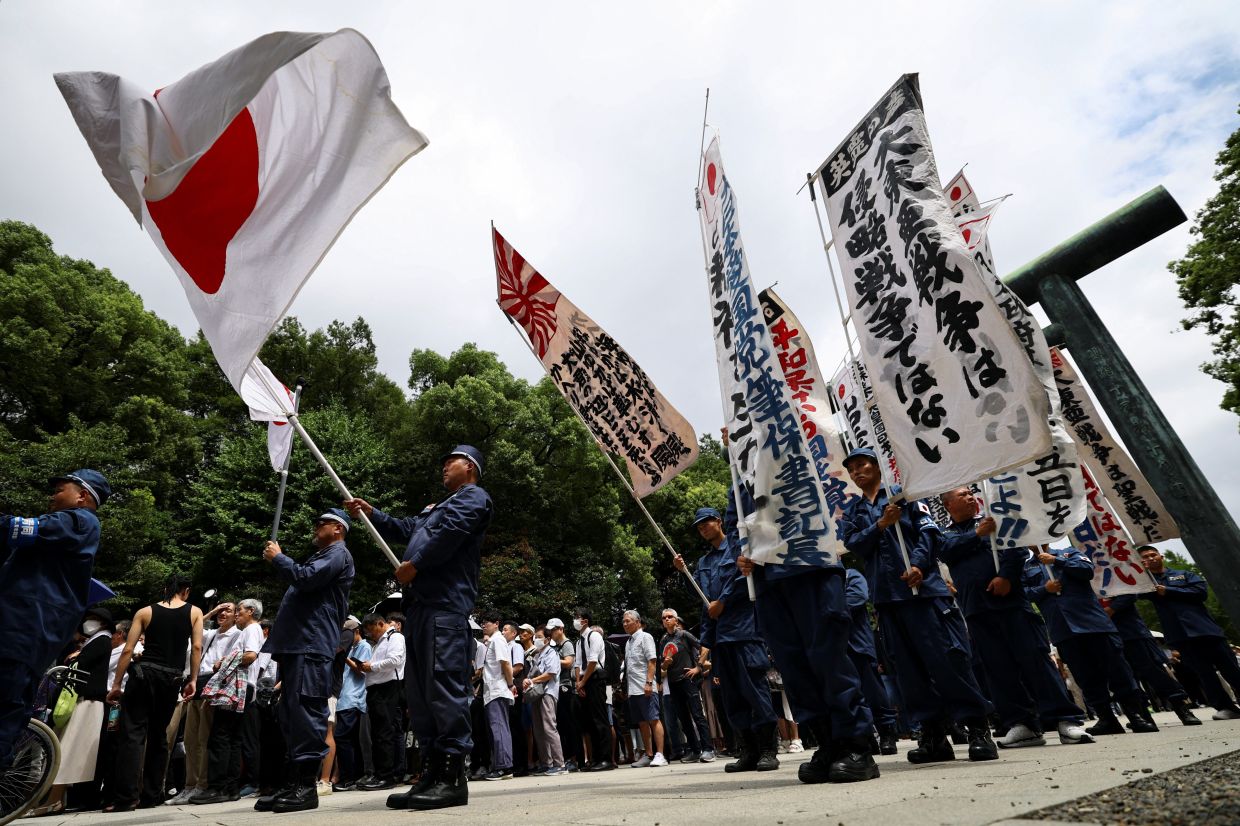
Japan's defence minister, Shinjiro Koizumi, made a high-profile visit to the Yasukuni shrine on Saturday to commemorate the 81st anniversary of Japan's surrender in World War II, demonstrating the complex diplomatic calculations that surround this sensitive memorial. However, Prime Minister Sanae Takaichi's conspicuous absence from the ceremonies underscores the delicate balance Tokyo must maintain between honouring its war dead and managing fraught relationships with regional powers that view the shrine as a symbol of unresolved historical grievances.
The Yasukuni shrine, dedicated to approximately 2.5 million war dead predominantly from Japan, has functioned as a diplomatic flashpoint for decades because it commemorates not only soldiers but also convicted war criminals who orchestrated Imperial Japan's invasion and brutal occupation of much of Asia during the 1930s and 1940s. For China, South Korea, and other nations that suffered Japanese military aggression, official visits by senior Japanese politicians to the site represent a troubling failure to confront and atone for historical atrocities. This perception has made Yasukuni visits a recurring source of bilateral friction, transforming what might otherwise be a solemn religious observance into a geopolitical statement.
Koizumi's visit as defence chief marks the first such pilgrimage in his current ministerial role, though he has maintained a long tradition of regular attendance at the shrine throughout his political career. The last defence minister to visit was Minoru Kihara in 2024, indicating that such visits, while controversial, remain within the bounds of precedent. Yet Koizumi's timing and position carry particular weight given the escalating strategic tensions between Japan and China over Taiwan, as well as ongoing disputes over maritime territories in the East China Sea.
Prime Minister Takaichi's decision to forgo a personal visit, despite being a regular attendee before assuming office in October, appears deliberate and strategically calculated. Before becoming prime minister, she had visited the shrine frequently, and there had been speculation in Japanese media that she might follow the example set by her mentor, former premier Shinzo Abe, who made a controversial visit in December 2013 on the first anniversary of taking office. Abe's pilgrimage triggered diplomatic uproar across the region, drawing rare criticism even from the United States, Japan's closest ally. Rather than risk similar fallout, Takaichi chose instead to send a monetary offering to the shrine, a symbolic gesture that acknowledges the memorial without the provocative symbolism of a personal appearance.
Takaichi's restraint reflects the increasingly fraught state of Japan-China relations under her leadership. In November, she suggested that Japan would consider military intervention in any future conflict over Taiwan, a statement that directly challenged Beijing's sovereignty claims and prompted sharp rebukes from Chinese officials. Taiwan, with a population exceeding 23 million, represents a critical geopolitical flashpoint where Japanese and Chinese strategic interests collide most acutely. China's response has been measured but unmistakable: Beijing has discouraged its citizens from travelling to Japan and implemented selective trade restrictions, while simultaneously conducting regular military patrols around disputed islands in the East China Sea.
The timing of Takaichi's hawkish Taiwan rhetoric, combined with Japan's accelerating military modernisation as it gradually abandons its post-war pacifist constraints, has elevated concerns in Beijing about what Chinese defence ministry spokesperson Senior Colonel Chen Xi characterised as "neo-militarism." In a statement released just before the anniversary date, Chen urged Japan to "earnestly reflect on itself, recognise and atone for its crimes, adhere to the post-war international order, and stop its dangerous acts of remilitarisation." This language reflects a strategic Chinese narrative portraying Japan as backsliding on historical accountability while simultaneously adopting an increasingly assertive military posture.
Japan-South Korea relations offer a more optimistic counterpoint to the China equation, having demonstrably improved in recent years through a combination of cultural diplomacy and political outreach. In January, Takaichi and South Korean President Lee Jae Myung engaged in a notable cultural exchange, playing drums together, while Koizumi participated in a badminton-style match with his South Korean counterpart. These informal interactions suggest that Tokyo and Seoul have found ways to transcend historical tensions through people-to-people engagement, though official shrine visits remain potent symbols that can quickly destabilise such warming trends.
The broader regional context further complicates Japan's position. Just one day before the anniversary date, Russian President Vladimir Putin visited the Kuril Islands in Russia's far east, an action that Japan also claims sovereignty over, prompting Tokyo to lodge a formal protest. This Russian provocation arrived amid a joint statement issued by China and Russia's ambassadors to Japan commemorating their respective World War II sacrifices—a gesture that appeared designed to reinforce a shared historical narrative and coordinate regional positioning against Japan's rearmament.
The Yasukuni shrine itself sought to navigate the political minefield by appealing to visitors to refrain from wearing military-style uniforms, a request aimed at preventing the venue from becoming a venue for nationalist display. An estimated 20 to 30 individuals nonetheless arrived in such attire, though shrine officials indicated they would provide guidance rather than forcibly exclude attendees. This modest show of restraint suggests that organised far-right groups refrained from staging the kind of large-scale demonstrations that have occasionally accompanied previous anniversary observances.
For Malaysia and other Southeast Asian nations observing these developments, Japan's diplomatic choreography around the Yasukuni visit illuminates the persistent historical tensions that continue to shape regional great-power dynamics. Japan's slow military rearmament, coupled with its increasingly explicit security commitments regarding Taiwan and its disputes with China over maritime boundaries, is fundamentally altering the security architecture of East and Southeast Asia. Nations like Malaysia, which maintain economic relationships with both Japan and China while seeking to preserve strategic autonomy, must carefully assess how Japanese political figures navigate these historical sensitivities and security pivots.
Takaichi's avoidance of a personal shrine visit represents a calculated attempt to avoid unnecessary provocation of Beijing, even as her broader defence and security policies move in directions that Beijing views with deep suspicion. This distinction between symbolic gestures and substantive policy represents the narrow corridor through which Japanese leaders must navigate. The contrast between Koizumi's attendance and Takaichi's absence reveals the degree to which even senior Japanese officials calibrate their actions based on regional reception, demonstrating that Yasukuni remains far more than a religious site—it functions as a barometer of Japan's regional relationships and its commitment to either historical reconciliation or nationalist assertion.

