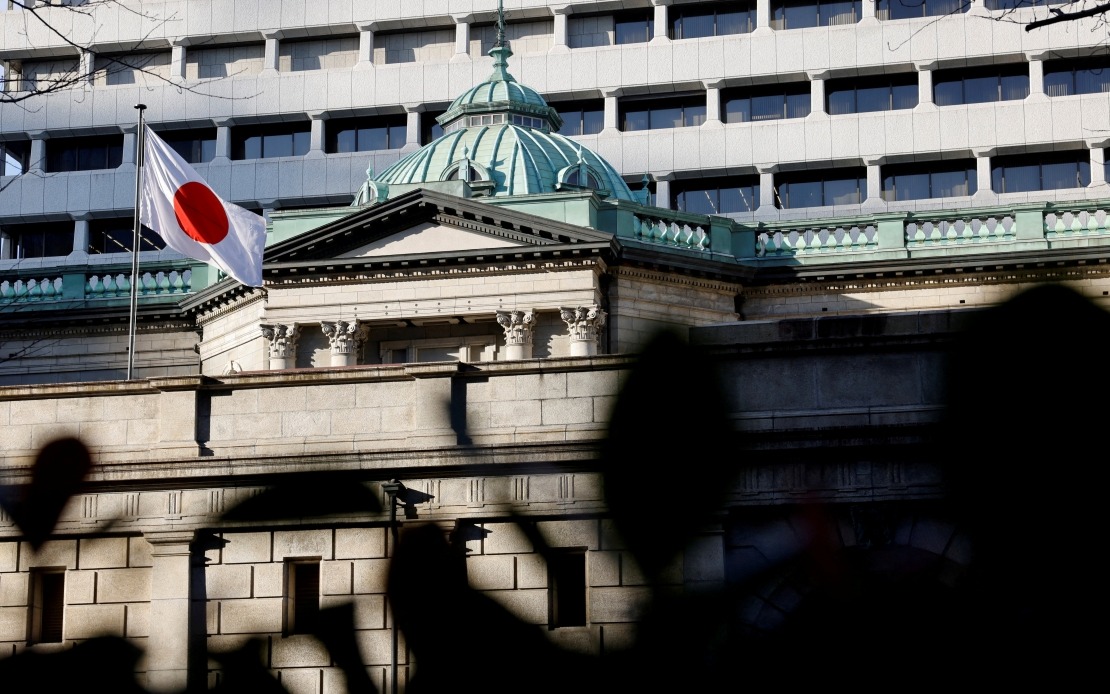
Japan's recent passage of legislation prohibiting the desecration of its national flag has reopened a contentious global conversation about where democracies should draw the line between protecting cherished national symbols and preserving citizens' rights to dissent and express themselves freely. The enactment has already drawn criticism within Japan, with observers warning that the law may amplify nationalist sentiment, and social media discourse suggesting Prime Minister Sanae Takaichi is attempting to foster what critics describe as a supremacist ideology grounded in Japanese exceptionalism.
The tension at the heart of this legislative moment reflects a fundamental challenge facing modern nation-states: how to instill civic pride and unity without weaponising symbols against political opponents or stifling legitimate protest. Japan's decision to criminalise flag desecration places it alongside numerous other countries with similar statutes, yet the global landscape reveals strikingly different philosophical and practical approaches to this issue. Understanding these variations provides crucial context for assessing what Japan's law might mean for democratic governance in the region.
Germany stands as perhaps the most severe example, where not only flag desecration but also insulting the national anthem and other state symbols carries criminal penalties. Violations there can result in imprisonment for up to three years or substantial fines, with sentences potentially doubling to five years if prosecutors can demonstrate that the offender intended to undermine Germany's constitutional order. This stringent framework reflects the country's historical reckoning with its Nazi past and subsequent commitment to protecting democratic institutions from those who would seek to dismantle them from within. Yet even in Germany, the relationship between flag and national identity has evolved markedly, constrained for decades after the Second World War and only gradually becoming more visible in public life.
The situation shifted noticeably following Germany's 2006 World Cup hosting, when flags became ubiquitous across the country. In recent years, however, many Germans have grown uneasy with flag imagery, viewing it as increasingly associated with right-wing movements that adopt patriotic symbolism while promoting exclusionary policies toward immigrants and minorities. This cautionary example demonstrates that criminalising flag desecration does not prevent nationalist movements from appropriating symbols for their own purposes—a lesson potentially relevant for Japan's own political trajectory.
France has similarly enshrined flag protection in law, treating any destruction or disrespectful use of the tricolour as illegal. The French approach is underpinned by a different national narrative, one emphasising the flag's embodiment of revolutionary ideals—liberty, equality, and fraternity—that transcend mere state power and represent universal democratic principles. This framing seeks to position flag protection as defence of democratic values rather than authoritarian symbolism, though critics argue the distinction is often more rhetorical than substantive.
In the Asian context, China enforces stringent penalties for flag-related offences, with imprisonment terms reaching three years for those who damage the national flag. The Chinese state integrates flag protection into a broader patriotic education framework, with the daily sunrise ceremony at Beijing's Tiananmen Square serving as a ritualistic reaffirmation of national loyalty. Individual cases illustrate the law's reach: a man in Tianjin received two years imprisonment for slashing 66 flags at a residential complex, while another individual in Qinghai faced administrative detention merely for using the flag as a curtain. Such prosecutions underscore how flag protection can extend into the minutiae of daily life.
South Korea similarly criminalises flag desecration when motivated by intent to insult the state, prescribing up to five years imprisonment. This framework has drawn sustained criticism from civil liberties advocates who contend that the law represents an illegitimate restriction on freedom of expression and protest, particularly given South Korea's vibrant and sometimes confrontational political culture. The ongoing debate there reflects broader questions about how young democracies navigate the relationship between national symbolism and democratic openness.
Iran presents a distinct case, where despite lacking an explicit statutory prohibition on flag desecration, the government views damage to the national flag—which bears the Arabic word for God—as blasphemy against Islam rather than merely a political offence. Recent years have witnessed government pressure to strengthen penalties following anti-government demonstrations, though the leadership has generally hesitated to impose the most severe punishments, partly because sustained conflict with the United States has necessitated domestic unity. This reflects how flag protection regimes often shift depending on perceived external and internal threats.
The United States offers the starkest contrast, operating as a nation founded on immigration and characterised by remarkable cultural and ideological diversity. The American flag, serving as a primary vehicle for national integration across these varied communities, has been subject to destruction as political protest—most notably during the Vietnam War era. In a landmark 1989 decision, the US Supreme Court ruled that flag burning constitutes protected expression under the First Amendment, reasoning that the right to dissent and criticise government is fundamental to American constitutional democracy. This ruling positioned the United States as an outlier among developed democracies, prioritising expressive freedom over symbol protection. Yet even this seemingly settled constitutional principle has faced renewed challenge, with former President Donald Trump issuing an executive order last August directing the Justice Department to prosecute flag desecration and related acts, demonstrating how these debates resurface even in jurisdictions with strong free-expression traditions.
For Malaysia and other Southeast Asian nations observing Japan's legislative move, the implications merit serious consideration. Nations across the region have their own flag protection laws and nationalist movements, and Japan's enactment may influence how policymakers in neighbouring countries approach similar questions. The Japanese case raises uncomfortable questions: Does criminalising flag desecration meaningfully protect national unity, or does it primarily serve to suppress dissenting voices? Can symbol protection and democratic freedoms coexist, or are they inherently in tension? These are questions each democracy must answer for itself, yet comparative experience suggests that the most robust democracies tend to be those confident enough in their institutions to tolerate—even protect—expressions of symbolic dissent.
Ultimately, Japan's flag desecration law represents a choice about what kind of democracy the country wishes to be. The international experience suggests that such laws rarely prevent the rise of nationalism, and may paradoxically provide authoritarian-minded movements with additional tools for suppression. The real test will be how Japanese courts interpret and apply the statute in practice, and whether civil society can sustain ongoing debate about the proper relationship between patriotism and freedom in a mature democratic society.

