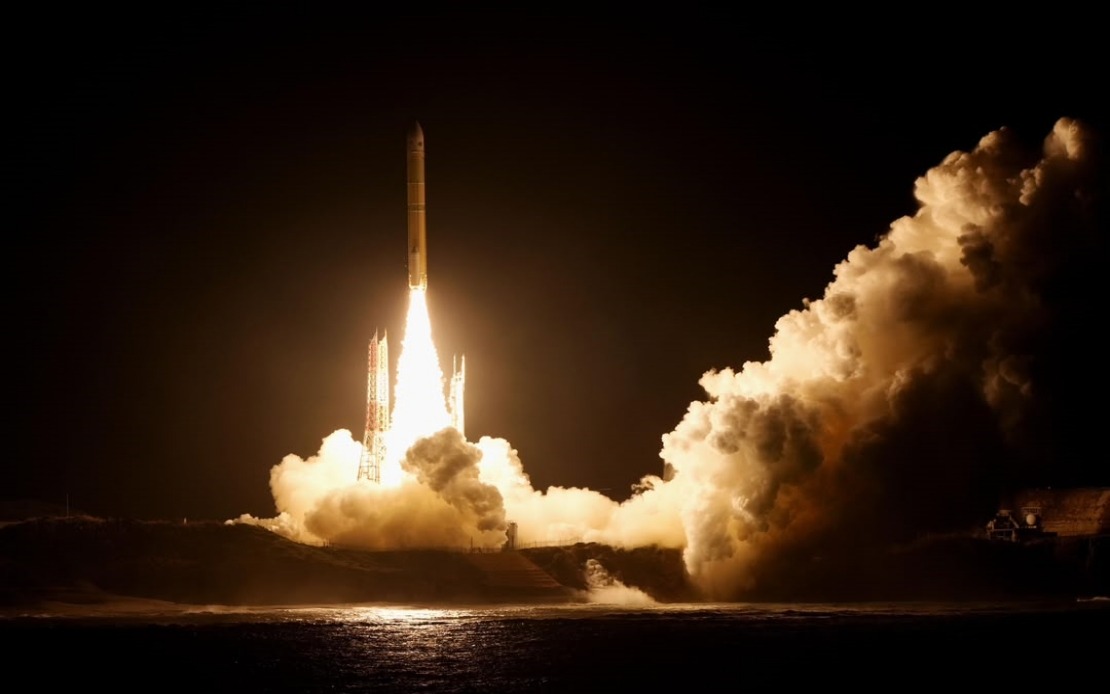
Japan's space programme achieved a significant milestone this week when the Japan Aerospace Exploration Agency successfully deployed the Michibiki No. 7 positioning satellite aboard an H3 rocket launched from the Tanegashima Space Centre on Tanegashima, a small island in southwestern Japan. The mission represents a crucial rebound for Japan's flagship launch vehicle, which had experienced setbacks in its early operational history but is now demonstrating the reliability needed to support the country's long-term space ambitions.
The successful deployment marks the second consecutive successful launch of the H3 rocket, following a recovery mission in June after a December failure involving the H3 No. 8 vehicle. This momentum is particularly important for Japan's space industry, which has staked considerable prestige and resources on transitioning from the highly dependable H2A rocket—which maintained an impressive track record across more than two decades of service—to the new H3 platform designed to offer enhanced capabilities and cost efficiency.
Weather challenges forced officials to reschedule the launch multiple times before conditions finally permitted liftoff on Tuesday morning. The mission had originally been targeted for the previous Friday, then delayed to Monday as a typhoon approached the launch site, before ultimately proceeding on Tuesday as weather patterns improved. Such delays are routine in spaceflight operations but underscore the complexity of coordinating large-scale launch operations in the typhoon-prone Western Pacific region, an environmental factor well understood by regional observers including Malaysian stakeholders monitoring space sector developments.
The Michibiki No. 7 satellite now joins five existing Michibiki satellites currently providing positioning services as part of Japan's Quasi-Zenith Satellite System. This indigenous navigation network delivers location information critical for smartphone applications, vehicle navigation systems, and precision agriculture—sectors with expanding adoption across Asia-Pacific economies including Malaysia and neighbouring nations. The system currently serves broad areas across East Asia and the Western Pacific, though its coverage remains supplementary to global systems like GPS.
Japan's government has established an explicit target of achieving full operational capability with seven Michibiki satellites in orbit, a threshold that would enable the country to provide comprehensive positioning services independent of reliance on external systems or other nations' satellite infrastructure. With two additional satellites now successfully deployed this year, the programme is advancing toward that strategic objective, which carries implications for regional autonomy in critical communications and navigation capabilities. Achieving independent navigation capacity represents a significant technological and strategic achievement for any developed nation.
The December failure that set back the programme involved the H3 No. 8 rocket and prevented the intended February deployment of the Michibiki No. 7 satellite. Officials at JAXA identified technical issues through rigorous post-failure investigation and implemented corrective measures before returning to flight operations. The June launch of the H3 No. 9 rocket, which carried multiple miniature satellites, served as a validation test of those fixes before this week's positioning satellite deployment.
The H3's mixed early track record reflects the inherent challenges in developing new heavy-lift launch systems, even within technologically advanced space programmes. The rocket was designed to replace the H2A as Japan's primary launch vehicle while incorporating design improvements aimed at reducing operational costs and expanding mission flexibility. However, transitioning from a proven platform to an entirely new system inevitably involves a learning curve, and Japan's experience demonstrates both the difficulties and the systematic approaches required for successful technology development in the space sector.
For Malaysia and other Southeast Asian nations, Japan's progress with its indigenous positioning satellite system carries important implications regarding regional technological cooperation and the broader geopolitical context of space capabilities in the Indo-Pacific. As space technology becomes increasingly central to economic competitiveness, infrastructure resilience, and strategic autonomy, developments in neighbouring countries' space programmes inform regional strategic planning and partnership opportunities. Japan's commitment to achieving independent navigation capability reflects broader Asian trends toward reducing technological dependence on systems developed and controlled by distant powers.
The successful launch sequence also demonstrates JAXA's institutional capacity to manage complex programmes through setbacks and maintain long-term strategic objectives despite operational challenges. This institutional resilience and technical competence position Japan as a reliable partner for international space cooperation ventures across Asia-Pacific, potentially including collaborative arrangements with Malaysian entities exploring space sector participation and capability development. The H3 programme's trajectory from early difficulties toward demonstrated reliability serves as a case study in technology development management relevant to emerging space programmes throughout the region.

