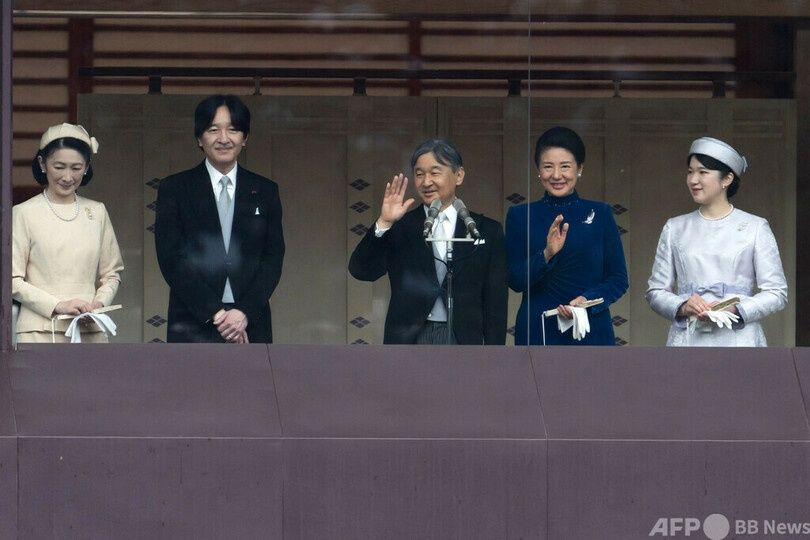
Japan's efforts to modernise its Imperial House Law have collided with entrenched political divisions after the Cabinet approved amendments on Tuesday that opposition lawmakers say represent a unilateral power grab disguised as necessary institutional reform. The bill, intended primarily to address the declining number of Imperial family members, has instead become a flashpoint for deeper disagreements about how Japan's centuries-old succession system should evolve and who should drive that evolution.
At the centre of the controversy lies a provision explicitly permitting male descendants of adopted Imperial family members to inherit succession rights to the Chrysanthemum Throne. This clause emerged from a government proposal allowing male descendants of former Imperial branches to be readopted into the Imperial household, a mechanism ostensibly designed to maintain the pool of eligible successors as the family shrinks. Constitutional Democratic Party of Japan Secretary General Masayo Tanabu pointedly attacked the inclusion, telling reporters that the provision represented "content that has not been discussed between the ruling and opposition camps," and emphasised that crucial matters "had not been fully debated were suddenly inserted" into the final bill.
The timing and framing of the government's move reveals fundamental disagreements about legislative process and the proper role of executive authority in such sensitive constitutional matters. During cross-party negotiations that preceded the Cabinet decision, lawmakers from both ruling and opposition benches had deliberately set aside succession questions to concentrate narrowly on sustaining Imperial family numbers. This procedural choice reflected broad acknowledgment that succession touches the very nature of the Emperor's constitutional role and demands consensus-building rather than majoritarian impositions. Chief Cabinet Secretary Minoru Kihara's subsequent defence—that the heads and vice heads of both chambers made no mention of adopted members' children, therefore "existing provisions of the Imperial House Law must apply"—struck critics as legal sophistry designed to obscure what they viewed as an end-run around legislative intent.
Government insiders defending the approach argued that technical completeness justified the insertion. A drafting official stated plainly that "the system would be incomplete unless we determine how to handle this within the framework of the current system," a rationale reflecting the bureaucratic impulse to fill legal vacuums rather than defer them. Yet this technical argument masks a deeper ideological preference: the Liberal Democratic Party's longstanding commitment to preserving strict male-line, male-only succession, a position that critics argue has been woven into the bill's fabric through selective bureaucratic discretion rather than transparent political debate.
The government's handling has fractured the ruling coalition itself. While Komeito, the secondary coalition partner, nominally supports the adoption system, party officials signalled wariness about proceeding without clearer legislative consensus. Masaaki Taniai, leader of Komeito's House of Councillors contingent, declared that "we cannot move forward with deliberations unless the will of legislature is established," a subtle but pointed rebuke suggesting the Cabinet had overreached. Similarly, the Centrist Reform Alliance, despite championing stable succession mechanisms, criticised the government for reopening issues that cross-party meetings had explicitly deferred.
A second contentious omission involves the legal status of husbands and children of female Imperial family members after marriage. The approved bill effectively strips such relationships of Imperial status, leaving spouses and offspring as commoners. The Constitutional Democratic Party had advocated granting Imperial status to preserve family unity, while the Centrist Reform Alliance had favoured postponement pending further consideration. By excluding these categories from legal recognition, the Cabinet has essentially preempted future legislative choices on a question admitting multiple reasonable answers. That only seven of thirteen parliamentary groups endorsed the initial cross-party proposals underscores the fragile consensus underlying these amendments.
The bill's controversial provisions bear the imprint of Shigetaka Yamazaki, the Special Advisor to the Cabinet Secretariat who has become the architect of Japan's recent Imperial system reforms. Yamazaki, a former Internal Affairs and Communications Ministry official, played the same role in drafting the 2017 special law enabling the previous Emperor's abdication. That earlier reform enjoyed near-unanimous support across parties and chambers, creating a striking contrast to the current measure's divisive reception. The shift from consensus to partisan contestation reflects broader erosion of cross-party comity on constitutional matters and the LDP's willingness to exploit procedural majorities to advance policy preferences opposed by significant opposition blocs.
Opposition parties are currently boycotting Diet deliberations amid broader clashes with the ruling coalition, rendering the bill's passage prospects genuinely uncertain. The boycott provides opposition lawmakers with leverage to demand substantive concessions or procedural renegotiation, yet it also risks backfiring if public opinion shifts toward viewing the opposition as obstructionist. The government's strategy of bundling succession changes with technical reforms appears designed to force opposition legislators to choose between accepting modifications to Imperial succession or appearing to block reasonable institutional improvements.
Scholars studying Japan's Imperial system have voiced alarm at the narrowness of the current approach. Yuji Otabe, a professor emeritus at Shizuoka University of Welfare and Imperial law expert, stressed that "originally, all possibilities should have been debated without limiting the focus to male-line males," and emphasised that matters touching "the nature of the Emperor as the symbol of the state" demand more careful deliberation than this process has permitted. This scholarly critique reflects growing concern that Japan's governing institutions are privileging procedural efficiency over the substantive consensus-building that constitutional questions legitimately demand.
For Malaysian and Southeast Asian observers, Japan's Imperial succession disputes offer instructive parallels to challenges facing monarchies across the region. Thailand, Malaysia, and Brunei all grapple with questions about royal succession, female consort status, and the proper balance between executive initiative and legislative deliberation. Japan's current conflict illustrates how constitutional reforms affecting state symbols require not merely formal legislative votes but genuine cross-party agreement reflecting societal consensus. The willingness of powerful executives to exploit technical arguments and procedural majorities to advance contested constitutional changes—evident in Tokyo's approach—represents a cautionary pattern that parliamentary democracies throughout Asia must vigilantly monitor and resist.
As Japanese legislators prepare for Diet deliberations, the Imperial House Law amendments have already signalled a troubling shift: the transformation of constitutional questions into partisan battlegrounds where winners impose solutions rather than stakeholders negotiate settlements. Should the bill pass without broader opposition acquiescence, it would establish a dangerous precedent suggesting that Japan's fundamental law can be reshaped through calculated executive manoeuvre rather than genuine democratic deliberation. The outcome will reverberate beyond Tokyo, shaping how Asian democracies think about preserving institutional legitimacy while adapting to contemporary pressures.

