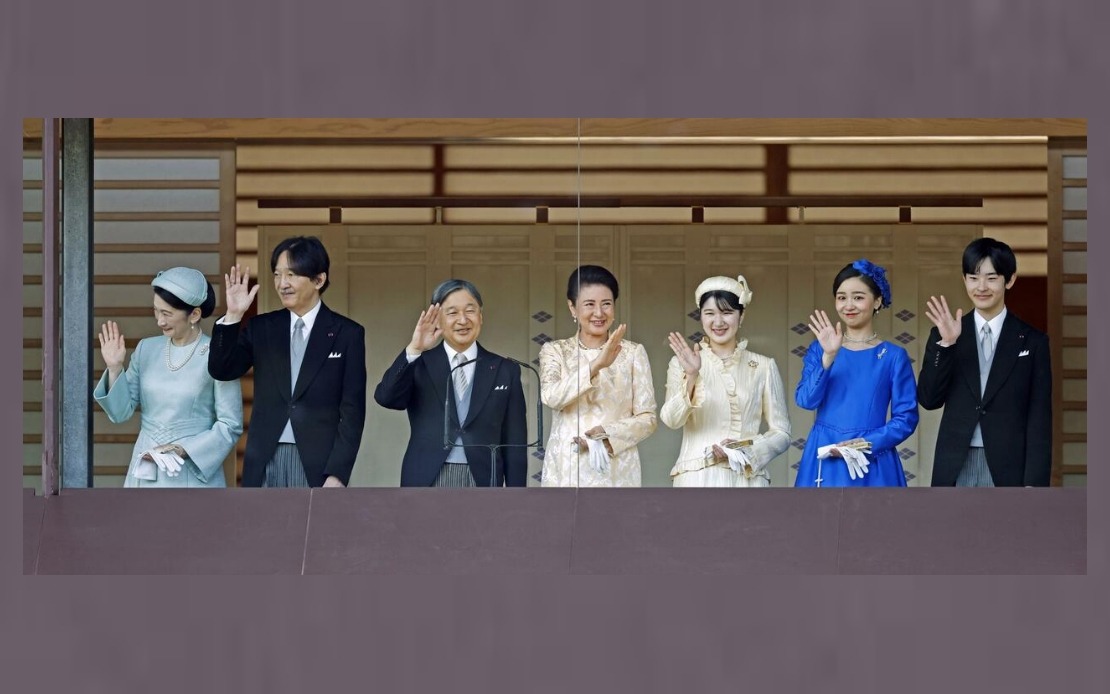
Japan's overhaul of its Imperial House Law has unleashed a wave of uncertainty rippling through the imperial bureaucracy and fractured public sentiment over how the world's oldest hereditary monarchy should evolve. Parliament enacted the landmark revision on Friday, marking the first substantial amendment to the foundational 1947 legislation governing the imperial system—a reflection of intensifying pressure to reverse the slow erosion of royal family members, which has contracted to just 16 individuals. The restructuring addresses a core anxiety animating Japan's conservative establishment: without intervention, the imperial lineage faces a demographic precipice that threatens centuries-old traditions.
Prime Minister Sanae Takaichi has positioned this overhaul as essential to preserving the institution's longevity, yet the reform's architecture betrays a fundamentally cautious approach that has sparked criticism for sidestepping broader transformations many Japanese citizens favour. The legislation permits males aged 15 and older from 11 former imperial branch families—lineages that surrendered their royal status in 1947 following constitutional reforms—to be adopted back into the imperial fold. Additionally, princesses who marry outside the family may now elect to maintain their royal designation, a concession absent from previous iterations of the law. While these provisions represent genuine liberalisation within a traditionally rigid framework, they fall conspicuously short of addressing what polling data consistently demonstrates: substantial public appetite for female succession to the throne.
Inside the Imperial Household Agency, institutional nervousness about implementation mingles with qualified acceptance. Senior officials acknowledge the reform's utility in securing a replenished roster of royals capable of fulfilling ceremonial obligations, with one agency representative noting the clarity it provides: "It's significant in that there is now a path toward securing a stable number of imperial members." Yet this same pragmatism is shadowed by deeper anxieties. Officials worry whether candidates from dormant branch families will genuinely volunteer for adoption—a prospect that strikes many observers as remote given the considerable lifestyle constraints and public expectations such a transition entails. Asahiro Kuni, an 81-year-old third son of the Kuninomiya branch family, articulated this scepticism bluntly when interviewed, questioning whether realistic candidates would materialise from the eligible pool.
The competency question looms equally large. Agency staff express apprehension about whether adoptees will grasp the philosophical underpinnings of Japan's constitutional framework, wherein the emperor functions as a "symbol" of the state rather than a traditional sovereign wielding executive power. Recent emperors, particularly Emperor Naruhito and his wife Empress Masako—herself a former diplomat who navigated the transition into imperial life—have redefined this symbolic role through extensive public engagement, visiting disaster zones and conducting international tours. The burden of internalising and perpetuating this evolved understanding weighs on institutional minds contemplating novice imperial members. One senior official elaborated on this concern: "Whether adoptees will understand the nature of the symbolic imperial system and be able to properly carry on the wishes is my worry."
For the five unmarried female imperial family members—including Princess Aiko, Emperor Naruhito's only daughter, and Princess Kako, daughter of Crown Prince Fumihito—the reform introduces a theoretically liberating but practically excruciating decision point. Under the new framework, should these women marry commoners, they may choose to remain royal or revert to civilian status. Superficially, this expands autonomy; in reality, it creates what agency aides describe as a "harsh choice." The dilemma reflects institutional ambivalence about female participation in the succession hierarchy. Because spouses and offspring of such marriages would retain commoner status, families would fractionalise into multiple legal tiers—an arrangement that one aide characterised as "strange having different statuses within the same family." The underlying message, several insiders suggest, is unmistakable: the government has engineered a solution that permits female imperial members to remain prominent while systematically foreclosing pathways to female imperial rule.
This calculated circumvention of the female succession question exposes a fundamental disconnect between conservative policymakers and evolving public attitudes. Polling consistently reveals that substantial majorities of Japanese citizens support the principle of a female emperor, particularly one who might resemble Princess Aiko in age and background. Yet the legislative process that produced this revision was notably opaque, conducted with minimal public consultation and scant civic education regarding the philosophical and constitutional stakes. A 22-year-old woman from Hiroshima, Miyu Nakao, articulated this frustration: "The government has made a decision on the imperial system all by itself," she observed, highlighting the troubling absence of citizens from substantive deliberation. A 20-year-old male university student in Osaka echoed this complaint, noting that neither he nor his peers possessed adequate familiarity with the Imperial House Law or its implications to engage meaningfully with the debate.
Public reaction has correspondingly fractionalised along generational and ideological fault lines. Older respondents, including a 76-year-old named Shinichi Kokubun who met Emperor Naruhito during a visit to Fukushima in April, expressed conditional support contingent on adoptees demonstrating the same commitment to public service and popular connection that the current imperial family exemplifies. His formulation—"If they can stand by the people just as the emperor does, I don't think there will be any problem"—captures a pragmatic perspective that prioritises institutional functionality over constitutional ideology. Younger citizens, by contrast, demonstrate greater frustration with the reform's limited scope and the democratic deficit characterising its passage, viewing the outcome as a conservative reassertion of male-dominated succession protocols dressed in modest reformist clothing.
The reform effort must be situated within broader trajectories reshaping Japan's constitutional order. Prime Minister Takaichi and her conservative coalition have signalled determination to reorient several foundational aspects of the postwar settlement, from security arrangements to constitutional interpretation. The imperial succession question constitutes a proxy battle within this larger struggle, pitting traditionalists committed to unbroken male lineage against modernisers emphasising meritocratic and egalitarian principles. By adopting the compromise position of permitting female retention of status while preserving male-only succession, the government has essentially attempted to neutralise criticism without yielding substantive power. This manoeuvre has satisfied neither traditionalists—who view adoptive mechanisms as insufficient—nor reformers who see the outcome as a missed opportunity for genuine democratisation of imperial governance.
For Southeast Asian observers, Japan's imperial succession debate offers instructive parallels and contrasts with regional monarchies navigating their own questions of institutional evolution and public legitimacy. While Malaysia, Thailand, and other Southeast Asian monarchies operate within fundamentally different constitutional and cultural contexts, they similarly confront tensions between hereditary tradition and contemporary expectations regarding transparency, accountability, and inclusive governance. Japan's experience suggests that technical legislative amendments absent substantive public engagement risk generating legitimacy deficits rather than resolving them. The silence of ordinary citizens—particularly younger demographics who will inherit whatever imperial system emerges—constitutes a democratic vulnerability that may eventually force more comprehensive reckonings than gradualist reforms can accommodate.

