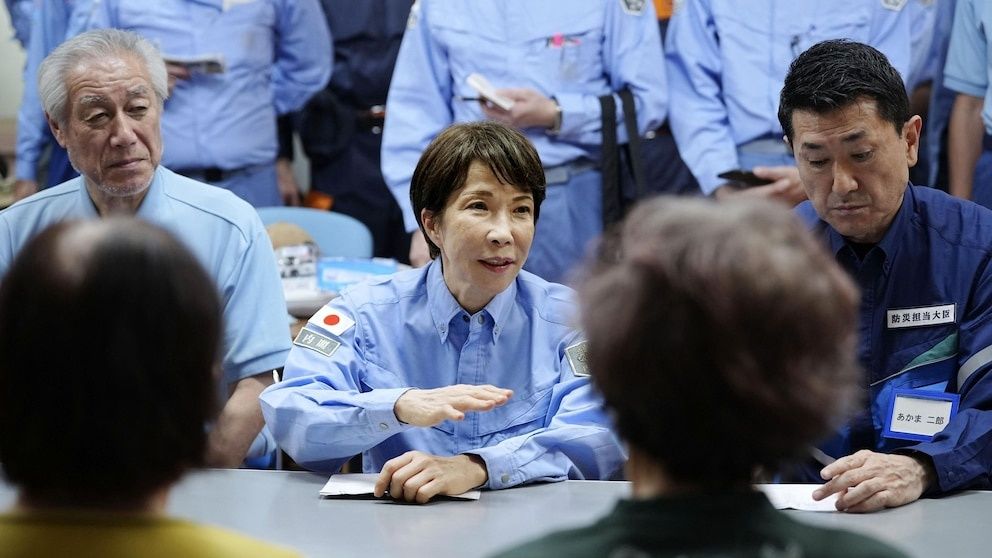
Prime Minister Sanae Takaichi conducted her first visit to Kumamoto Prefecture on Monday, touring the aftermath of Japan's most significant earthquake in recent weeks—a magnitude 7.1 tremor that struck the southwestern prefecture on Kyushu's southern main island on Tuesday, August 4. Her inspection came as the disaster-stricken region faces a compound crisis: not only are communities dealing with structural devastation, but residents are simultaneously confronting oppressive heat, water shortages, and the strain of temporary housing arrangements that threaten to claim additional lives through heat-related illnesses.
The human toll from the initial earthquake has proven substantial. Thirty-eight people have perished as a direct or indirect consequence of the quake, according to prefectural officials. Among the fatalities is a resident who succumbed to apparent heat stroke while sheltering in a vehicle during the sweltering weather conditions that followed the disaster. Another death remains under investigation. These figures underscore how natural disasters in Japan often extend beyond the immediate moment of geological upheaval, with secondary hazards—particularly heat exposure—compounding the original crisis.
The scale of material damage reflects the earthquake's violence and Kumamoto's population density. Approximately 700 homes have been completely destroyed, while damage assessments indicate that over 11,300 additional structures sustained varying degrees of harm. Across the prefecture, 114 people have sustained injuries. Residents have begun the arduous process of clearing wreckage, piling debris, broken furniture, and damaged appliances into collection heaps on streets and public spaces—a visible symbol of the reconstruction effort that lies ahead.
A particularly acute vulnerability has emerged in the form of water scarcity and energy shortages. More than 46,000 households remain without access to clean water supplies, a critical concern given the extreme ambient temperatures predicted by the Japan Meteorological Agency to reach nearly 40 degrees Celsius. Simultaneous fuel shortages have compounded these challenges, leaving residents without adequate means to store food or transport goods. The combination creates a humanitarian bottleneck where basic survival needs become difficult to meet during the crucial days and weeks following disaster.
Temporary shelter remains inadequate for the scale of displacement. Over 8,500 people are currently housed in emergency facilities that were hastily converted from community centers, school gymnasiums, and educational classrooms—venues ill-suited for extended occupancy and frequently lacking air-conditioning systems. These crowded conditions, as housing experts have long documented, breed additional problems including sanitation failures, privacy violations, and psychological stress. Beyond official shelters, many residents have opted for alternative arrangements of desperation: families are sleeping in vehicles parked at town hall parking lots, camping in public parks, or attempting to shelter in the open air near their destroyed homes.
Governor Takashi Kimura utilized his meeting with Prime Minister Takaichi to emphasize the urgency of the heat crisis, describing the current meteorological conditions as "abnormal" and stressing how extreme temperatures are compounding the already desperate circumstances facing residents. He appealed directly to the national government for enhanced support to upgrade evacuation centers, pointing to critical deficiencies in clean water distribution and basic medical services at many facilities. The governor's requests reflect the gap between emergency preparedness planning and the actual capabilities of local infrastructure when confronted with a disaster of this magnitude.
Takaichi's response, while diplomatically measured, lacked specific commitments or timelines. She pledged that the government would "quickly examine" what measures could be implemented and stated intentions to "move proactively" in addressing the governor's concerns. The vagueness of her commitment reflects the bureaucratic processes that often characterize disaster response, even as residents endure deteriorating conditions. Nevertheless, her visit itself—conducted by helicopter survey over affected areas before landing at one of the prefecture's best-equipped shelters—drew sharp criticism on social media for appearing performative rather than substantive.
The shelter chosen for the prime minister's visit presented an atypical picture of evacuation conditions: it featured cardboard partitions, makeshift beds, and functioning air-conditioning units. Critics argued that this carefully curated viewing distorted the reality facing the vast majority of displaced persons crowded into facilities lacking such amenities. The disparity between showcase shelters and actual conditions highlights ongoing tensions in disaster governance between media management and genuine policy responsiveness.
A tragic footnote has emerged from the disaster that raises questions about corporate accountability during emergencies. An explosion occurred at the Aeon Mall in the town of Kashima after the initial earthquake, killing seven people and injuring five others who were recovered from the structure. Investigators believe the explosion resulted from a gas leak that occurred after approximately 3,000 shoppers had been evacuated to a parking lot, though some employees remained inside the building. Habita, the company operating a general store within the mall, has acknowledged that it instructed two employees—both of whom perished in the explosion—to return to the building to secure sales proceeds in a company safe.
The human cost of this corporate directive crystallized during a wake held for one victim, 22-year-old Kurumi Otake. Two company executives from Habita attended to apologize to her family. In a moment laden with anguish, Otake's mother told them: "I wish someone had stopped her. My daughter is not coming back." The statement encapsulates the secondary tragedies that disasters often produce, where ordinary business procedures become death sentences when normal safety protocols collapse. Goji Yuse, a company sales manager, acknowledged the instructions but offered no explanation for why business continuity took precedence over employee safety in conditions where structural integrity was unknown.
For Malaysian and Southeast Asian observers, the Kumamoto disaster offers sobering lessons relevant to this region's own earthquake preparedness and disaster response frameworks. Many Southeast Asian nations face comparable geological risks, particularly along the Pacific Ring of Fire and associated fault systems. The Japanese experience demonstrates how even highly developed nations with robust emergency infrastructure struggle with heat management in post-disaster environments—a concern magnified in Southeast Asia's tropical climate. Furthermore, the tension between corporate interests and worker safety evident in the Aeon Mall explosion reflects patterns that deserve scrutiny across regional economies where informal labor practices and inadequate workplace protections remain persistent challenges.
Kumamoto's recovery trajectory will depend on sustained government commitment beyond the initial media attention phase that typically follows major disasters. The prefecture faces weeks of elevated risk for heat-related mortality in shelters, water-borne disease outbreaks, and psychological impacts among displaced populations. Japan's wealth and institutional capacity provide advantages unavailable to poorer regions, yet even these resources are proving strained by the compound effects of earthquake damage, extreme weather, and infrastructure failure. As the prefecture transitions from emergency response to medium-term recovery, the adequacy of official support and the speed of reconstruction will likely determine whether this disaster becomes a catalyst for improved building codes and emergency protocols, or merely another incident that fades from public memory once media attention shifts elsewhere.

