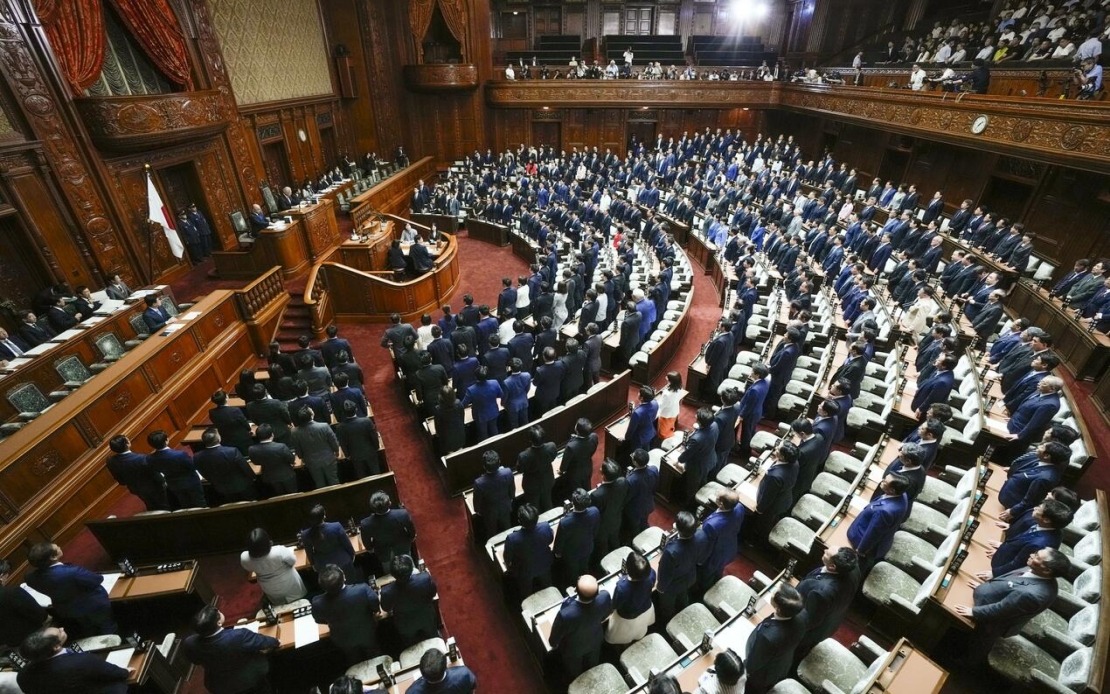
Japan's House of Representatives has approved a significant overhaul of the Imperial House Law on Friday, marking the nation's first substantial revision to the statute since 1947. The accelerated passage through parliament in a single day of deliberations represents a watershed moment for Japan's centuries-old imperial succession framework, which has grown increasingly strained by declining family numbers and strict male-only inheritance rules. Prime Minister Sanae Takaichi's administration now seeks to shepherd the legislation through the upper House of Councillors before the parliamentary session concludes on July 17, with the ruling Liberal Democratic Party and coalition partner Japan Innovation Party commanding the supermajority required to overcome any potential resistance.
The constitutional and demographic pressures driving this legislative push have accumulated over decades. Japan's imperial family has contracted substantially, with the number of potential successors dwindling as female members automatically forfeit their royal status upon marrying outside the imperial bloodline. The reigning monarch currently has limited direct heirs, a situation that has prompted sustained public and political debate about how to preserve the continuity of the Chrysanthemum Throne while remaining consistent with constitutional principles. The bill addresses this through two interconnected mechanisms designed to expand the pool of eligible family members without fundamentally altering the male-succession tradition.
Central to the legislative framework is permission for the imperial household to adopt males aged fifteen and above who descend from emperors through unbroken male lineages. Japan maintains records of eleven former imperial branch families whose male descendants retain this theoretical connection to the imperial line despite centuries of separation. By permitting adoption of these individuals, the legislation would dramatically increase the number of imperial family members available to perform ceremonial duties and provide succession depth. Critically, while adopted members themselves cannot become emperor under the bill's terms, their male children would gain eligibility to ascend the throne, effectively creating a pathway for branch family descendants to enter the main imperial succession line.
The second pillar introduces an equally significant modification permitting female imperial members to maintain their status even after marrying commoners. This provision directly reverses a principle embedded in the current law that has automatically stripped women of imperial rank upon such marriages. The amendment recognises that female members contribute substantively to imperial functions and ceremonial requirements, and their loss to the imperial institution represents a practical impediment to fulfilling the institution's contemporary roles. Yet the legislation notably stops short of opening the throne itself to female succession or allowing maternal lineage to establish imperial eligibility, despite polling indicating public receptiveness to such measures.
The legislative framework emerged from consultations spanning all thirteen parliamentary parties and groups, filtered through discussions led by the speakers of both chambers. This ostensibly broad consensus-building exercise produced a baseline proposal that focused narrowly on ensuring adequate imperial family numbers and deferring the more contentious succession questions. However, the final bill incorporated additional provisions not contained in that original proposal, specifically permitting the male children of adoptees to inherit eligibility for the throne. This expansion has drawn criticism from opposition parties who perceive it as a departure from the negotiated framework and evidence of the ruling coalition's willingness to advance beyond previously agreed parameters.
The reform carries particular significance for Malaysia and Southeast Asian observers because imperial succession frameworks remain central to legitimacy and governance structures across the region. Thailand's own strict succession laws and Singapore's constitutional monarchical arrangements demonstrate how Asian democracies continue wrestling with balancing institutional tradition against contemporary demographic and social realities. Japan's legislative approach—expanding participation while preserving core hierarchical principles—may offer instructive models for other nations contemplating similar tensions between tradition and practical governance.
The accelerated parliamentary timeline reflects broader political tensions within Japan's Diet rather than consensus around the substance of imperial reform. Parliamentary gridlock had persisted since late June as opposition factions boycotted discussions on multiple government-priority bills, including controversial legislation to reduce lower house representation and establish a secondary capital city. Opposition parties leveraged this procedural obstruction to demand accountability from Prime Minister Takaichi over allegations concerning online videos critical of political opponents, seeking substantive debate sessions between her and opposition leaders. The ruling coalition's concessions on these competing priorities, including withdrawal of the seat-reduction bill from the current session, enabled proceedings to resume and facilitated rapid passage of the imperial legislation.
Prime Minister Takaichi's government submitted the imperial reform bill in late June but faced parliamentary paralysis stemming from the broader coalition versus opposition standoff. The resolution of those tensions through Tuesday's compromise agreement clearing the way for substantive negotiations directly enabled Friday's expedited voting schedule. Opposition parties had sought to condition approval of any government legislation on demonstration of good-faith engagement with their leadership, turning parliamentary procedure itself into leverage for accountability on unrelated matters. This compressed legislative timeline—entering deliberations early Friday and voting within hours—differs markedly from the extended committee processes and debate schedules typically accorded major constitutional framework amendments.
The political context surrounding this legislation highlights how Japan's imperial institutions remain inseparable from contemporary partisan dynamics. Unlike many nations where succession reform proceeds through relatively depoliticised constitutional processes, Japan's imperial law modifications occur within partisan parliamentary channels where coalition discipline and opposition leverage continuously intersect. The bill's transformation from a narrowly focused consensus proposal into legislation incorporating additional provisions demonstrates how legislative outcomes reflect balance-of-power calculations as much as substantive policy development. For regional observers, this exemplifies how traditional institutions across Asia operate within decidedly modern democratic political frameworks.
The legislation's passage through the lower house, commanding overwhelming support from the ruling coalition's supermajority, virtually ensures enactment provided the upper house approves during the remaining parliamentary session window. The upper house has historically shown deference to lower house actions on matters involving imperial institutions, viewing such questions as ultimately reflecting the will of the elected lower chamber. The coalition's supermajority in the lower house simultaneously grants it substantial leverage should the upper house prove reluctant, permitting override of amendments or rejection through the constitutionally prescribed supermajority mechanism. This procedural position ensures the legislation will become law regardless of upper house composition or opposition party sentiment.
For Malaysia specifically, Japan's imperial succession reform may prompt reflection on similar institutional modernisation questions facing Southeast Asian monarchies. The deliberate choice to expand imperial participation while preserving core succession principles demonstrates how traditional institutions can accommodate demographic and social change without complete institutional transformation. As Southeast Asian nations similarly grapple with demographic shifts, gender equality pressures, and evolving public expectations of monarchical institutions, Japan's carefully calibrated approach—permitting female status retention and branch family adoption while maintaining male-line succession—illustrates one model for reconciling continuity with evolution. Whether Malaysia and other regional monarchies ultimately adopt comparable frameworks remains uncertain, but Japan's legislative process provides relevant precedent for how democratic parliaments address such traditionally sensitive institutional questions.

