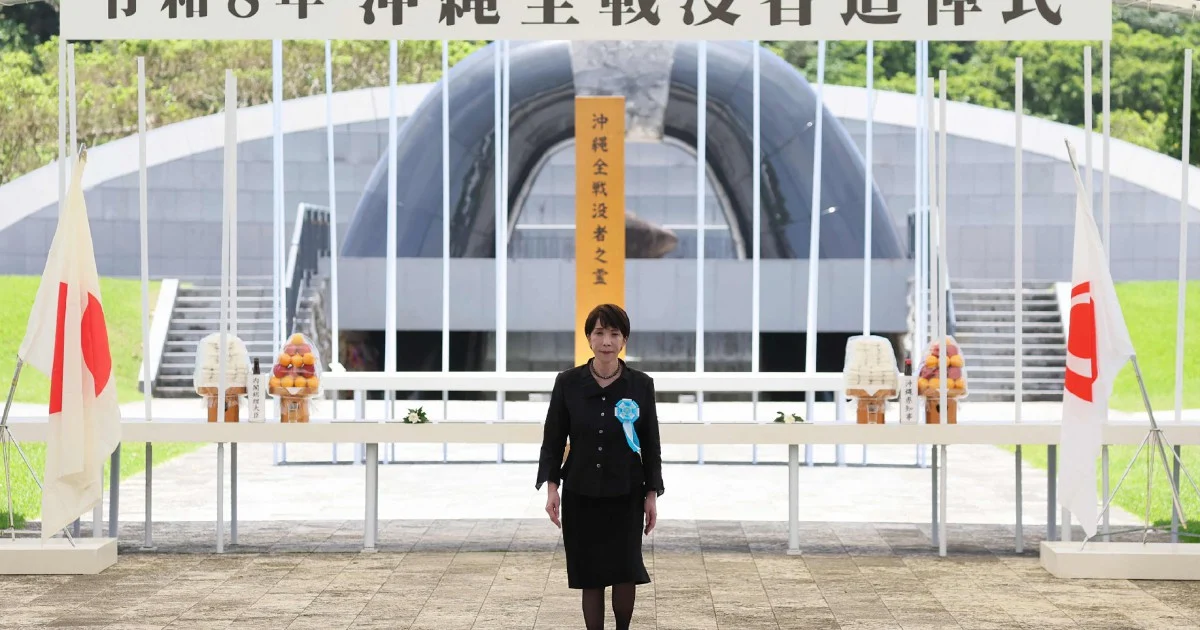
Japanese Prime Minister Sanae Takaichi encountered vocal opposition during a commemoration event at a World War II memorial in Tokyo, with protesters expressing sharp disapproval of the government's direction on military matters. Television coverage documented the confrontation, capturing the intensity of public feeling surrounding Japan's evolving defence stance. The incident underscores growing tensions between Tokyo's security policy shifts and sections of the Japanese population who remain attached to the nation's postwar pacifist principles.
Japan has spent more than seven decades following a defensive military posture that restricted its armed forces to homeland protection. This constitutional constraint emerged from the country's catastrophic involvement in World War II and reflected a deliberate choice by policymakers to chart a peaceful course. The pacifist approach became deeply embedded in Japanese society, shaping national identity and informing public discourse on defence and international relations. However, the strategic environment in East Asia has shifted dramatically, prompting policy recalibrations in recent years.
The Takaichi government has pursued a more expansive military policy that represents a marked departure from Japan's traditional restraint. These adjustments include enhanced defence spending, capability development, and a more active security role in the Indo-Pacific region. Such moves reflect genuine concerns about evolving geopolitical realities, particularly regarding regional tensions and the need to maintain stability. Yet for many Japanese citizens who came of age during the pacifist era, these developments represent a troubling abandonment of core national values.
The memorial event itself carried symbolic weight, making it a natural flashpoint for expressing concerns about military policy. World War II remembrance carries profound emotional resonance in Japan, serving as a reminder of the devastating consequences of military aggression and strategic miscalculation. For protesters present, the timing of policy announcements or commemoration events felt inappropriate, appearing to instrumentalise historical memory for contemporary political purposes. This friction between historical consciousness and modern security pragmatism continues to shape Japanese public discourse.
Takaichi represents a faction within Japan's ruling Liberal Democratic Party that advocates for a more muscular defence posture. Her appointment signals the administration's commitment to security policy evolution. However, her elevation to the premiership has simultaneously energised opposition groups concerned about the trajectory of such changes. The heckling incident reflects broader societal divisions over how Japan should navigate twenty-first-century security challenges while honouring its pacifist heritage.
For Southeast Asian observers, Japan's military pivot carries significant implications. Tokyo's enhanced defence capabilities and more active regional engagement influence the balance of power throughout the Indo-Pacific. Japan's partnership frameworks, technology transfers, and security cooperation with regional nations shape the security landscape that affects countries throughout the area. Malaysia and other Southeast Asian states maintain interests in Japan's trajectory, balancing appreciation for Tokyo's role as a stabilising force against sensitivities about remilitarisation.
The generational dimension of this debate deserves attention. Younger Japanese citizens who never directly experienced wartime atrocities may view military normalisation more pragmatically than older generations. Conversely, peace advocacy groups continue mobilising opposition, arguing that Japan's security interests can be served without abandoning constitutionally-enshrined commitments to pacifism. This intergenerational disagreement will likely intensify as policy decisions accumulate.
International context matters considerably for understanding these developments. China's military modernisation, North Korea's weapons programmes, and Russia's assertiveness have convinced security analysts across the developed world that passive postures invite complications. Japan's policymakers argue that enhanced defence capabilities deter rather than provoke aggression. Yet opponents contend that arms racing dynamics create their own instabilities and that Japan's greatest strategic asset remains its moral authority as a pacifist nation that prospered through cooperation rather than coercion.
The heckling at the memorial represents more than a single confrontation between government and protesters. It encapsulates a fundamental debate about national identity, historical memory, and security strategy. Japan must reconcile legitimate contemporary security requirements with deeply rooted postwar commitments. Neither complete withdrawal from military modernisation nor abandonment of pacifist principles offers a straightforward solution. How Tokyo navigates this tension will significantly influence regional stability and Japan's place in an evolving Asian order. The street-level opposition documented at the memorial suggests this conversation will remain contested throughout Japanese society for years ahead.