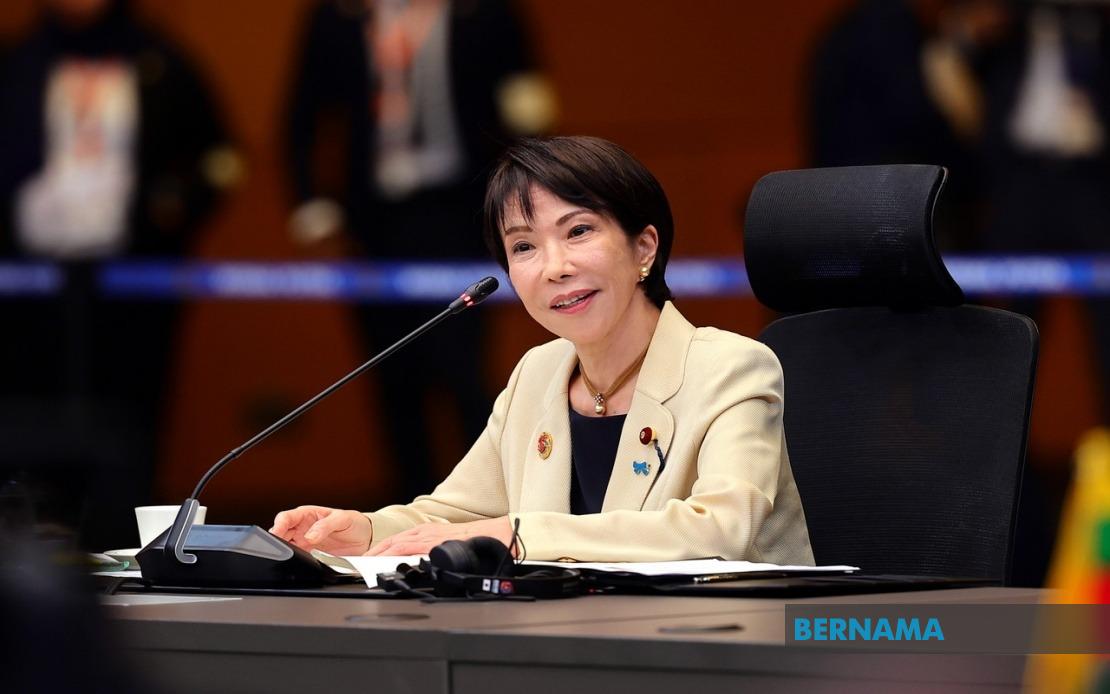
Japan's Prime Minister Sanae Takaichi has intensified diplomatic efforts to secure stable transit through the Strait of Hormuz, one of the world's most strategically vital waterways, by engaging directly with Oman's Sultan Haitham bin Tariq al-Said in a Monday phone conversation that underscores Tokyo's mounting concerns over shipping security in the Middle East.
The call comes at a critical juncture when direct negotiations between the United States and Iran have reached a standstill, leaving the future of maritime safety in the Persian Gulf increasingly uncertain. Takaichi's outreach to Oman reflects Japan's recognition that the sultanate, which maintains historically balanced relations with both Iran and Western powers, occupies a unique diplomatic position and may serve as an intermediary to de-escalate regional tensions that threaten global trade routes.
For Japan and other major Asian economies, the Strait of Hormuz represents far more than a symbolic passage. Approximately one-third of all seaborne traded oil transits through this 21-mile corridor annually, making it indispensable to the energy security of Japan, South Korea, China, and Southeast Asia. Any disruption to shipping lanes triggers immediate reverberations across regional supply chains and energy markets, with direct consequences for inflation, manufacturing costs, and economic growth in countries throughout the Indo-Pacific.
During their conversation, Takaichi articulated Japan's core interest: the resumption and maintenance of free and safe passage through the waterway, language that carries particular weight given recent years of regional instability, including tanker incidents and military posturing. Her emphasis on "safe passage" signals Japanese anxiety about not merely nominal freedom of navigation but genuine security guarantees that would allow commercial vessels to operate without fear of seizure, attack, or interference.
Oman's response, as relayed by Takaichi to Tokyo reporters, suggests the sultanate is taking on an increasingly meditative role in regional affairs. Sultan Haitham indicated that Oman would meaningfully consult with and incorporate the perspectives of all nations dependent on the Hormuz corridor, a diplomatic formulation that hints at Muscat's willingness to engage with multiple stakeholders rather than align exclusively with any single power. This approach reflects Oman's historical foreign policy doctrine of non-alignment and pragmatic engagement.
The deeper context reveals that Oman is simultaneously engaged in separate discussions with Iran regarding shipping routes and maritime arrangements, according to regional reporting. These parallel tracks suggest Muscat is attempting to walk a delicate diplomatic tightrope, maintaining sufficient communication channels with Tehran to influence Iranian behaviour while remaining receptive to the concerns of Japan, Europe, and Gulf Cooperation Council members who depend on unobstructed Hormuz passage.
Japan's diplomatic initiative carries particular significance for Southeast Asia, as the region shares Japan's vulnerability to Hormuz disruptions. Malaysia, Indonesia, and Singapore, as major shipping hubs and energy importers, face similar exposure to any escalation affecting the strait. When Japan's leadership elevates this issue to the level of prime ministerial engagement, it signals the issue's gravity and may encourage other regional governments to voice their own stakes in maintaining stability.
The stalled US-Iranian negotiations form the uncomfortable backdrop to this conversation. With diplomatic channels between Washington and Tehran frozen, informal pressure from countries like Japan that have traditionally maintained neutral or bridge-building relationships becomes more valuable. Tokyo hopes that by appealing to shared interests in maritime stability, it can indirectly influence Iranian calculations about the costs of any aggressive action against shipping.
Takaichi's move also reflects Japan's broader strategic repositioning in Middle Eastern affairs. Under recent administrations, Tokyo has sought to deepen its diplomatic presence in the region beyond traditional energy procurement relationships, positioning itself as a stabilizing voice and responsible stakeholder. Engagement with Oman particularly appeals to Japanese strategy because Muscat has demonstrated ability to communicate across regional divides without sacrificing its own sovereignty or credibility.
The implications extend beyond immediate security concerns. Prolonged uncertainty over Hormuz passage raises long-term risks for energy investments, shipping insurance premiums, and global supply chain resilience. Companies across Asia factor in Hormuz-related risk premiums when pricing goods and planning logistics, effectively taxing every economy in the region. Takaichi's diplomatic outreach, though modest in appearance, represents a preventive effort to avoid scenarios where such risk premiums become prohibitively expensive.
Looking forward, the success of Oman's consultative approach will largely determine whether diplomatic pressure can achieve what military posturing and sanctions have not: a stable understanding among regional parties that the benefits of preserving Hormuz traffic exceed any short-term advantages from disruption. Japan's willingness to engage directly with Oman rather than merely coordinating through Western allies suggests recognition that traditional alliance frameworks alone cannot resolve this fundamentally regional challenge.

