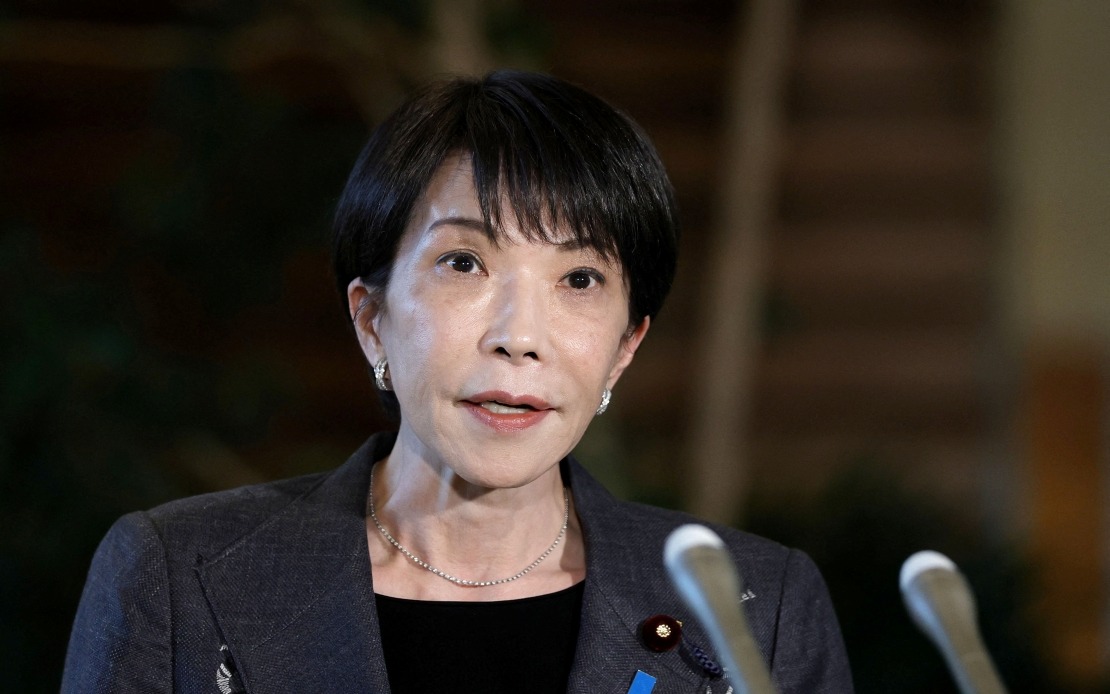
Japan's newly elevated Prime Minister Sanae Takaichi has made a significant commitment regarding the country's consumption tax trajectory, pledging to return the levy on food and beverages to its standard 8 per cent rate once a temporary reduction expires. The announcement carries particular weight given Japan's precarious fiscal situation and the political sensitivity surrounding tax increases in a cost-of-living environment that has stretched household budgets across the nation.
Takaichi delivered her assurance during a parliamentary committee session when questioned by Democratic Party for the People lawmaker Ken Tanaka about the government's true intentions regarding the tax reduction plan. Her categorical statement—"I clearly state that we will bring it back to where it was two years after implementing (the reduction)"—represents an attempt to address scepticism within both the ruling coalition and opposition benches about whether the temporary measure would ultimately become permanent, a dynamic that has constrained fiscal policy in many developed economies.
The backdrop to this commitment lies in the ruling Liberal Democratic Party's dramatic retreat from its February election pledge to eliminate consumption tax entirely on food items. Instead, the LDP has now proposed reducing the rate to just 1 per cent for a two-year period commencing April 2027, a substantial modification from the original zero-rate promise that had resonated with voters grappling with persistent inflation. This recalibration reflects both practical constraints and mounting concerns about Japan's already unsustainable debt trajectory.
The shift emerged through discussions at a cross-party national council on taxation and social security, where competing pressures became evident. Technologically, implementing a zero per cent rate would have required extensive modifications to retailers' point-of-sale systems across the nation, creating implementation delays and business disruption. Economically, the move reflects growing apprehension among policymakers regarding Japan's fiscal sustainability, which has already earned the dubious distinction of being the worst among Group of Seven nations. Recent turbulence in Japanese government bond markets, with yields reaching their highest levels in decades, has intensified these anxieties about the nation's long-term economic stability.
Parliamentary opposition to the tax restoration reflects legitimate concerns about political feasibility. Tanaka articulated a fundamental challenge: once voters experience a tax reduction, restoring it becomes extraordinarily difficult to sell, as citizens inevitably interpret the change as a "tax increase" regardless of technical framing. This dynamic has historically constrained fiscal consolidation efforts in many mature democracies, where tax reductions become entrenched while spending cuts face fierce resistance. Takaichi's explicit advance commitment appears designed to preempt this political trap by establishing expectations early.
The alternative approach proposed by the LDP demonstrates the government's determination to fulfil its electoral promise while maintaining fiscal credibility. Rather than maintaining zero consumption tax indefinitely, the party has proposed annual cash handouts totalling 600 billion yen, equivalent to approximately US$3.7 billion or the revenue that a 1 per cent levy would generate. This mechanism preserves the economic benefit for household purchasing power while maintaining actual tax revenue and avoiding the permanence problem that plagues zero-rate regimes.
For Malaysian observers and policymakers, Japan's predicament offers valuable lessons about the long-term consequences of fiscal populism. Japan's debt-to-GDP ratio, already among the highest globally, demonstrates how temporary tax cuts and spending increases can accumulate into structural imbalances that constrain future policy flexibility. The currency weakness affecting the Japanese yen reflects investor concerns about unsustainable fiscal trajectories, a warning relevant to any developing or emerging market considering similar measures.
The timeline outlined by Takaichi indicates she intends to move the reduction "as soon as possible" once the national council completes its interim report later in June, suggesting implementation could proceed within the calendar year despite formal launch in April 2027. This accelerated pathway reflects political eagerness to deliver tangible relief to voters while inflation remains a live concern, though it also compresses the window for necessary fiscal adjustments elsewhere in the budget.
The involvement of the Japan Innovation Party, the LDP's junior coalition partner, underscores how inflation-fighting measures have achieved cross-party consensus in Japan, much as they have across Southeast Asia and beyond. Multiple opposition parties had similarly committed to food tax reductions during the election campaign, creating political inevitability around some form of relief even as fiscal realities constrained its scope. This consensus, paradoxically, may strengthen Takaichi's position when the time arrives to restore normal tax rates, as it prevents opposition parties from claiming the reversal represents a purely LDP initiative.
Looking ahead, the success of Takaichi's two-year commitment will depend heavily on macroeconomic conditions at the renewal point. If inflation has retreated sufficiently and living standards have recovered, public acceptance of the tax restoration may prove easier. Conversely, if Japanese households continue experiencing economic stress, the political pressure to extend the reduction—precisely the scenario Tanaka warned against—could prove overwhelming. The prime minister's willingness to state her intention plainly and publicly suggests awareness that credibility regarding the sunset clause will be crucial for maintaining fiscal discipline throughout her tenure.