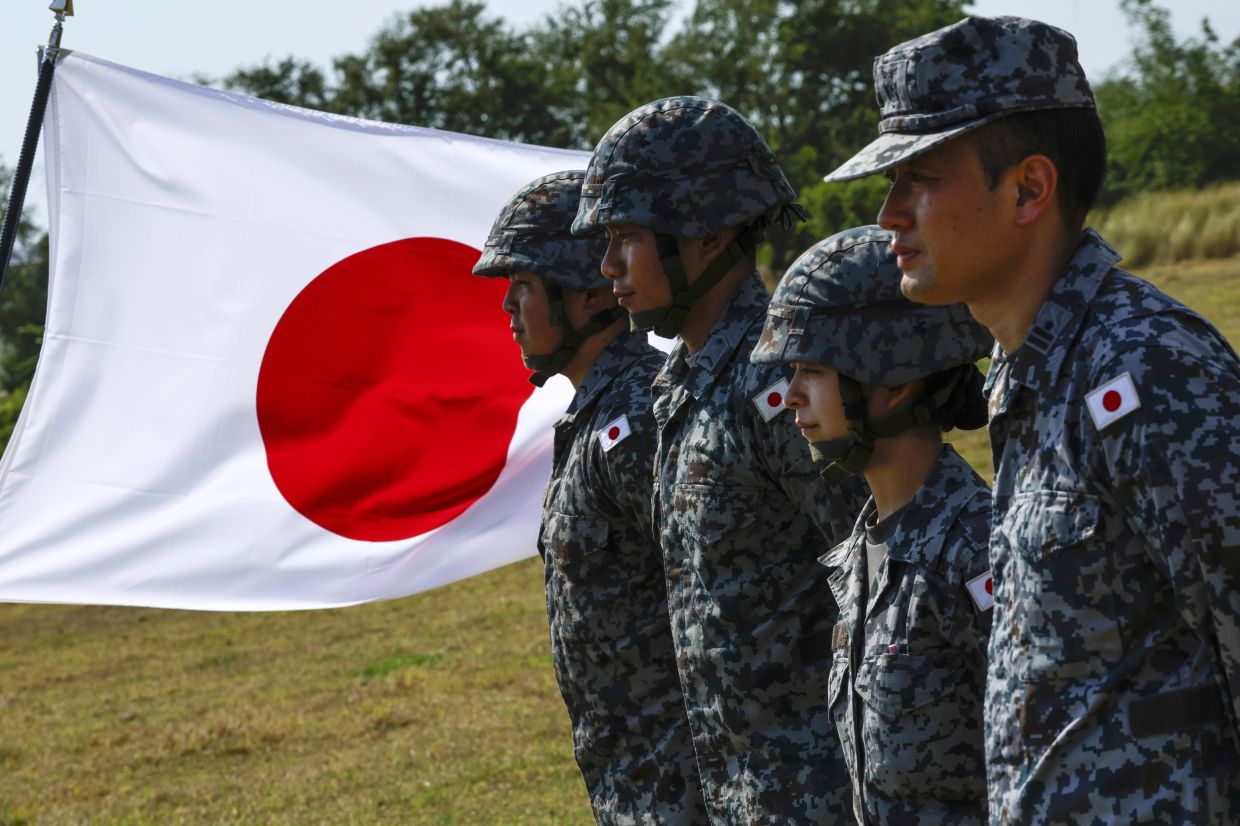
Japan's efforts to strengthen its military and security standing in the Indo-Pacific have become increasingly sophisticated, yet face significant structural constraints that threaten to undermine their effectiveness. While Tokyo seeks to position itself as a regional stabiliser capable of offering an alternative to Chinese dominance, the strategy remains vulnerable to perceptions of militarisation and dependence on Washington, exposing deeper anxieties about Japan's long-term security posture in an era of perceived American retrenchment.
The visibility of Japan's security diplomacy peaked during last month's regional security forum in Singapore, where Defence Minister Koizumi featured prominently in discussions about regional stability. The cancellation of a scheduled session intended to showcase China's cooperative regional partnerships inadvertently highlighted the competitive dynamic shaping the gathering, while Koizumi's carefully orchestrated public meeting with US Defence Secretary Pete Hegseth signalled Tokyo's determination to reassert the centrality of the Japan-US alliance. Yet this very gesture, intended to project confidence, simultaneously revealed Japan's underlying concern that Washington's commitment to Asia may be wavering—a concern that has prompted Tokyo to accelerate its independent diplomatic and military outreach across the region.
Japan's strategic reorientation has manifested in several tangible ways. Most notably, Tokyo has pursued the expansion of nuclear-powered attack submarines, a proposal that represents a fundamental shift in how Japan conceptualises its own defence capabilities and its willingness to challenge traditional constraints. Simultaneously, Japan has upgraded partnerships with established allies such as New Zealand, welcoming announcements about enhanced frigate deployments that reinforce interoperability frameworks. These military-to-military engagements form part of a broader architecture designed to create layered security partnerships across the Indo-Pacific, creating a network that functions independently of traditional US-centric alliance structures while remaining complementary to them.
The underlying logic driving this strategic shift reflects genuine uncertainty about American reliability. President Trump's repeated demands that Japan and South Korea substantially increase defence spending, coupled with his administration's imposition of high tariffs on key strategic partners including India, have generated substantial anxiety in Tokyo about the predictability of Washington's regional commitments. This shift in the security environment has prompted Japanese policymakers to develop a more self-reliant posture, one that acknowledges Washington's continued importance while simultaneously building alternative mechanisms for regional stability that do not depend entirely on US leadership.
Crucially, Japan recognises that a purely military-centric approach to regional engagement will prove insufficient and potentially counterproductive. Many Southeast Asian and Pacific Island nations prioritise economic development, energy security, and infrastructure investment alongside traditional security concerns. Analysts emphasise that Tokyo must pursue a comprehensive engagement strategy that integrates security cooperation with infrastructure financing and energy transition support—an approach that allows regional partners to benefit from Japanese assistance without feeling compelled to choose explicitly between Beijing and Washington. This holistic methodology reflects a maturation in Japanese strategic thinking, one that acknowledges both the limits of military power and the importance of addressing the genuine development needs that shape how regional nations evaluate their international partnerships.
Japan's recalibrated Free and Open Indo-Pacific framework, announced by Prime Minister Sanae Takaichi in May, embodies this integrated approach. Rather than emphasising abstract principles such as the rule of law and democratic governance—the focus of former Prime Minister Shinzo Abe's 2016 formulation—the updated strategy concentrates on practical tools with immediate relevance: undersea cable security, energy supply chain resilience, and maritime domain awareness capabilities. This pragmatic reorientation reflects recognition that abstract principles, while important, cannot compete with concrete economic benefits when smaller nations evaluate their strategic alignment. By linking connectivity infrastructure, energy security, and military assistance into a cohesive package, Tokyo offers regional partners tangible benefits that address their most pressing vulnerabilities.
The expansion of Japan's Official Security Assistance programme represents a particularly innovative element of this broader strategy. Created to circumvent constitutional restrictions on military aid, the OSA programme enables Tokyo to provide direct support to the military entities of strategic partners—a critical distinction from conventional official development assistance, which traditionally excludes military recipients. This mechanism has scaled rapidly, expanding from four recipient countries and 2 billion yen in funding to twelve countries and 18.1 billion yen in less than three years. The programme now provides advanced radar systems, drones, and other capabilities that many regional nations lack the financial resources to acquire independently, effectively allowing Tokyo to shape regional military capabilities and interoperability while demonstrating commitment to partners' security needs.
Port and airport development represents another crucial component of Japan's strategic toolkit. While explicitly military assistance carries political risks for recipient governments—potentially inviting domestic criticism about militarisation or external alignment—infrastructure investment enjoys broader public acceptance. Moreover, well-designed port and airport facilities support not only civilian economic activity but also coastguard operations and defence logistics, allowing Japan to develop strategic capacity while maintaining political plausibility. This approach treats connectivity infrastructure as a dual-use tool, simultaneously addressing genuine development needs while creating the physical infrastructure necessary for coordinated maritime security operations across the region.
The June 2025 announcement of exploratory talks between Tokyo and Jakarta regarding potential export of Japanese Asagiri-class destroyers demonstrates how Japan's lifting of restrictions on lethal weapons exports in April has accelerated concrete military-industrial cooperation. Japan can now sell defence equipment to seventeen nations, including six Association of Southeast Asian Nations members—the Philippines, Malaysia, Indonesia, Vietnam, Thailand, and Singapore. This expansion of the defence export market serves multiple strategic objectives simultaneously: it strengthens security partnerships through the provision of advanced military hardware, demonstrates the operational utility of Japanese defence systems, and creates commercial opportunities that support Japan's domestic defence industrial base. The warship discussions with Indonesia exemplify how Tokyo is translating diplomatic engagement into concrete military cooperation.
Japan's April launch of the $10 billion Power Asia initiative further illustrates the integration of security with economic resilience. Designed to help regional partners secure emergency energy supplies and build long-term resilience against disruptions affecting the Strait of Hormuz, the initiative acknowledges that energy security underpins broader regional stability. By combining energy security assistance with traditional military cooperation, Japan addresses a dimension of regional vulnerability that military power alone cannot resolve, while positioning itself as a holistic security partner capable of addressing the multifaceted challenges facing Indo-Pacific nations.
Yet significant obstacles persist in Tokyo's ambitious regional strategy. Analysts caution that Japan, lacking the massive financial resources available to Beijing, cannot compete with China on a purely quantitative basis. Instead, Tokyo must work collaboratively with allies, developing complementary capabilities and shared infrastructure that create qualitative advantages through integration rather than individual superiority. Equally important, Japan must carefully avoid explicitly anti-China framing that would alienate regional partners already feeling pressure to balance relationships with both Beijing and Washington. The perception that Japan is simply offering a military-led alternative to Chinese dominance would undermine the appeal of Tokyo's integrated approach, potentially driving smaller nations toward Beijing as the path of least resistance in choosing sides.
The fundamental challenge facing Japanese strategy reflects broader structural realities in the contemporary Indo-Pacific. Regional nations genuinely require assistance with development, energy security, and military modernisation—needs that neither Washington nor Beijing monopolises. Japan's innovation lies in recognising that it can compete effectively not by matching Chinese financial resources or American military power individually, but by offering a sophisticated package combining military cooperation, infrastructure investment, energy security, and development assistance without demanding exclusive alignment. This approach acknowledges that regional nations need not choose between Beijing and Washington entirely, but can instead construct pragmatic relationships with multiple partners, each providing specific benefits.
The effectiveness of Tokyo's regional strategy will ultimately depend on how successfully Japan maintains its positioning as a genuine development and security partner rather than simply another external power seeking to constrain Chinese influence. As Japanese officials expand their engagement across Southeast Asia and the Pacific Islands, they must continuously balance the legitimate security anxieties driving their outreach with recognition that regional nations possess their own interests and priorities that extend well beyond great power competition. Japan's capacity to offer infrastructure development, energy security, and military modernisation assistance without demanding explicit anti-China positioning may prove the key to sustaining partnerships that currently lack deeper institutional foundation. Whether Tokyo can sustain this nuanced approach while managing domestic pressure for more explicitly confrontational policies toward Beijing remains an open question shaping the entire future of Indo-Pacific security architecture.

