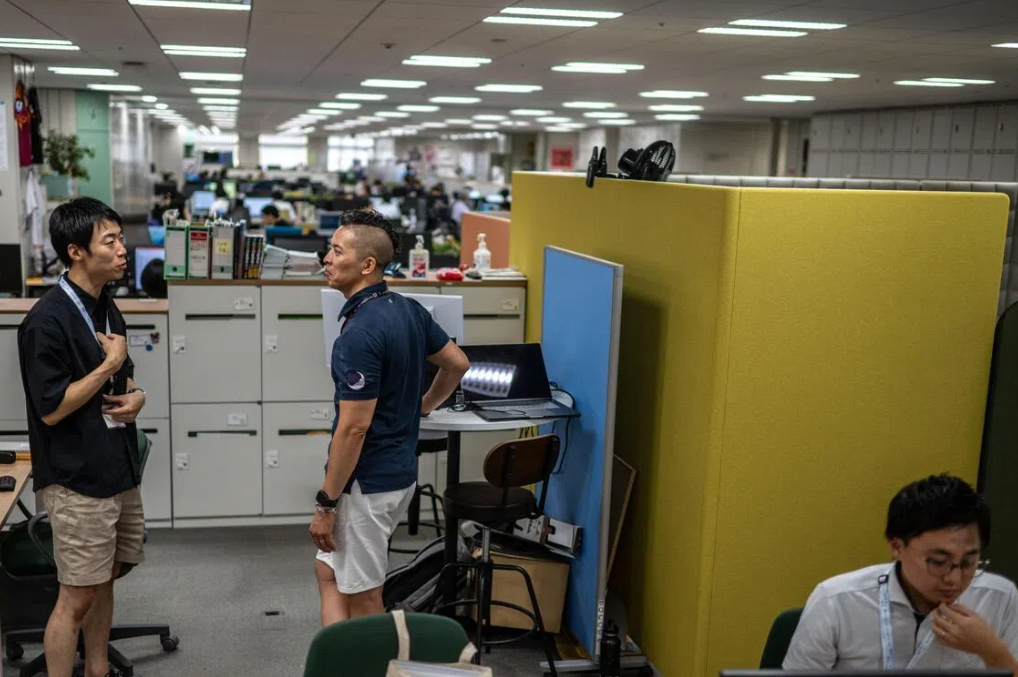
Tokyo's latest effort to help office workers endure Japan's oppressive summer weather through casual dress has collided with an unusual social friction: complaints about exposed male leg hair in the workplace. The metropolitan government expanded its Cool Biz initiative in April to allow employees to wear T-shirts, trainers and shorts instead of traditional formal suits and ties, aiming to reduce the severity of the heat that annually claims lives and hospitalises thousands across the nation. Yet the seemingly straightforward policy has instead ignited a broader conversation about workplace propriety, body image and the limits of informality in Japan's historically conservative office culture.
The controversy has crystallised around a term that might seem absurd to outside observers but reflects genuine discomfort among some Japanese workers: "sunehara", or "leg hair harassment". The phrase refers to the distress some, predominantly female, colleagues report experiencing when confronted with the sight of a male coworker's exposed shin hair. This phenomenon has sparked debate online and in surveys, revealing a generational and gender divide in how Japanese society views the intersection of comfort, heat management and workplace decorum. What the government framed as a practical response to dangerous weather has instead become a referendum on changing social norms around masculinity, body standards and professional appearance.
A June survey conducted by Gorilla Clinic, a men's cosmetic treatment establishment, unveiled the scale of public hesitation about the shorts policy. The data showed nearly identical division: 53.5 per cent of respondents opposed wearing shorts to professional settings, while 46.5 per cent backed the idea. Significantly, women substantially outnumbered men among survey participants, indicating that female office workers may harbour greater reservations about observing their male colleagues' legs and associated body hair in the professional environment. The split reflects deeper anxieties about physicality, attractiveness standards and what constitutes appropriate professional presentation in Japanese workplaces, where appearance conventions have traditionally carried substantial weight.
Understanding the reluctance reveals much about Japanese attitudes toward the body and professionalism. Opponents cited concerns ranging from body shape visibility to the prominence of body hair as reasons for their resistance. In a culture where workplace dress codes have historically emphasised formal coverage and physical restraint, the shift toward exposure—even minor exposure of the legs—represents a substantial cultural shift. Body consciousness remains acute in Japan, where fitness and appearance standards are notably rigorous, and the sudden visibility of previously concealed areas of the male form has generated anxiety among those accustomed to more uniform, covered professional appearances.
The discomfort has produced unexpected consequences, particularly among male workers themselves. Akifumi Funatsu, a director at Gorilla Clinic, observed that an increasing number of male clients are pursuing laser hair removal, motivated not primarily by aesthetic preference but by what they perceive as social responsibility. These men appear convinced that visible leg hair constitutes a form of workplace nuisance, and they are voluntarily undergoing cosmetic procedures to eliminate potential discomfort they might cause colleagues. This development demonstrates how workplace pressure and social anxiety can influence personal grooming decisions, transforming what was ostensibly a heat-management measure into a driver of cosmetic industry demand.
Japan's gradual shift toward relaxed office attire began nearly two decades ago, initiated by then-environment minister Yuriko Koike in 2005. The original Cool Biz campaign promoted short-sleeved shirts and the abandonment of jackets and ties, positioning casual dress as an environmental measure tied to reduced air-conditioning consumption. The initiative gained significant traction when then Prime Minister Junichiro Koizumi appeared publicly without formal jacket and tie, lending political credibility to the concept. Following the 2011 earthquake and tsunami, which strained Japan's energy infrastructure, the government intensified the campaign under the banner "Super Cool Biz", further liberalising workplace dress expectations and establishing a precedent for flexible professional attire.
Since then, workplace dress has genuinely transformed, particularly within dynamic sectors such as technology startups and innovation-focused companies. Tokyo's recent expansion to explicitly permit shorts represents a significant boundary extension. However, this progression has occurred within an uneven social landscape where traditional expectations about professional appearance remain deeply embedded, particularly among older generations and in more conservative corporate settings. The shorts policy thus exposes a generational fault line, with younger workers more likely to embrace casual dress while older professionals and some female colleagues express discomfort with the implications.
The timing of this cultural negotiation cannot be separated from Japan's genuine public health crisis related to extreme heat. During the week of July 6-12 alone, the Fire and Disaster Management Agency recorded seven deaths from heatstroke and hospitalised 4,580 individuals. Summer temperatures and humidity levels have reached dangerous extremes, with high humidity particularly compromising the body's ability to regulate temperature through perspiration. Government officials have responded with multi-faceted recommendations including hydration, aggressive air-conditioning use and gradual heat acclimatisation. Beyond official guidance, Japanese consumers have embraced technological solutions including clothing with integrated cooling fans, specialised cooling wipes, umbrellas with heat-blocking properties and portable fan devices.
Against this backdrop of genuine health risk, the leg hair controversy assumes a different character. One can interpret the resistance to shorts not merely as conservative social anxiety but as a safety debate occurring in a population acutely aware of heat-related mortality. Some workers, particularly women in environments with significant gender imbalance, may prioritise what they perceive as maintaining professional composure and boundaries even under physical stress. The debate therefore encompasses not only aesthetic preferences but also competing understandings of how workplaces should balance worker comfort, safety and professional norms during public health emergencies.
The unresolved tension reveals how difficult it proves to engineer social change through top-down policy intervention. Tokyo environmental official Noboru Watanabe articulated the government's position clearly: providing workers options in severe heat rather than prescribing specific attire, with the stipulation that chosen clothing should not offend colleagues. Yet defining offensive workplace presentation has proven substantially more complicated than anticipated. The near-perfect split in public opinion regarding shorts acceptance suggests no consensus exists, and the government faces a situation where expanding options for some workers creates discomfort for others.
Looking forward, the Cool Biz expansion will likely evolve into a negotiated settlement rather than universal acceptance. Workplaces may develop sector or department-specific standards, with technology and creative industries moving faster toward casual dress while finance and law firms maintain greater formality. Individual companies will determine what constitutes appropriate professional presentation, and the shorts question will probably vary substantially depending on organisational culture. The leg hair harassment phenomenon, while superficially comic, thus represents a genuine friction point between competing workplace values as Japan navigates modernisation, environmental responsibility and evolving social expectations.

