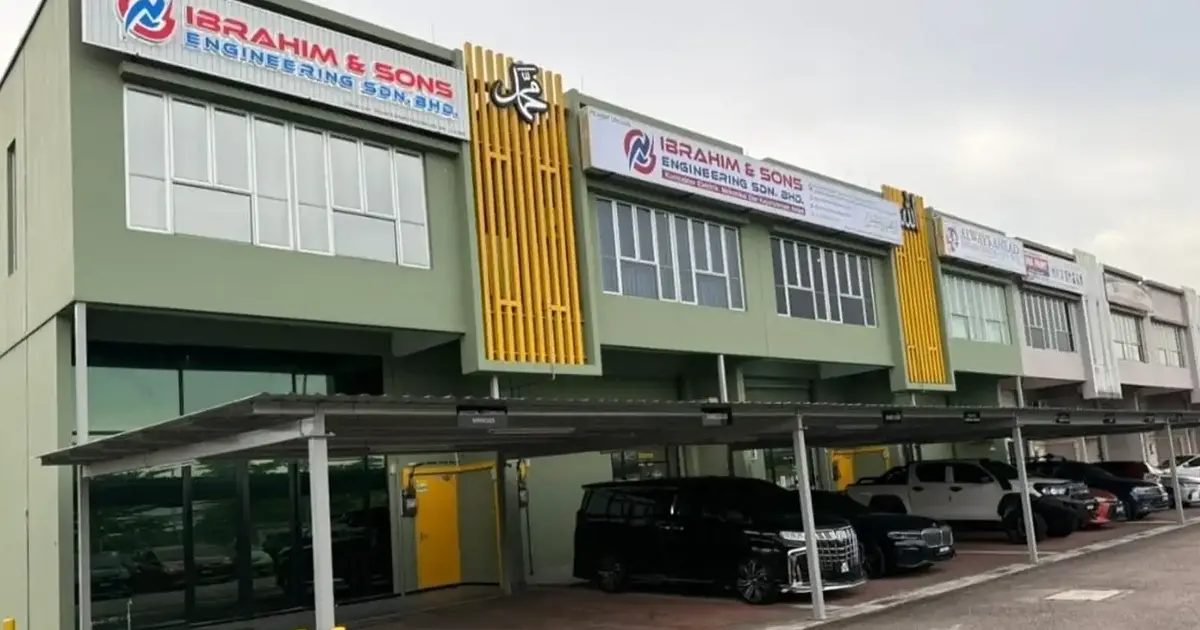
Ibrahim & Sons Engineering Sdn Bhd has escalated its dispute with Steel Hawk group by filing a defamation counter-suit, alleging that the group orchestrated a deliberate and calculated campaign to damage the company's standing and credibility within the industry. The legal move represents a significant escalation in what has become a protracted and increasingly contentious business quarrel, with both parties now seeking recourse through the courts after their commercial relationship deteriorated.
At the heart of the counter-claim lies Ibrahim & Sons' assertion that Steel Hawk engaged in what the company characterises as a 'pre-planned media strategy' specifically designed to portray the company's leadership and operations in the most damaging light possible. Rather than addressing disputes through conventional commercial channels, the Johor Bahru-based firm argues that Steel Hawk deliberately chose to amplify allegations through public statements and media engagement, thereby deliberately inflicting reputational harm on the engineering company and its directors.
The strategy allegedly pursued by Steel Hawk reflects a pattern increasingly observed in Malaysian business disputes, where parties resort to public campaigns and media narratives rather than pursuing purely legal remedies. Such approaches can fundamentally undermine business relationships and investor confidence, creating collateral damage that extends well beyond the immediate parties involved. For companies operating within Malaysia's tightly-knit engineering and construction sectors, reputational damage can prove as consequential as any financial penalty, potentially affecting ability to secure contracts and maintain banking relationships.
Defamation claims in Malaysia require claimants to demonstrate that false statements have caused measurable harm to reputation and standing. Ibrahim & Sons' position effectively contends that by characterising the company and its directors as fraudulent operators, Steel Hawk crossed the threshold from legitimate business dispute into territory where reputation becomes the primary battlefield rather than contractual obligations or financial claims. The distinction matters considerably because it forces courts to examine not merely whether disputes exist, but whether the manner and medium of those disputes constitute deliberate attempts to destroy rather than resolve.
The counter-suit underscores broader tensions within Malaysia's business environment, particularly in sectors like engineering where competitive pressures and project dynamics can generate intense conflicts. When partnerships dissolve, particularly those involving significant financial stakes or project responsibilities, former partners occupy a position of considerable informational advantage regarding each other's operations. This asymmetry creates temptation to weaponise legitimate grievances through selective disclosure and strategic narrative control, precisely the conduct Ibrahim & Sons now alleges.
From a Malaysian corporate governance perspective, the case illustrates why clear partnership agreements and dispute resolution mechanisms prove essential. Many business disputes escalate unnecessarily because parties lack predetermined frameworks for addressing disagreements before they metastasise into all-encompassing conflicts. The absence of structured alternatives often leaves embattled parties feeling their only recourse involves public positioning and media engagement, thereby validating Steel Hawk's alleged approach regardless of its ultimate merit or factuality.
The defamation claim also reflects evolving legal attitudes toward corporate conduct in an age of rapid information dissemination. What constitutes recklessness regarding accuracy has shifted substantially as news cycles accelerate and social media amplifies claims beyond traditional media gatekeepers. Malaysian courts increasingly examine whether organisations exercised due diligence before making serious accusations, recognising that digital platforms can transmit damaging allegations instantaneously to audiences that may never encounter subsequent corrections or exonerations.
For the broader engineering sector, this dispute carries instructive implications about professional conduct and ethical standards. Industry bodies and professional associations increasingly emphasise that competitive advantage must derive from superior capability and performance rather than from attempts to systematically diminish competitors' reputational standing. Such standards become particularly important when public procurement processes depend substantially on contractor reputation and track record, as they do throughout Malaysia's infrastructure development landscape.
The counter-suit's viability will likely hinge on evidence demonstrating Steel Hawk's knowledge of falsity or demonstrable recklessness regarding accuracy when making publicly attributed claims. Malaysian courts have shown increasing willingness to provide remedies where parties can establish calculated campaigns to damage reputation through dishonest means, particularly where the defendant's informational position should have prompted greater caution. Ibrahim & Sons will need to document Steel Hawk's communications and editorial choices to substantiate allegations of pre-planning and deliberate strategy.
The litigation trajectory remains uncertain, but the counter-suit's existence ensures this business dispute will occupy Malaysia's commercial courts for months or years ahead. Both parties' legal positions suggest neither intends capitulation, making settlement discussions unlikely absent substantial intervening developments. The case serves as cautionary reminder that aggressive public positioning, however strategically appealing short-term, can generate countervailing legal liability and escalate disputes into protracted contests consuming resources and management attention far beyond their original scope.

