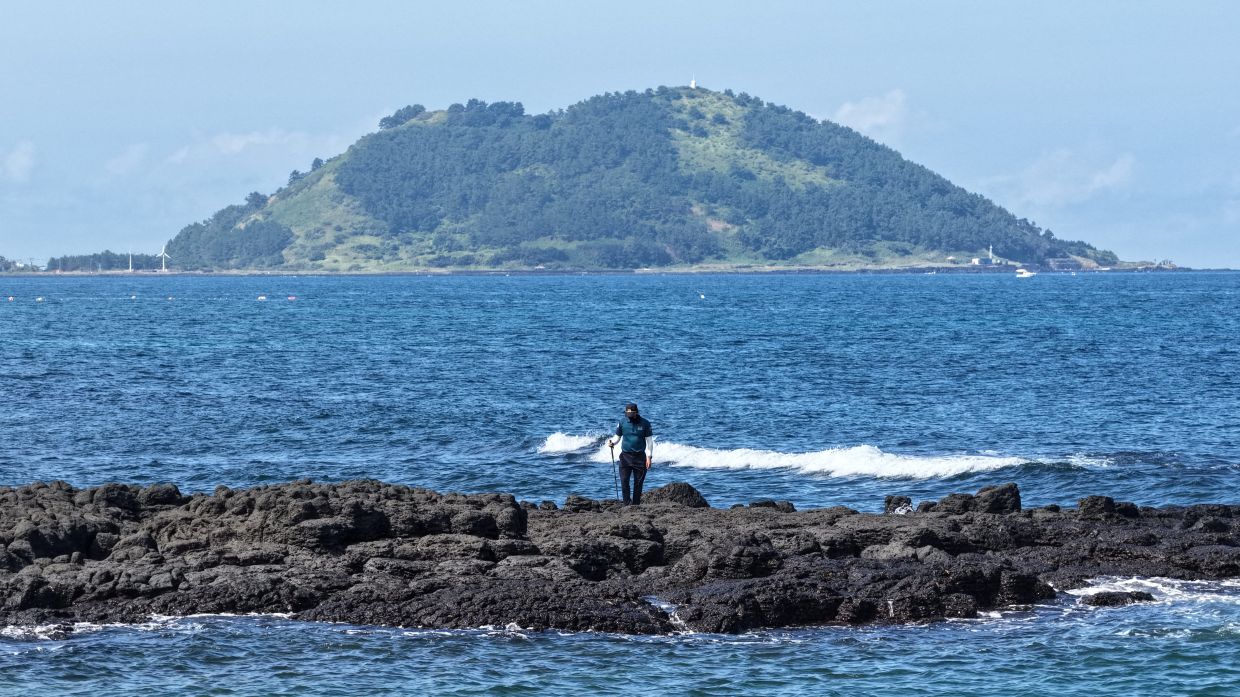
Jeju Island, long celebrated as South Korea's most romantic and picturesque vacation destination, is experiencing an unprecedented image crisis following revelations of serious police incompetence in handling multiple missing-person cases. The convergence of four bodies discovered within a 72-hour window in late August, coupled with evidence that a police officer deliberately falsed closed at least two investigations, has shattered public confidence in local law enforcement and triggered widespread concern about safety conditions on the island. The scandal threatens to compound existing economic challenges as domestic tourism numbers have already begun declining, with implications that extend beyond South Korea's borders into Southeast Asian travel patterns, as regional tourists frequently visit Jeju as part of extended Asian holiday itineraries.
The crisis crystallizes around the disappearance and death of Jang Mi-ran, a 37-year-old woman who vanished sometime between late May 12 and early May 13 after leaving her residence in Hallim-eup, Jeju City. For nearly three months, her case languished in limbo following a police officer's decision in May to close the investigation, with the officer falsely claiming he had made direct contact with the missing woman. The discovery of her remains on Monday, August 24, in a palm grove less than a ten-minute walk from her last known location, exposed the dereliction and raised agonizing questions about how many additional cases might have been similarly abandoned or mishandled by the same officer.
The pattern of negligence extended beyond Jang's case. A man in his sixties, also reported missing, was discovered deceased in Gujwa-eup on Saturday after an inexplicable investigative delay. Police records subsequently revealed that this case, like Jang's, had been improperly closed by the same officer. Additionally, on the same day Jang's body was located, authorities found another previously missing individual dead near a ravine in Aewol-eup. The following day, fishermen spotted a septuagenarian's corpse in the waters off Sinheung-ri in Jocheon-eup. Although authorities have determined that the deaths resulted from natural causes or accidents rather than deliberate violence, the rapid succession of discoveries and the glaring investigative failures have created a perception of systemic incompetence that threatens far more than forensic truth—it jeopardizes public trust.
The reverberations are already visible in Jeju's vital tourism economy. Social media platforms have become amplifiers of fear, with residents and visitors alike voicing concerns about personal security across the island. One short-term rental proprietor, Cho, posted on Instagram that several tenants have terminated their leases in response to recent events. Hong Hye-geol, a television personality and preventive medicine specialist who has resided on Jeju for seven years, warned fellow islanders that isolated rural roads remain perilously empty during daylight hours, suggesting that even seemingly safe environments pose concealed risks. Prospective visitors are openly reconsidering their plans, with wedding photographers canceling sessions and social media users explicitly calling for a boycott until officials address the police misconduct and establish accountability.
Though no dramatic tourism collapse has yet materialized in official statistics, the sentiment shift among service providers suggests deeper economic anxiety. Bang, a 52-year-old operator of a women-only guesthouse in Jocheon-eup, reports receiving escalating inquiries from nervous guests concerned about neighbourhood safety. A group reservation cancelled just two days before publication, potentially reflecting the growing climate of apprehension. Paradoxically, Bang's decision to market exclusively to female travellers—once a distinctive competitive advantage—has become a liability, as safety concerns intensify precisely among the demographic most affected by violent crime discourse. The guesthouse operator's observation reveals how reputational damage transcends statistical reality: even well-maintained, illuminated neighbourhoods cannot easily counteract the psychological impact of high-profile investigative failures.
The tourism sector's vulnerability extends beyond immediate reputation damage. Jeju already confronted declining domestic visitor numbers before the scandal emerged. According to the Jeju Tourism Organization, the island received 963,401 domestic visitors in July, representing a 12.4 percent decline from the previous year's 1,100,021 arrivals. More significantly, July's total marked the first occasion since the Covid-19 pandemic began in 2020 that monthly domestic visitor counts fell beneath the psychologically important one-million threshold. August's early data revealed continued deterioration, with daily domestic arrivals averaging 35,295 visitors through August 23—approximately 300 fewer than the same 2023 period. The police scandal thus strikes an already wounded tourism market, potentially accelerating a downward trajectory that tourism officials have struggled to reverse.
Contextualizing this decline within regional travel patterns illuminates the broader significance for Southeast Asia. Jeju functions as a crucial node within many regional tourists' Korean itineraries, particularly for Malaysian, Singaporean, and Thai visitors who construct multi-country Southeast Asian holidays incorporating both South Korea and neighbouring destinations. Negative safety narratives circulating through social media networks transcend national boundaries, shaping travel decisions across demographic groups and income levels. If perceptions of Jeju deteriorate sufficiently, some visitors may redistribute budgets toward alternative Korean destinations or substitute entirely with other regional options, potentially redirecting spending from South Korea's tourism economy toward Southeast Asian competitors or other Northeast Asian destinations.
The statistical foundation for public anxiety warrants examination, particularly given the methodological complexity surrounding Jeju's crime figures. According to data from the Korean National Police Agency, Jeju recorded the nation's highest crime rate in 2024, measuring 4,539.6 crimes per 100,000 residents. However, this calculation employs Jeju's permanent resident population of approximately 663,000 as the denominator, while the island attracts millions of annual visitors whose presence substantially elevates crime exposure rates without corresponding increases in the population baseline. This statistical distortion—common in tourism-dependent jurisdictions—produces inflated crime rate metrics that, while technically accurate within the resident-based calculation, misrepresent the actual risk profile confronting visitors. Nevertheless, perception frequently supersedes statistical methodology in shaping travel decisions, and the combination of headline crime figures and dramatic missing-person scandals creates a compelling emotional narrative regardless of methodological caveats.
Police authorities and local government officials face mounting pressure to demonstrate rapid, comprehensive responses that rebuild institutional credibility. The scandal exposes not merely individual officer misconduct but potential systemic failures in case management, supervisory oversight, and investigative protocols. Addressing public anxiety requires transparency regarding investigation outcomes, accountability measures for the implicated officer, and structural reforms preventing future similar lapses. Without decisive, visible action, the reputational damage will calcify into reputation as local tourism operators, regional travel agencies, and potential visitors internalize narratives of police unreliability and personal security risks.
For Malaysian and regional travellers accustomed to frequent Jeju visits, the unfolding crisis presents a cautionary reminder about tourism destination vulnerability to security narratives. While statistical data suggests Jeju remains reasonably safe for visitors, the combination of declining tourism numbers, high-profile police failures, and negative social media amplification creates a self-reinforcing cycle that can rapidly transform perception into economic reality. Regional tourism boards monitoring the situation recognize that reputational crises transcend individual destinations, potentially influencing broader Korean tourism performance and influencing Southeast Asian visitor confidence across multiple South Korean attractions. The resolution—both investigative and institutional—will therefore carry implications extending well beyond Jeju's shores, influencing regional travel patterns and cross-border tourism dynamics throughout 2024 and beyond.

