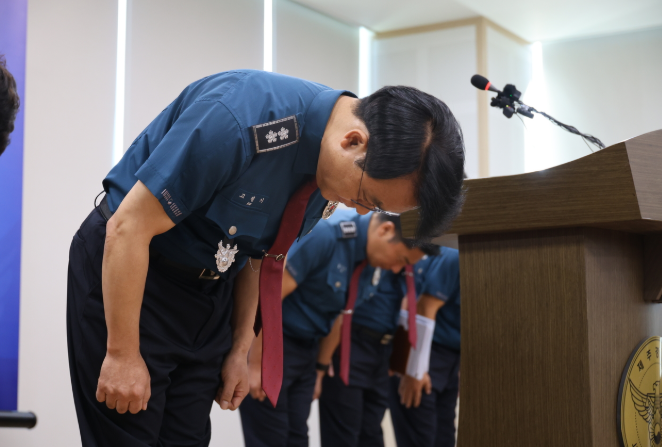
South Korea's Jeju Police Commissioner Ko Pyeong-gi offered a formal public apology on Thursday, August 27, following a significant failure in the handling of two missing person cases that resulted in preventable deaths. The incident has highlighted serious gaps in investigative protocols at the Jeju Provincial Police Agency and raised questions about how such cases are managed across South Korean law enforcement.
The controversy centres on a Jeju police officer identified as Bu, who stands accused of deliberately mishandling missing person investigations by fabricating evidence of contact with those reported missing. In the case of Jang Mi-ran, a 37-year-old woman who vanished in May, the officer allegedly closed the investigation by falsely claiming he had spoken directly to her, despite having no actual communication. Jang's body was subsequently discovered on Monday, August 24, days after the case file had been closed.
The same officer employed an identical approach in a second case involving an older male victim in his 60s, whose remains were found on Saturday. By fraudulently reporting contact with the missing individual, Bu effectively terminated the active investigation, preventing any further police efforts to locate or assist the person. Both cases represent a fundamental breach of investigative duty, as the false closure of files meant that families received no updates and no resources were directed toward finding their missing relatives.
In his statement at the agency headquarters, Commissioner Ko acknowledged the profound human cost of this misconduct. He expressed remorse specifically directed toward the two individuals who perished without reuniting with their families, while also recognising the immeasurable suffering inflicted upon their bereaved relatives. Ko's apology extended to the broader Jeju community, reflecting an understanding that public trust in law enforcement had been compromised by the officer's actions.
The commissioner stressed that police officers carry an explicit and solemn responsibility to safeguard public safety and preserve human life. By abandoning this fundamental duty and resorting to fabrication, the officer not only failed those who went missing but created lasting damage to the families left behind with questions and unresolved grief. Ko characterised the impact as having left permanent psychological scars on those affected, recognising that such negligence cannot be remedied through apologies alone.
The investigation into Bu's conduct will proceed with the stated commitment to full transparency and thoroughness. Ko pledged that the police agency would examine every aspect of the officer's conduct and determine whether any legal culpability warranted prosecution. However, the broader institutional response has been equally significant, with the Jeju Provincial Police Agency announcing a comprehensive audit of all missing person cases handled on the island.
This systematic review represents an attempt to identify whether Bu's misconduct was an isolated incident or symptomatic of wider problems within the department's case management procedures. The audit will specifically examine whether other cases may have been improperly closed, whether officers in other jurisdictions employed similar methods to artificially reduce case backlogs, and whether supervisory oversight failed to detect such irregularities. Such audits, while necessary, also underline how deeply the credibility of the agency has been shaken.
The implications for Malaysian and regional policing standards are noteworthy. Missing person investigations demand rigorous documentation, clear protocols for case closure, and regular supervisory review to prevent precisely this kind of manipulation. The Jeju case demonstrates how a single officer's dishonesty, combined with insufficient checks and balances, can result in tragedy and erode public confidence in law enforcement systems. Southeast Asian police forces often operate under resource constraints and heavy caseloads, creating environments where similar pressures to artificially reduce pending cases might emerge.
For South Korea specifically, this incident arrives during a period of broader scrutiny of police conduct and institutional accountability. The high-profile nature of the case, combined with the commissioner's public apology, signals that authorities take the lapse seriously. Yet questions persist about what failures in training, supervision, and case management protocols allowed an officer to repeatedly file false reports without detection. The answer likely involves insufficient peer review, inadequate database cross-checking, and perhaps insufficient consequences for early warning signs of misconduct.
The commitment to audit all outstanding missing person cases across Jeju should yield concrete results and recommendations for systemic improvement. Any identified cases with similar irregularities will require reinvestigation, and families who may have been misled by false case closures will need to be contacted and informed. This process will be administratively burdensome but essential for restoring institutional integrity.
Looking forward, the Jeju Police agency will need to implement stronger checks, such as requiring direct supervisor approval before closing missing person cases, mandating periodic case reviews rather than relying on officers' initial assessments, and establishing clear documentation standards that make falsification more difficult and detectable. Training programmes should emphasise the ethical and legal obligations underpinning missing person investigations, particularly when resources are limited.
The human cost of this failure extends beyond the immediate families to broader concerns about police accountability in an era of public scrutiny. Commissioner Ko's apology, while necessary, must be accompanied by concrete institutional changes that prevent recurrence. For other regional police forces, the Jeju case offers a cautionary lesson about the dangers of inadequate oversight and the importance of maintaining investigative integrity, particularly in cases where vulnerable populations rely on police to find them.

