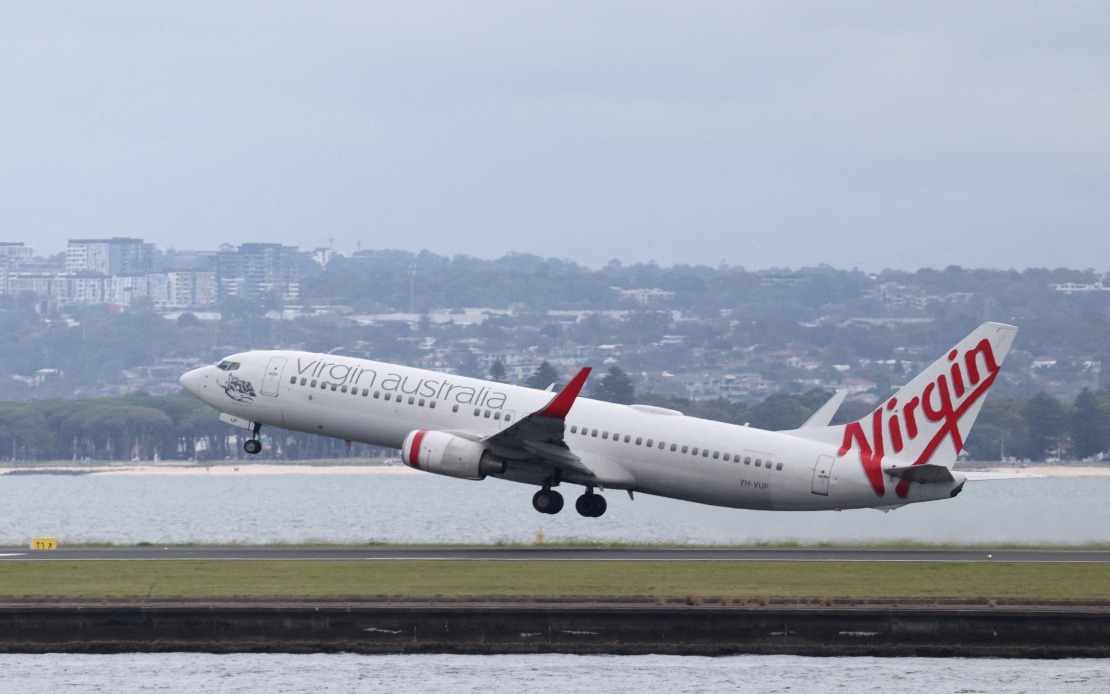
A cabin crew member was injured when a Jetstar Airways flight was forced to perform an emergency stop on a Sydney Airport runway to avert a collision with an empty Qatar Airways Boeing 777 that was being towed on Sunday morning. The incident, which occurred around 7 am Australian Eastern Standard Time as Jetstar flight JQ402 prepared to depart for the Gold Coast, has renewed focus on safety procedures at one of Australia's busiest aviation hubs and comes amid ongoing operational challenges at the facility.
The Jetstar aircraft was taxiing toward the runway under direction from Air Traffic Control when pilots suddenly had to apply firm braking as the towed Qatar Airways aircraft came into close proximity. The emergency manoeuvre caused injuries to at least one member of the cabin crew, who was attended to by ambulance paramedics at the scene. Fortunately, no passengers aboard the Jetstar flight sustained injuries in the near-miss incident, though the event has highlighted the potential consequences of miscommunication or timing errors during ground operations at major airports.
Jetstar, which operates as a wholly-owned subsidiary of Qantas, has initiated a formal investigation into the circumstances surrounding the incident. A company spokesperson acknowledged that the airline's aircraft had been operating under Air Traffic Control instructions when the emergency braking became necessary, suggesting that the crew acted appropriately in response to the unexpected proximity of the other aircraft. The statement emphasised the swift action taken by Jetstar pilots to prevent what could have been a catastrophic accident on the tarmac.
The timing of this incident is particularly significant given recent operational difficulties at Sydney Airport. The previous Friday and Saturday saw more than 250 flights subjected to delays stemming from staff shortages at Airservices Australia, the government-owned corporation responsible for providing air traffic control and related services at major Australian airports including Sydney. These disruptions pointed to broader resource constraints affecting the nation's aviation infrastructure, raising concerns about whether adequate staffing levels are being maintained to ensure safe operations.
Airservices Australia operates the critical air traffic management systems that guide aircraft movements on the ground and in the skies above Sydney Airport. The organisation's recent staffing challenges underscore the pressures facing Australia's aviation sector as passenger numbers recover and operational demands increase post-pandemic. When staff levels fall below required thresholds, the margin for error in coordinating complex ground operations shrinks considerably, potentially creating conditions where incidents like Sunday's near-collision become more likely.
For Malaysian aviation stakeholders and carriers operating through Sydney Airport, such incidents carry particular relevance. Australia remains a key hub for Southeast Asian aviation networks, with numerous Malaysian carriers including Malaysia Airlines maintaining regular services to various Australian destinations. Any disruption or safety concern at Sydney Airport affects regional traffic flows and passenger confidence in Australian aviation safety standards, which have traditionally been regarded as among the world's highest.
The investigation into Sunday's incident will likely examine communication protocols between air traffic controllers and ground crew, the systems used to track towed aircraft, and whether proper separation distances were maintained during taxiing operations. Towing empty aircraft across active or semi-active runway areas is a standard procedure at major airports, but it requires meticulous coordination to prevent exactly the type of situation that unfolded on Sunday morning.
This event also raises questions about whether Sydney Airport's current infrastructure and staffing arrangements are adequately scaled to handle the volume and complexity of ground operations. As Australia's largest airport continues to experience growth in passenger numbers and flight movements, the margin for operational error cannot afford to shrink. The incident demonstrates that safety depends not only on well-trained personnel and modern equipment but also on sufficient staffing levels to maintain the constant vigilance that aviation demands.
The injury sustained by the Jetstar crew member, though not life-threatening based on initial reports, serves as a reminder of the physical consequences that can result from sudden aircraft movements during ground operations. Cabin crew are particularly vulnerable during such incidents, as they may not be anticipating sudden braking that can occur without warning during taxiing procedures. This aspect of the incident may prompt airlines and airport operators to review communication protocols with cabin crew regarding potential hazards during ground operations.
Industry observers will be monitoring the outcomes of Jetstar's investigation closely, as the findings may inform broader discussions about safety procedures at Australian airports and similar facilities throughout the Asia-Pacific region. Given the interconnected nature of regional aviation networks, lessons learned from incidents at major hubs like Sydney can influence operational practices across Southeast Asia and beyond, making the investigation's conclusions particularly relevant to carriers and airports throughout the region.
The near-miss also comes at a time when aviation authorities globally are emphasising the importance of robust safety cultures and the need to maintain operational margins that prevent incidents from escalating into accidents. Sydney Airport authorities and Airservices Australia will likely face renewed scrutiny regarding whether current resource allocation is sufficient to maintain the safety standards expected at a major international gateway. For passengers and operators alike, these questions about capacity and safety at key aviation facilities remain pressing as air travel continues its recovery trajectory.

