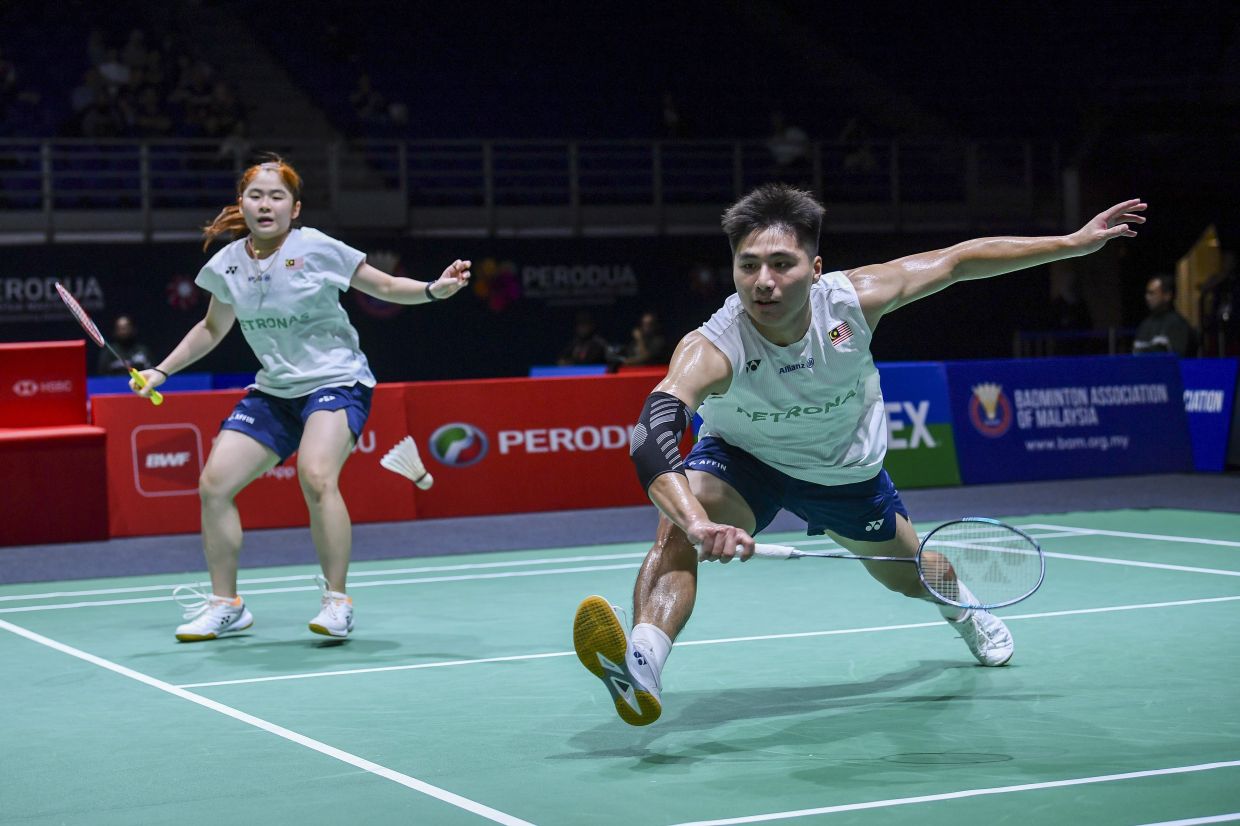
Malaysian mixed doubles shuttler Jimmy Wong is building momentum towards his Olympic ambitions after settling back into the national badminton programme, with the 23-year-old expressing genuine optimism about his prospects for the 2028 Los Angeles Games. Since rejoining the Badminton Association of Malaysia in April, Wong has benefited from a professional coaching environment and stable partnership arrangements that he believes position him favourably for long-term success on the international circuit.
The partnership between Wong and Cheng Su Yin represents a calculated step forward in Malaysian mixed doubles development, an area where the national federation has invested considerable resources in recent years. Currently ranked 118th in the world, the pairing has established a concrete milestone to drive their progression: achieving a top-32 finish by the end of 2024 would unlock access to premium tournaments including the lucrative Super 750 and Super 1000 series, significantly expanding the competitive opportunities available to them. This ranking threshold serves as both a practical objective and a psychological marker of progress within the sport's hierarchical tournament structure.
Wong's recent appointment with mixed doubles coach Nova Widianto represents a significant development in his sporting trajectory. The Indonesian coach brings credentials that few Malaysian badminton players regularly access, having competed at Olympic level and previously held world championship status—a pedigree that extends beyond tactical instruction into the realm of mental preparation and tactical maturity. Wong articulated how this exposure to world-class coaching has already influenced his development, noting that Widianto's contributions span both technical gameplay refinement and broader personal growth, suggesting an integrated approach to athlete development rather than narrow skills-focused instruction.
The pair's early performances together have generated genuine excitement within Malaysian badminton circles. Their upset victory over world number one pairing Feng Yanzhe and Huang Dongping during the Singapore Open served as a statement of capability, demonstrating that Wong and Su Yin possess the capacity to compete against elite opposition. However, their subsequent second-round exit at the same tournament underscores a reality facing most developing partnerships: consistency and depth across multiple matches remains challenging, and the tournament calendar demands sustained high-level performance rather than isolated victories.
Wong's approach to managing expectations reveals a maturity beyond his 23 years. Rather than loading his shoulders with an exhaustive list of targets that might prove counterproductive, he has deliberately calibrated his goal-setting to maintain focus on immediate challenges while preserving psychological flexibility. This philosophical stance acknowledges an important principle within elite sport: excessive target accumulation can paradoxically impede performance by fragmenting attention and escalating pressure during competition. His emphasis on delivering consistently well each time he enters the court reflects a process-oriented mindset increasingly recognised as fundamental to championship-level development.
The Malaysian badminton federation's investment in Wong's development comes at a strategically important moment for the sport. The Los Angeles Olympics represent a realistic timeline for emerging pairs to establish themselves on the world stage, and Malaysia's historical strength in doubles competition creates institutional expectations around Olympic qualification. Wong and Su Yin's progression will be monitored closely as potential contributors to Malaysia's overall Olympic medal prospects, particularly given the nation's recent mixed doubles challenges at the highest levels of international competition.
Communication and partnership cohesion emerge as foundational elements in Wong's assessment of his work with Su Yin. Mixed doubles requires extraordinary synchronisation between partners, with split-second decision-making at the net and coordinated court positioning differentiating champion pairings from competitive but ultimately unsuccessful combinations. Wong's confidence in their compatibility suggests that the partnership has moved beyond the awkward early phases into more seamless operational mode, though he remains appropriately candid about technical aspects requiring attention and refinement through continued tournament exposure.
The timeline Wong has established—reaching the top 32 by year-end—creates natural checkpoints for evaluating whether the return to the national set-up has yielded tangible competitive benefits. Malaysian badminton observers will scrutinise their performances across the tournament circuit over the coming months, assessing whether their momentum from the Singapore Open upset represents a genuine upward trajectory or a temporary flash against elite opposition. The ranking system's mathematical structure means that top-32 status demands sustained success across multiple tournaments rather than isolated victories.
For Malaysian readers monitoring the sport's development pathway, Wong's journey encapsulates broader questions about how national programmes nurture talent and structure progression toward elite international competition. His willingness to relocate his career within the national set-up, combined with BAM's ability to provide sophisticated coaching resources, illustrates the federation's commitment to competitive development. The coming months will determine whether this investment translates into the competitive results that Olympic qualification demands.

