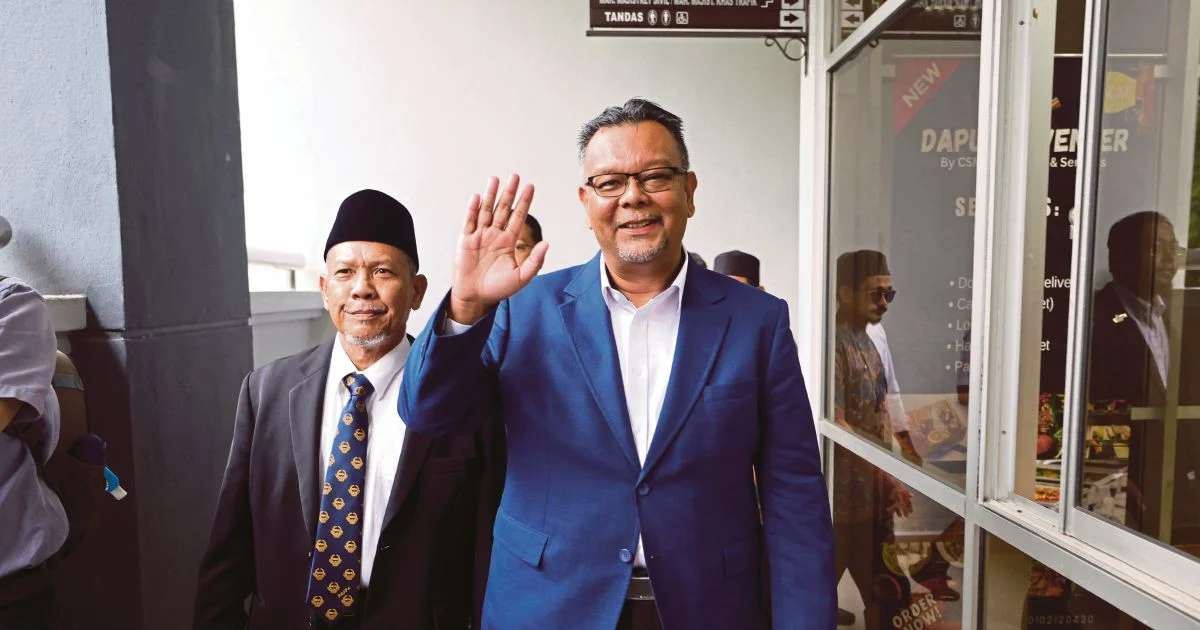
The case of Jitra state assemblyman Dr Haim Hilman Abdullah took a significant turn when he appeared before Seremban magistrate's court to address charges relating to allegedly inflammatory public statements. The politician formally entered a not guilty plea, setting the stage for legal proceedings that could have implications for how elected representatives navigate the delicate terrain between parliamentary privilege and public conduct standards in Malaysia.
Charges involving statements intended to provoke public alarm represent a serious matter within Malaysia's legal framework, touching upon longstanding questions about the boundaries of political speech and citizen protection. The specific allegation against Dr Haim Hilman suggests that authorities determined his words crossed from protected political discourse into territory deemed potentially destabilizing to public order. This distinction has become increasingly contested in Malaysian politics, particularly as social media and instant communication amplify the reach and impact of political statements.
Dr Haim Hilman's not guilty plea indicates he contests the prosecution's characterization of his words, potentially arguing that his statements fell within acceptable political commentary or that they lacked the necessary intent to cause alarm. The plea marks an important juncture: rather than accepting a guilty verdict or attempting negotiation through lower court resolution, the assemblyman has chosen to mount a full defence, suggesting confidence in his legal position or a conviction that the charges lack merit.
The case unfolds against a broader backdrop of heightened political sensitivity in Malaysia. Recent years have witnessed intensified scrutiny of political figures' public utterances, with multiple lawmakers facing various charges related to their statements. These cases often reflect deeper tensions within the nation's political ecosystem, where robust opposition to government policies and ethnic-religious sensitivities frequently intersect with legal constraints on speech and expression.
From a regional perspective, Malaysia's approach to regulating political speech through the courts differs markedly from some neighbouring democracies. The provision under which Dr Haim Hilman has been charged exists to protect public order, but critics argue it can be employed to constrain legitimate political opposition. His defence in court will likely illuminate how judicial interpretation applies these provisions in contemporary Malaysian politics, potentially offering guidance for other political figures navigating similar terrain.
The Seremban magistrate's court proceedings represent the formal commencement of what could become a lengthy legal process. Malaysian court procedures for such matters typically involve multiple hearings, witness testimony evaluation, and opportunities for both prosecution and defence to present comprehensive arguments. The timeline and trajectory of Dr Haim Hilman's case will be closely monitored by political observers, legal analysts, and civil society organizations interested in how Malaysian courts balance national security and public order concerns against constitutional protections for political expression.
For Dr Haim Hilman's political standing and the broader Jitra constituency he represents, this legal challenge introduces considerable uncertainty. While Malaysian politicians have weathered various legal challenges and continued their careers, the process itself demands significant personal resources and diversion of attention from constituency work. The not guilty plea signals his intention to contest the matter thoroughly rather than seek expedited resolution, suggesting preparedness for protracted legal engagement.
The case also raises questions about prosecutorial discretion and how authorities determine when political statements merit criminal investigation. Unlike civil defamation or administrative responses, criminal charges carry heightened gravity and potential for imprisonment. This elevates the stakes considerably beyond political debate or parliamentary accountability mechanisms, introducing the coercive power of the criminal justice system into what many would characterize as political speech contestation.
Observers from across Malaysia's political spectrum will parse the details of what statements prompted the charges. Different communities may interpret identical words through divergent lenses—some viewing them as dangerous provocations requiring legal response, others as legitimate political expression subject only to parliamentary discipline or electoral judgment. The court's eventual determination will provide authoritative interpretation of how far political speech can extend before crossing into criminality.
The appearance in Seremban magistrate's court marks a test case for understanding contemporary Malaysian political jurisprudence. As the proceedings develop through examination of evidence and legal arguments, the fundamental question of where legitimate political expression ends and public-alarm-inducing statements begin will face judicial scrutiny. For elected representatives throughout Malaysia, the case's outcome will carry practical implications for how they calibrate their public communications and navigate the intersection of political responsibility and legal liability.
Dr Haim Hilman's not guilty plea sets in motion a legal process that extends beyond his individual circumstances, touching upon broader questions about political freedom, public order maintenance, and judicial interpretation of statutory provisions regulating speech. The coming court proceedings will reveal how Malaysian jurisprudence balances these competing interests in contemporary political practice.

