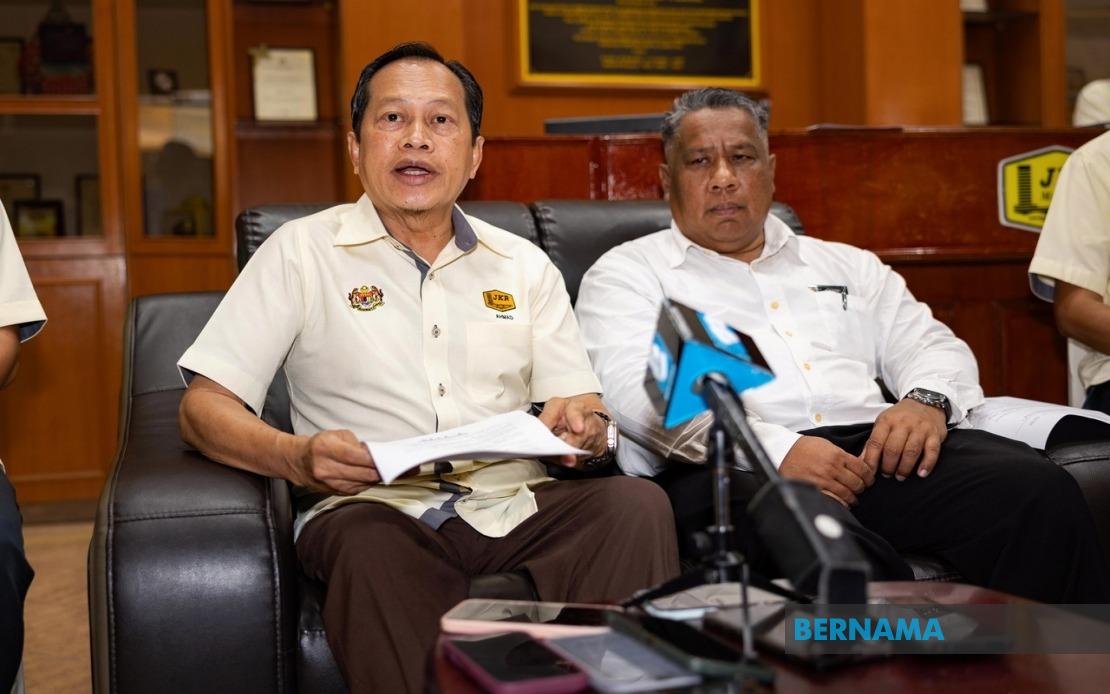
The Public Works Department (JKR) has signalled its willingness to work closely with local authorities in addressing tree safety concerns along Malaysian federal roads, following mounting pressure to prevent further tragedies similar to the fatal incident in Bentong last week. Deputy Works Minister Datuk Seri Dr Ahmad Maslan made the clarification during a visit to the Manjung District Engineer's Office, emphasising that while responsibility for tree management rests with local authorities under existing legislation, his ministry remains committed to supporting their efforts through enhanced coordination and technical assistance.
The minister's statement addresses a critical gap in road safety governance that has become increasingly apparent following a horrific accident in which four family members were killed by a falling tree along the FT68 Bentong-Kuala Lumpur Old Road. Bentong MP Young Syefura Othman had previously called for JKR and private maintenance concessionaires to strengthen partnerships with certified arboricultural experts to conduct regular technical assessments of mature trees and slope stability along federal road reserves. This incident has brought into sharp focus the question of who bears responsibility for preventing similar disasters across the nation's extensive federal road network.
Ahmad Maslan clarified the legal framework underpinning these responsibilities, pointing to Section 101(b) of the Local Government Act 1976 (Act 171). This provision explicitly grants local authorities (PBT) the power to plant, prune, or remove trees within their administrative jurisdictions, including those situated on federal road reserves that fall within their territorial boundaries. The minister's emphasis on this statutory delegation is significant, as it establishes a clear legal precedent for where accountability should ultimately lie in matters of roadside tree management and maintenance.
However, the deputy minister stressed that clarifying JKR's limited role should not be interpreted as a refusal to engage with the problem. He emphasised that his department operates under specific concession agreements with private maintenance contractors, and these agreements contain strict limitations on tree removal. Under the current contractual framework, trees can only be cut down after they have already fallen and pose an immediate hazard. This retrospective rather than preventive approach reflects the narrow scope of JKR's authority in the matter, a constraint that Ahmad Maslan was keen to highlight during his explanation.
The minister rejected suggestions that JKR was shirking responsibility, instead framing the department's limited scope as a result of both legal constraints and contractual limitations. He pointed out that JKR's remit focuses on road furniture and signage rather than vegetation management, a distinction that underscores the specialised nature of arboricultural work. This clarification is important for understanding the structural barriers that currently prevent the rapid deployment of proactive tree management practices on federal roads, barriers that cannot simply be overcome through departmental goodwill alone.
Ahmad Maslan's visit to Manjung served a broader purpose than merely addressing the tree safety controversy. During the working visit, he received comprehensive briefings on the district's organisational structure, the functions of various operational divisions, and the status of current and forthcoming infrastructure projects. This engagement reflects the ministry's stated commitment to maintaining close oversight of technical service delivery at the ground level, where implementation challenges often diverge significantly from policy intentions in the capital.
The deputy minister stressed the critical importance of continuous monitoring and robust coordination between the Ministry of Works (KKR), state-level JKR offices, and district-level engineering units. This emphasis on multi-tiered coordination suggests recognition that infrastructure maintenance and safety in Malaysia require seamless integration across administrative levels. Without such coordination, gaps in accountability can emerge, potentially creating situations where neither state nor federal authorities take ownership of safety-critical issues.
Ahmad Maslan framed his visit as a demonstration of KKR's broader commitment to strengthening technical service delivery and infrastructure development at the district level throughout the country. He underscored that the ministry's strategic objective is to ensure that every project and maintenance activity adheres to required technical specifications, schedules, and budget allocations. This standards-based approach reflects an attempt to systematise infrastructure management across Malaysia's diverse regions and local administrative contexts.
Looking forward, the minister pledged that KKR would intensify monitoring and coordination mechanisms with JKR at all hierarchical levels to maintain Malaysia's public infrastructure at optimal standards. The emphasis on continued vigilance suggests recognition that current systems may harbour vulnerabilities, particularly in areas where responsibility boundaries between agencies remain ambiguous or where reactive rather than preventive approaches dominate. For Malaysian road users and residents in areas adjacent to federal roads lined with mature trees, the minister's commitment to strengthened oversight offers some assurance, though the fundamental question of who bears responsibility for proactive tree assessment remains largely with local authorities.
The Bentong tragedy has exposed a potential blind spot in the nation's road safety infrastructure: the absence of mandatory, systematic inspection protocols for trees on federal road reserves. While legal responsibility clearly rests with local authorities, the practical implementation of rigorous arboricultural assessment programmes may require additional resources, technical expertise, and inter-agency cooperation mechanisms that currently may not be fully established. Ahmad Maslan's acknowledgment that JKR stands ready to assist local authorities represents a potential pathway toward closing this gap, though the effectiveness of any such cooperation will depend on how quickly operational frameworks can be developed and deployed.
For regional observers, Malaysia's struggle to clarify and operationalise tree management responsibilities on major roads reflects challenges common to Southeast Asian infrastructure governance. As urbanisation accelerates and road networks expand, the question of maintaining vegetation alongside transportation corridors becomes increasingly critical. Ahmad Maslan's articulation of existing legal frameworks and his commitment to enhanced coordination may serve as a model for how other regional governments might approach similar governance challenges, provided that commitments translate into concrete operational changes and resource allocation.

