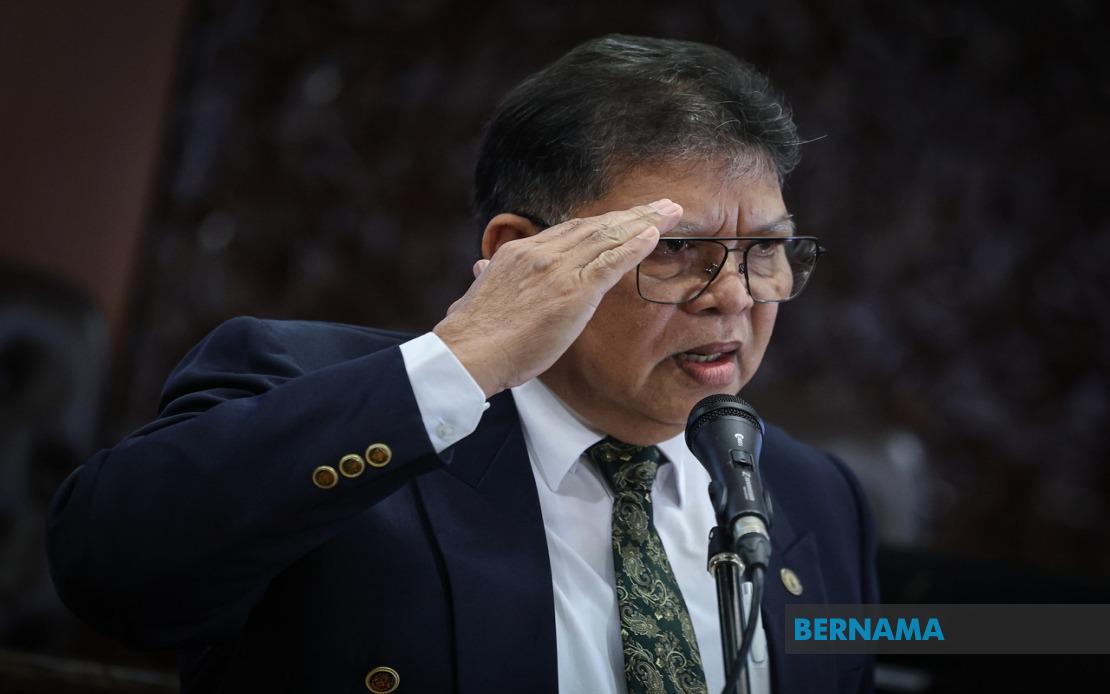
Dewan Rakyat Speaker Tan Sri Johari Abdul has championed the introduction of a proportional representation electoral system as a mechanism to foster inclusive parliamentary leadership that genuinely reflects Malaysia's diverse ethnic and cultural landscape. Speaking at the Harmony Symposium convened at Parliament on June 26, Johari articulated his vision of an electoral framework capable of nurturing a new generation of leaders better equipped to navigate the nation's multicultural identity and address the evolving needs of all communities.
The proposal emerges against the backdrop of Malaysia's significant demographic transformation. According to projections Johari cited, Bumiputera Malays are anticipated to comprise 77 per cent of the nation's population by 2050, a shift that carries profound implications for how minority groups maintain political representation and influence over legislative processes. This demographic trajectory raises critical questions about the sustainability of minority political participation under the current first-past-the-post constituency system, where electoral outcomes depend heavily on geographic concentration of voters.
Under Malaysia's existing electoral architecture, parliamentary seats are allocated through single-member constituencies where the candidate receiving the most votes wins representation, regardless of overall vote margins. This system inherently disadvantages dispersed minority populations who rarely constitute majority voters within individual constituencies. As Bumiputera Malay demographics expand, the geographic feasibility of minority-plurality constituencies diminishes correspondingly, potentially marginalizing minority political voice at the legislative level. Johari's concern reflects a fundamental tension within plural democracies: how to maintain meaningful representation for communities that comprise a shrinking proportion of the overall population.
Proportional representation systems operate on an entirely different principle, allocating parliamentary seats based on the overall percentage of votes each party receives nationally or regionally. Under such arrangements, parties representing minority interests could secure legislative representation proportional to their electoral support, even if geographically dispersed across constituencies. This mechanism would theoretically enable minority communities to maintain parliamentary presence and advocacy capacity regardless of demographic shifts, provided their parties maintain electoral viability.
Johari's intervention carries particular weight given his institutional position. As Speaker of the lower house, his public endorsement of proportional representation signals serious consideration of electoral reform at the highest parliamentary levels. His framing transcends narrow partisan interests, instead positioning the proposal as essential infrastructure for national cohesion and long-term democratic legitimacy. By emphasizing that silenced minority voices could create societal fractures, Johari invokes a stability argument—that inclusive representation fundamentally strengthens rather than weakens national harmony.
The symposium also featured Syahredzan Johan, chairman of the Malaysia Cross-Party Parliamentary Group on Racial and Religious Harmony and Bangi MP, whose presence underscored cross-partisan engagement with representation issues. The KRPPM-KKA explicitly aims to generate policy recommendations and practical institutional mechanisms addressing racial and religious harmony through parliamentary and ministerial channels. This institutional infrastructure reflects growing recognition that representation concerns demand systematic engagement rather than ad-hoc responses.
Johari deliberately reframed the temporal scope of political deliberation, urging participants to transcend immediate contemporary issues and contemplate Malaysia's challenges across five to 100-year horizons. This perspective shift proves analytically valuable, as demographic and representational questions require longitudinal thinking. Short-term political cycles often incentivize reactive posturing, whereas century-scale analysis necessitates strategic institution-building. Malaysia's documented 77 ethnic groups add further complexity—Johari emphasized that coexistence frameworks must accommodate extraordinary diversity within democratic structures, making representational mechanisms especially consequential.
The proportional representation debate intersects with ongoing comparative democratic discourse. Several established democracies employ mixed systems combining proportional and constituency elements, offering potential models for adaptation. Israel, Germany, and the Netherlands maintain proportional components that secure representation for minority parties, though these systems present their own governance complexities including coalition-building difficulties. Malaysia's exploration of such mechanisms reflects international awareness of representational trade-offs and institutional alternatives.
Implementing proportional representation would require constitutional amendment given the Federal Constitution's specification of existing electoral arrangements. Such constitutional change demands two-thirds parliamentary supermajority, restricting unilateral implementation. This threshold establishes an institutional guardrail requiring genuine cross-partisan consensus, which Johari's symposium convening implicitly acknowledges. The difficulty of achieving consensus itself validates why representation questions demand early serious engagement—delayed deliberation compounds constitutional change obstacles.
The proposal resonates throughout Southeast Asia, where several nations navigate comparable demographic and pluralist representation challenges. Thailand, Indonesia, and the Philippines have experimented with mixed electoral systems addressing minority incorporation. Malaysian discussion therefore occupies a regional conversation about reconciling demographic change with inclusive democratic governance. For constituencies including substantial Sabahan and Sarawakian indigenous populations, electoral architecture decisions prove particularly salient given historical underrepresentation dynamics.
Critics of proportional representation systems note practical complications including coalition government fragmentation, governance instability, and potential empowerment of fringe parties. Malaysia's strong party system could mitigate certain instability risks, though undoubtedly trade-offs would emerge. Johari's proposal essentially initiates a cost-benefit calculus: weighing hypothetical governance complications against demonstrable representation risks under demographic transformation. This represents a quintessentially democratic deliberation, acknowledging that no electoral system optimizes simultaneously across all governance dimensions.
The timeline surrounding Johari's advocacy proves significant. As demographic projections materialize across the next two and a half decades, the window for deliberate electoral reform closes progressively. Early serious engagement allows Malaysia to design representational mechanisms proactively, rather than confronting representation crises reactively. This prospective orientation reflects sophisticated democratic statesmanship, recognizing that institutional design decisions made today fundamentally shape political possibilities and community voice across generations.
Moving forward, the KRPPM-KKA and parliamentary institutions must translate Johari's conceptual proposal into concrete legislative frameworks, pilot mechanisms, and constitutional pathways. The Harmony Symposium demonstrates institutional willingness to engage representation questions seriously, positioning Malaysia potentially as a regional exemplar of proactive democratic adaptation. Whether proportional representation ultimately emerges as adopted policy remains uncertain, but the Speaker's intervention establishes representation sustainability as a legitimate priority for Malaysian democratic institutions.

